Damascus bunka knives
The bunka knife combines the straight edge of a nakiri with a pointed, angled tip. It cuts vegetables, meat and fish just as well as fine herbs or garlic. Here you'll find our damascus steel bunka knives with blades of 18 to 21.5 cm.
4 products
Guide
Damascus bunka knives
What is a bunka knife?
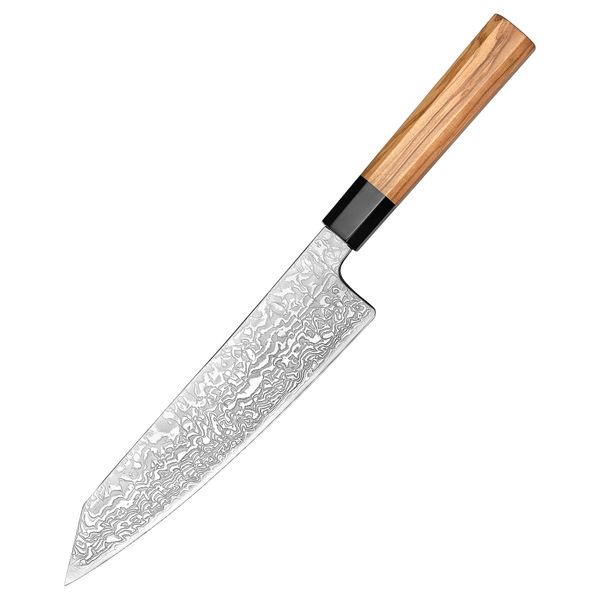
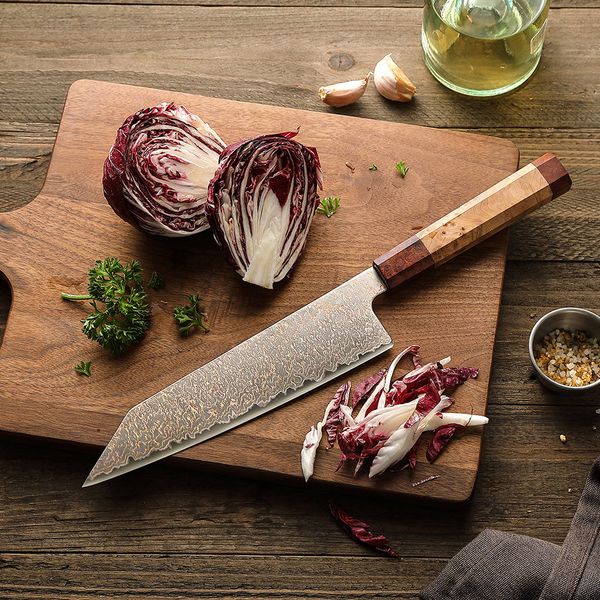
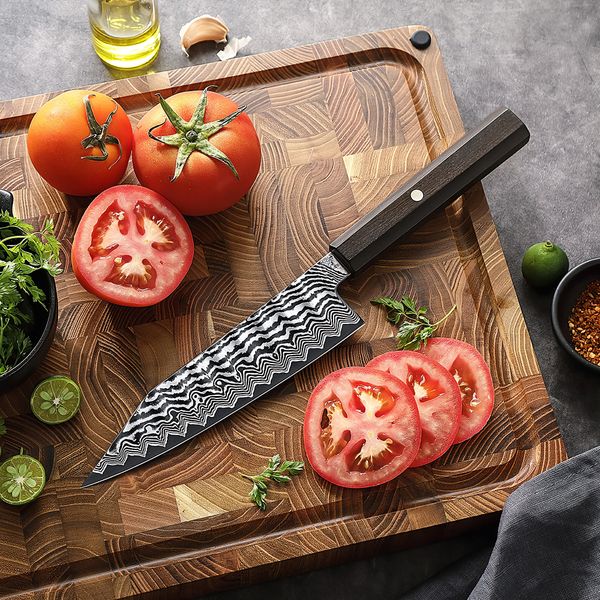
The bunka is a knife shape from Japan and a close relative of the santoku knife. Typical features are the wide blade with an almost straight edge and the distinctive tip: the spine doesn't curve down but ends in an angled edge. Our bunka knives are modelled on this design and have a damascus steel blade.
Uses: what is a bunka knife for?
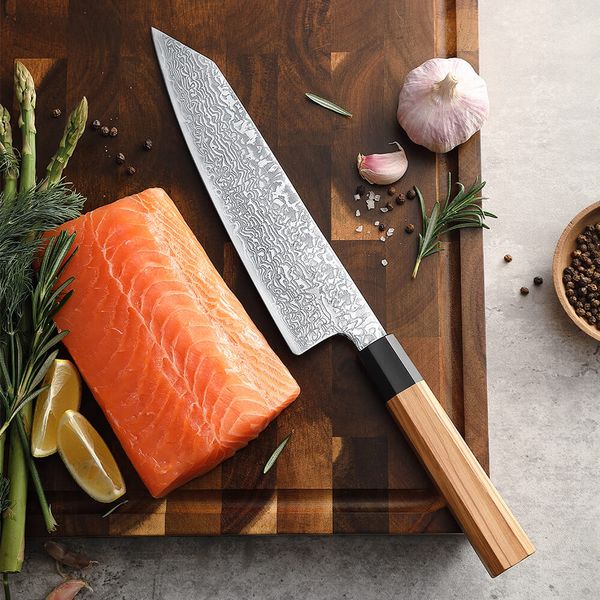
- Vegetables and herbs: the straight edge has full contact with the board, ideal for onions, leeks, peppers and herbs.
- Fine work with the tip: finely cutting garlic, scoring onions lengthways or deseeding peppers.
- Meat and fish: strips for the pan, portioning fish fillets, all boneless.
Bunka vs santoku: what's the difference?
Both are versatile main knives with a flat edge. The difference is the tip: on the santoku the spine curves down to the tip, on the bunka it ends in an angled, pointier edge. That makes the bunka a little more precise for detailed work and gives it a more striking look. If you're looking for a classic all-rounder, both are a good choice. If you like the rocking cut, reach for a chef's knife.
Our bunka knives at a glance
- KAYA: 21.5 cm blade with 67 layers around a hard steel core, olive wood and buffalo horn handle.
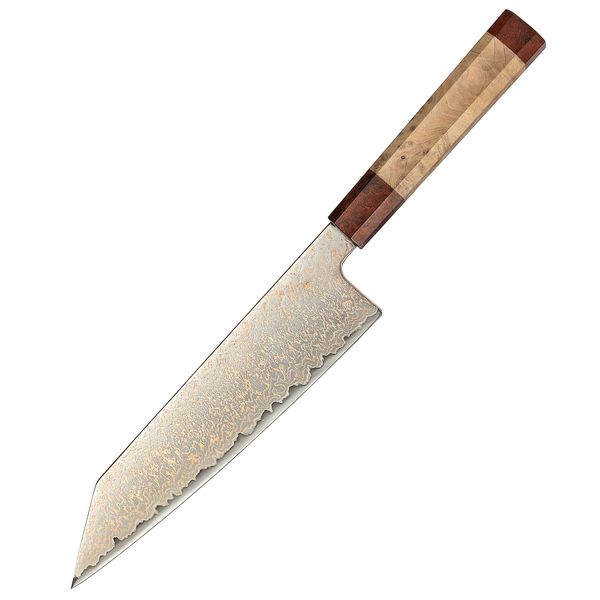
- HIIRO: 21 cm blade of steel, copper and brass with a sycamore maple handle.
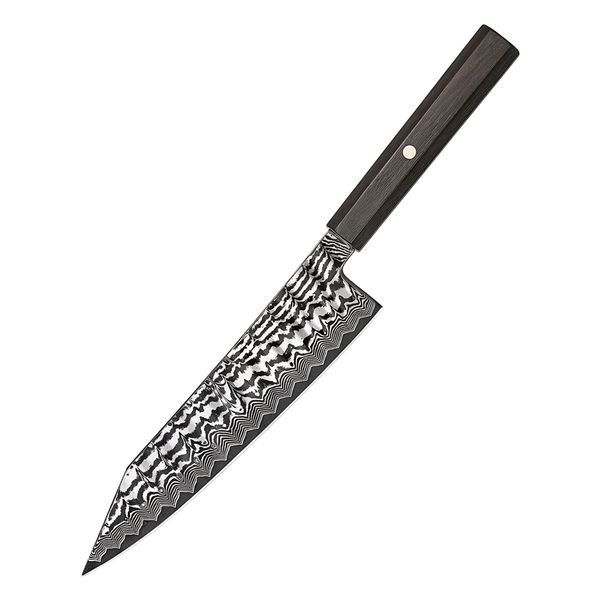
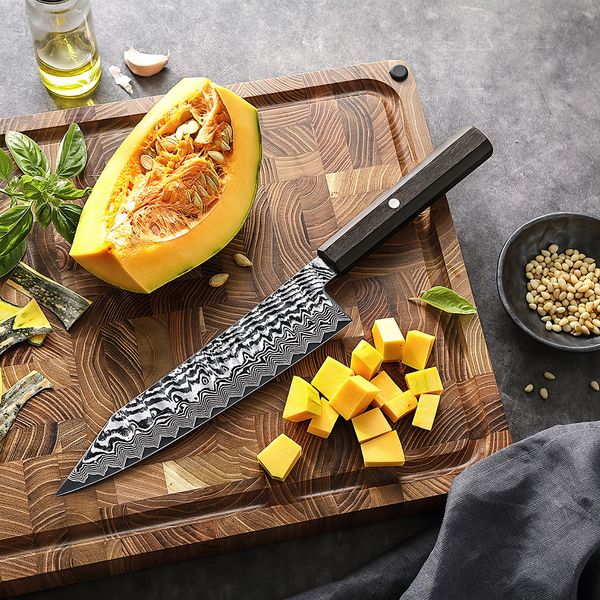
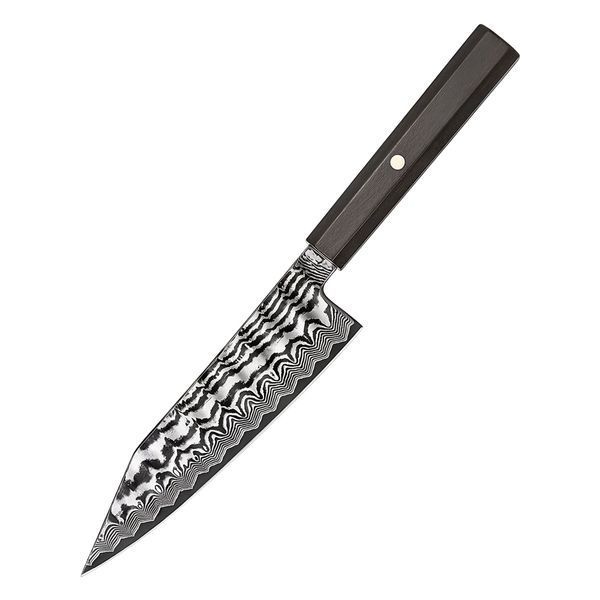
- NAMI: blade of around 21 cm with a hammered surface and octagonal ebony handle, also as a small bunka of around 18 cm.
Sharpening and care
Sharpen your bunka on a whetstone at about 15 degrees per side. Finish with the angled tip by lifting the handle slightly so that it stays sharp too. Cut on wood or plastic, wash by hand and dry the knife straight away. With us you get a 30-day money-back guarantee and a 5-year warranty on every knife.
Our recommendation: if you're looking for an everyday bunka knife, the 21.5 cm KAYA bunka is the classic. If you like something eye-catching, go for HIIRO with copper and brass; if you prefer something handier, the small NAMI bunka.
Frequently asked questions
What is a bunka knife good for?
For almost everything in the kitchen: vegetables, herbs, meat and fish without bones. The angled tip also makes fine jobs like cutting garlic or scoring onions easy.
What's the difference between bunka and santoku?
The shape of the tip. On the santoku the spine curves down, on the bunka it ends in an angled, pointier edge. That makes the bunka a little more precise for detailed work.
Is a bunka knife suitable for beginners?
Yes. The straight edge is easy to guide. Take a little more care with the tip at first, as it's pointier than on a santoku.
What blade length should a bunka have?
Around 18 to 21 cm. With 21 cm you can comfortably cut large vegetables like cabbage too; the shorter version is nimbler.
What's the difference between kiritsuke and bunka?
Both have an angled tip. The kiritsuke is usually longer and narrower and more of a professional's knife. The bunka is shorter and wider, which makes it handier for everyday use.