
Damascus carving knives
With a carving knife you slice roasts, ham, roast beef or salmon into thin, even slices in a single long stroke. Here you'll find our damascus steel carving and sashimi knives with long, narrow blades.
3 products
Guide
Damascus carving knives
What is a carving knife?
A carving knife has a long, narrow and fairly flat blade. Thanks to its length you can cut each slice in one stroke without sawing. The surface stays smooth, the juices stay in the meat and the slices come out evenly thin.
What is a carving knife used for?
- Roasts and poultry: carving roast pork, roast beef, the Christmas goose or turkey at the table.
- Ham and pastrami: wafer-thin slices from the joint.
- Fish: gravlax, smoked salmon and raw fish for sashimi.
- Large vegetables and fruit: melon or squash in long slices.
Carving knife and sashimi knife
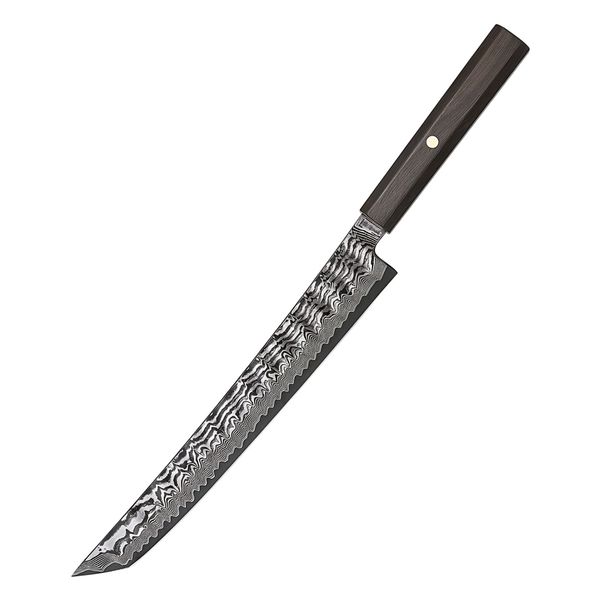
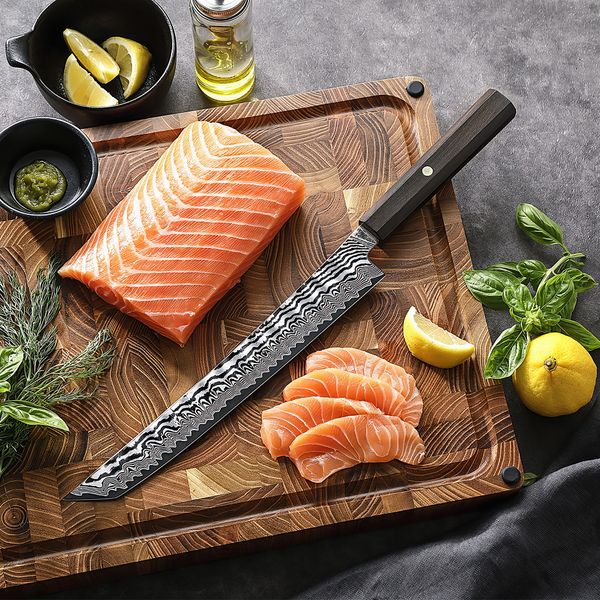
A sashimi knife is a very long, narrow knife for raw fish. The principle is the same as with a carving knife: long blade, one stroke, smooth cut surface. Our NAMI sakimaru with a 25.5 cm blade is modelled on this design and ideal for salmon, tuna and other large fillets, but just as good for roasts and roast beef.
Our carving knives at a glance
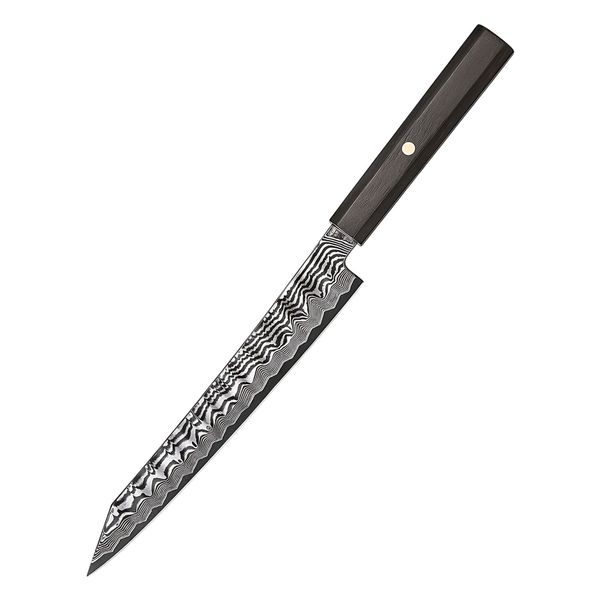
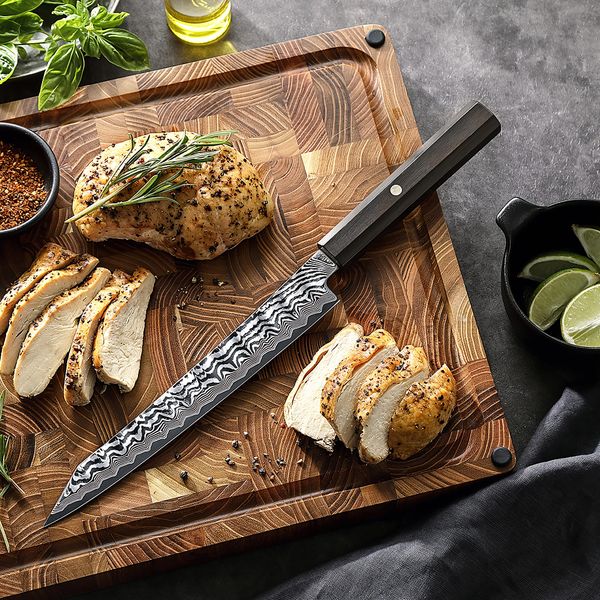
- NAMI carving knife: blade of around 22 cm with a hammered surface and octagonal ebony handle.
- NAMI sakimaru: long, narrow blade of around 25.5 cm for sashimi, salmon and large roasts.
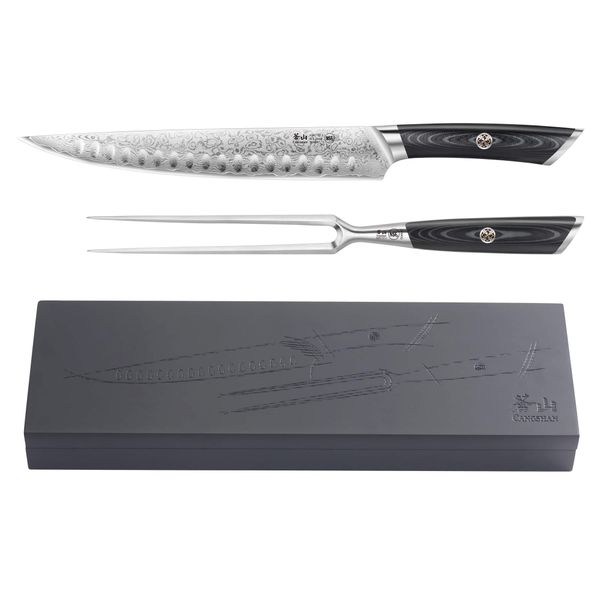
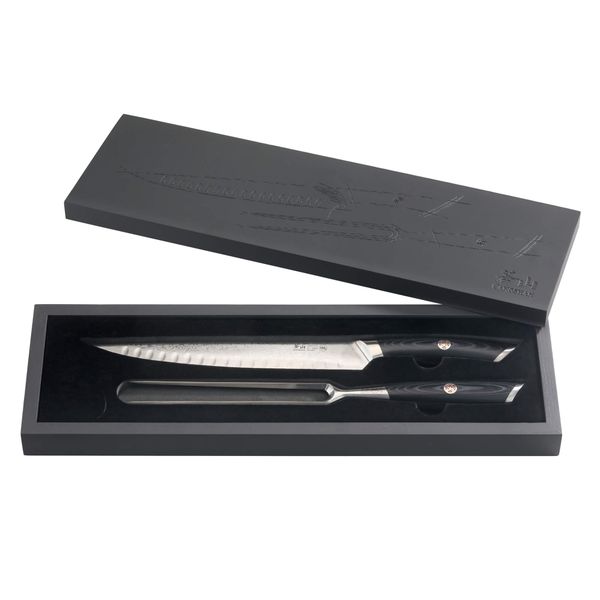
- KURO carving set by Cangshan: carving knife with a 22.9 cm blade and carving fork in a wooden box, for carving the roast at the table.
What to look for when buying
- Length: at least 20 cm, ideally 22 cm or more. The blade should be longer than the joint is wide.
- Narrow blade: less friction, smoother slices.
- Smooth edge: for roasts and fish, a smooth, sharp edge cuts more cleanly than a serrated one.
Sharpening and care
Sharpen the carving knife on a whetstone at about 15 degrees per side and work the long blade over the stone in sections. Wash by hand, dry straight away and store with a blade guard or on a magnetic strip. With us you get a 30-day money-back guarantee and a 5-year warranty on every knife. For raw meat and fish, the fillet knife is the right addition; for the steak on your plate, the steak knife.
Frequently asked questions
What do you need a carving knife for?
For slicing roasts, poultry, ham and salmon into thin, even slices, in one long stroke without sawing.
How long should a carving knife be?
At least 20 cm; 22 to 26 cm is ideal. Our carving and sashimi knives have blades of 22 to 25.5 cm.
What's the difference between a carving knife and a sashimi knife?
Both have a long, narrow blade. The sashimi knife is usually even longer and narrower and intended for raw fish; the carving knife for roasts and poultry. In everyday use you can use either for both.
Do I need a carving fork?
It helps hold the roast steady while carving without touching it with your fingers. It's included in the KURO carving set.