
Damascus paring knives
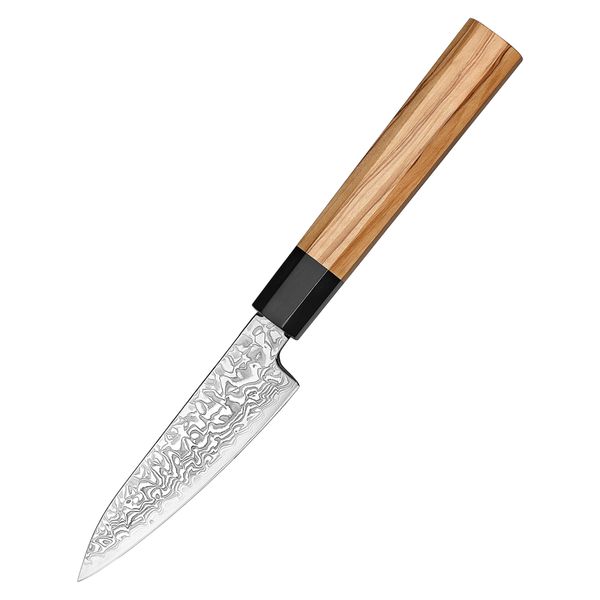
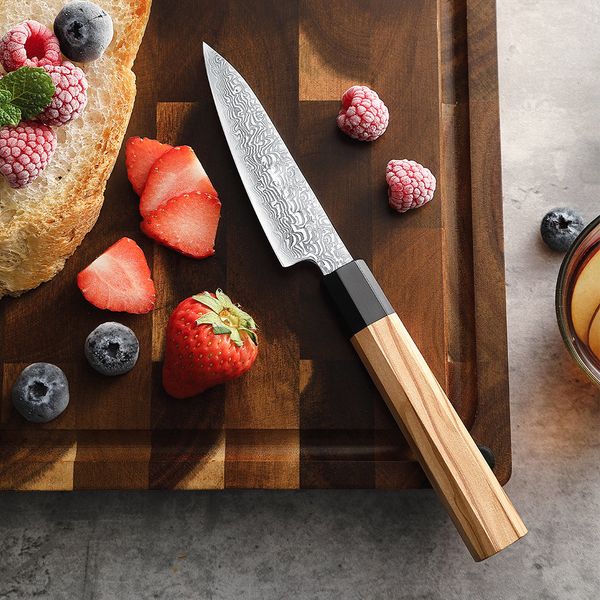
A good paring knife sits so securely in the hand that you can work without a board: peeling potatoes, coring apples, hulling strawberries. Our paring knives have a short damascus steel blade of around 10 cm and a wooden handle.
3 products
Guide
Damascus paring knives
What makes a paring knife?
The paring knife is the smallest knife in the kitchen. Its short, pointed blade can be guided very precisely with your fingers. You usually work in the hand: the food in one hand, the knife cutting towards your thumb with small movements.
What is a paring knife used for?
- Peeling potatoes and vegetables: thinly and evenly, with little waste.
- Preparing fruit: peeling and coring apples and pears, hulling strawberries, segmenting citrus fruit.
- Fine work: removing potato eyes, cleaning mushrooms, cutting garlic.
- Turning: cutting vegetables into even, rounded shapes.
What to look for when buying
- Blade length: 8 to 11 cm. Shorter blades are safer when peeling in the hand.
- Tip: a fine tip matters for cores and potato eyes.
- Handle: it shouldn't slip even with wet hands. Wooden handles feel warm and grippy.
- Sharpness: a sharp paring knife is safer than a blunt one, because you need less pressure.
Our paring knives at a glance
- KAYA: 10.6 cm blade with 67 layers around a hard steel core, olive wood and buffalo horn handle.
- ORIBU: 10 cm blade of 73-layer damascus powder steel with an olive wood handle.
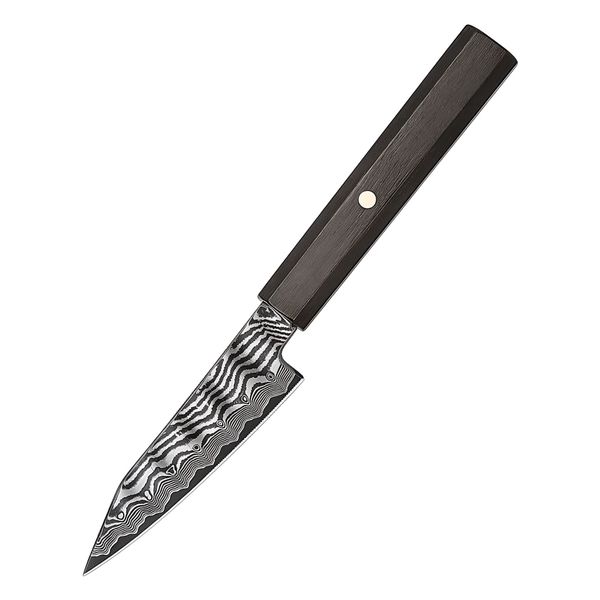
- NAMI: blade of around 10.5 cm with a hammered surface and octagonal ebony handle.
For slightly bigger tasks on the board, a utility knife of 12 to 14 cm is the ideal addition.
Sharpening and care
The small paring knife is also best sharpened on a whetstone at about 15 degrees per side. Because the blade is short, it's quick. After peeling fruit, give it a quick rinse (fruit acid attacks the steel otherwise) and dry it straight away. With us you get a 30-day money-back guarantee and a 5-year warranty on every knife.
We don't award our own test seals, and we don't call ourselves a "test winner". You're the best judge of whether a paring knife suits you: with our 30-day money-back guarantee you can try it out at your leisure in your own kitchen.
Frequently asked questions
How long should a paring knife be?
Between 8 and 11 cm. Our paring knives have a blade of around 10 cm: enough for apples and potatoes, short enough for safe work in the hand.
What's the difference between a paring knife and a peeler?
A peeler only peels. With a paring knife you can also core, clean, cut small pieces and remove potato eyes.
Is a damascus paring knife worth it?
Yes, if you use it often. The hard steel stays sharp for a long time, and a sharp paring knife is safer because it doesn't slip.
How do I sharpen a paring knife?
On a whetstone at about 15 degrees per side, just like a large knife. With the short blade it's even quicker.
Paring knife with a curved or straight blade?
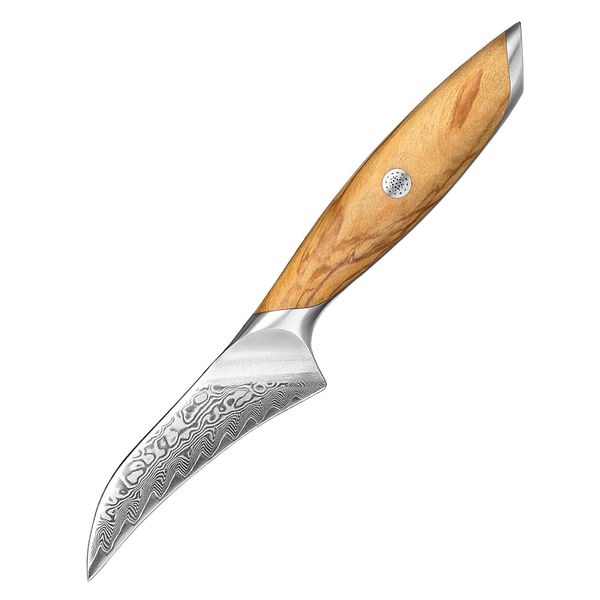
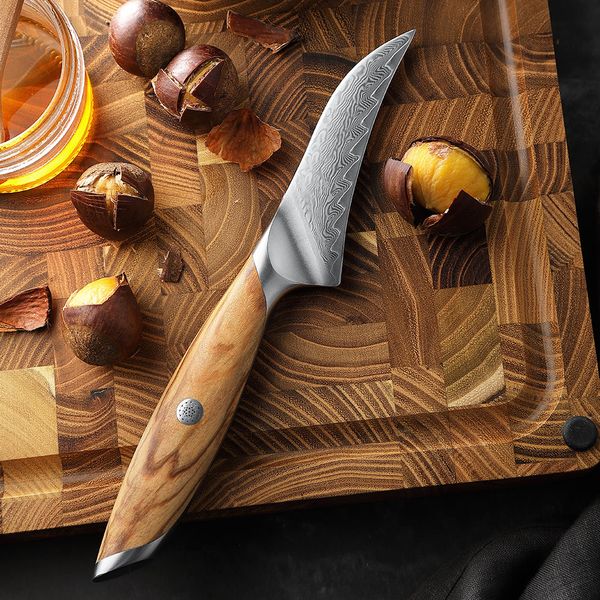
Paring knives with a curved blade (tourné knives) specialise in rounded shapes. For everyday use a straight blade is more versatile: you can peel, clean and cut everything with it. Our paring knives have a straight blade.