Damascus santoku knives
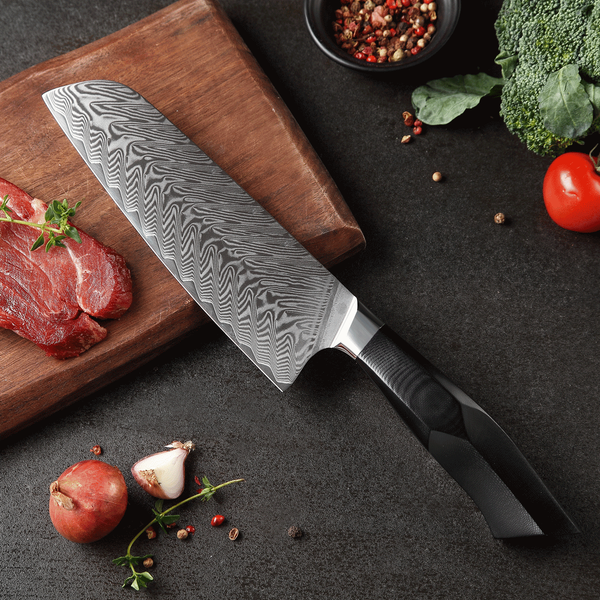
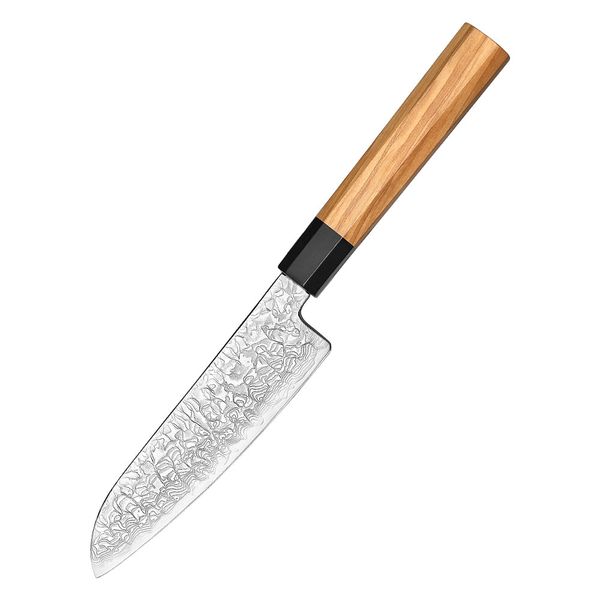
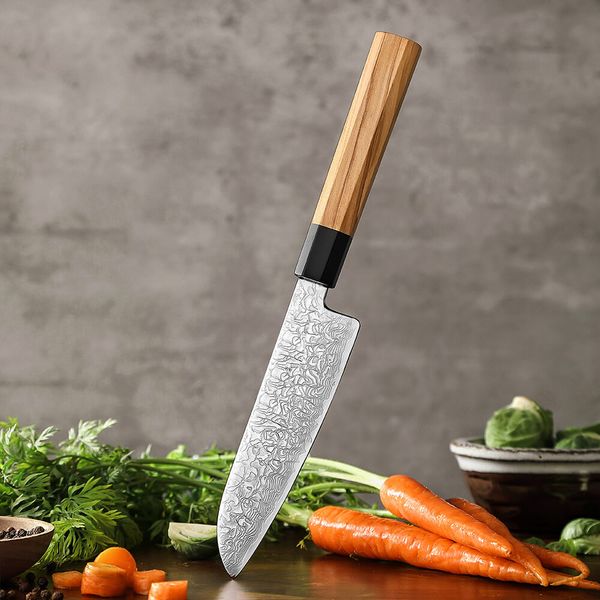
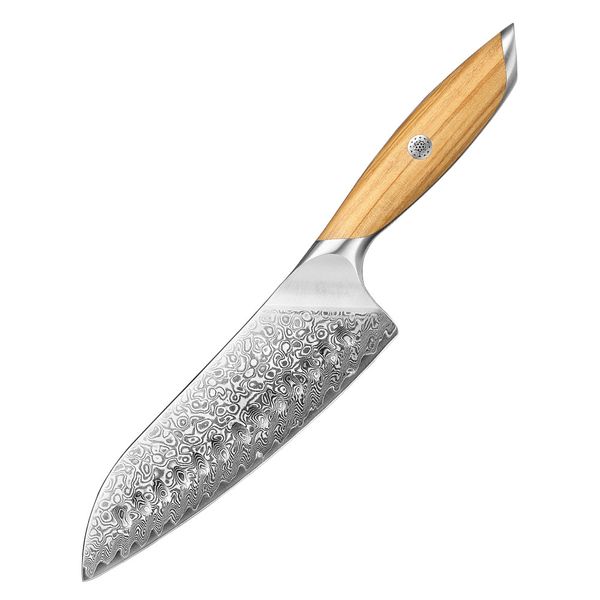
The santoku knife is the all-rounder among kitchen knives: with its wide blade you slice, dice and chop vegetables, meat and fish, and the flat edge makes straight, clean cuts easy. Here you'll find our damascus steel santokus, from the handy 14 cm knife to the classic santoku with a blade of around 18.5 cm.
8 products
Guide
Damascus santoku knives
What is a santoku knife?
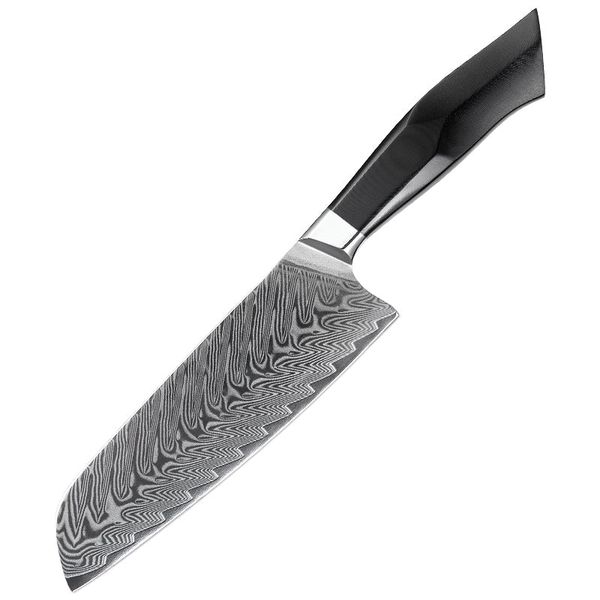
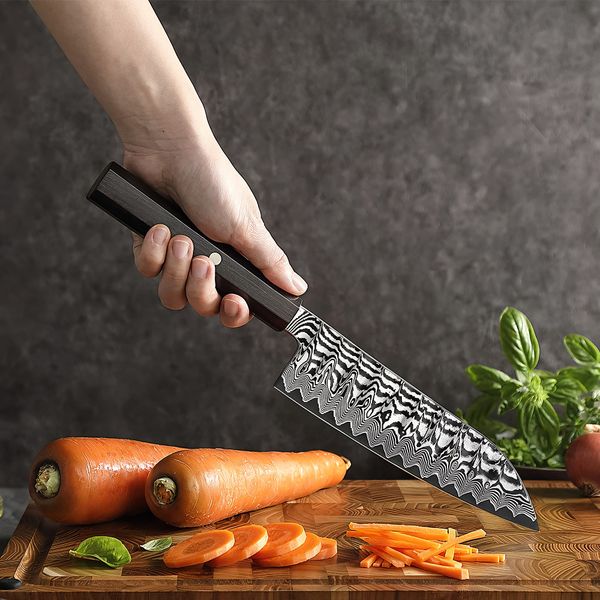
"Santoku" roughly means "three virtues": the knife cuts meat, fish and vegetables equally well. The shape comes from Japan and is now at home in almost every kitchen. Typical features are the wide, fairly tall blade, the almost straight edge and the spine that slopes gently down to the tip. Our santoku knives are modelled on this design and have a damascus steel blade.
What is a santoku knife used for?
For most cooking tasks, a santoku is the knife you reach for first:
- Vegetables: dicing onions, slicing carrots, cutting peppers into strips: the flat edge has full contact with the board on every cut.
- Herbs: finely chopping parsley, chives or basil without crushing them.
- Meat and fish: chicken breast in strips, beef for the pan, salmon in portions, all boneless.
- From board to pan: with the wide blade you simply gather up what you've cut and carry it over.
The santoku is less suited to bones, frozen food and hard squash skins. For bread, use a serrated bread knife.
Santoku vs chef's knife: what's the difference?
Both are main knives, but they work differently. The santoku is usually a little shorter and has a flatter edge. You mainly cut with a forward push or a straight downward cut. The chef's knife has a longer, more curved edge and suits the rocking cut, where the tip stays on the board.
If you like cutting vegetables quickly and prefer a handy knife, the santoku is the right choice. If you rock-chop large quantities and are used to long blades, you'll be happy with the chef's knife. For cutting only vegetables, there's also the nakiri knife with a completely straight edge and the bunka knife with an angled tip.
What to look for when buying
- Blade length: 17 to 19 cm is the classic for almost every task. A small santoku of about 14 cm is nimbler and suits small hands or small boards.
- Hardness: our santokus are 60 to 62 HRC, so the edge stays sharp for a long time.
- Blade height: a tall blade leaves more room for your knuckles above the board.
- Weight: light knives are nimble; heavier ones cut through firm food with less effort. Choose what feels right to you.
- Handle: wood feels warm and needs a little oil now and then; G10 and plastic are especially low-maintenance.
Our santoku knives at a glance
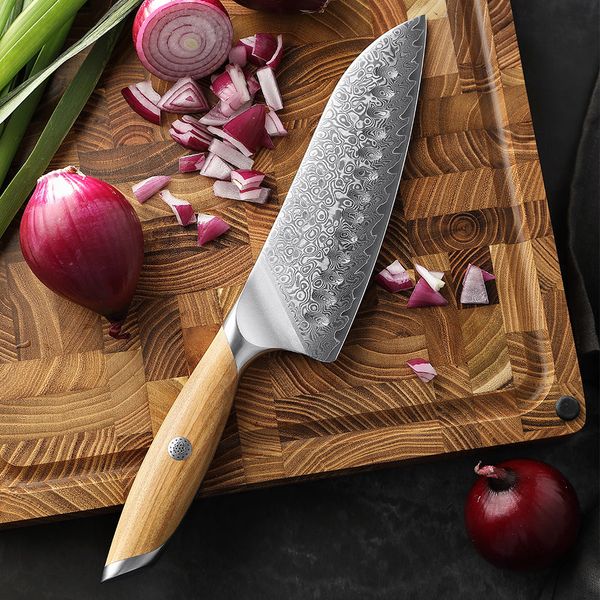
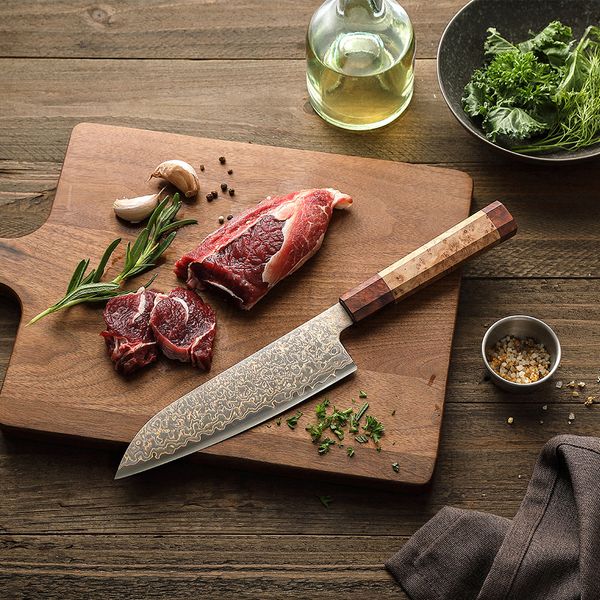
- KAYA: 67 layers around a hard steel core, olive wood and buffalo horn handle, also as a small 14 cm santoku.
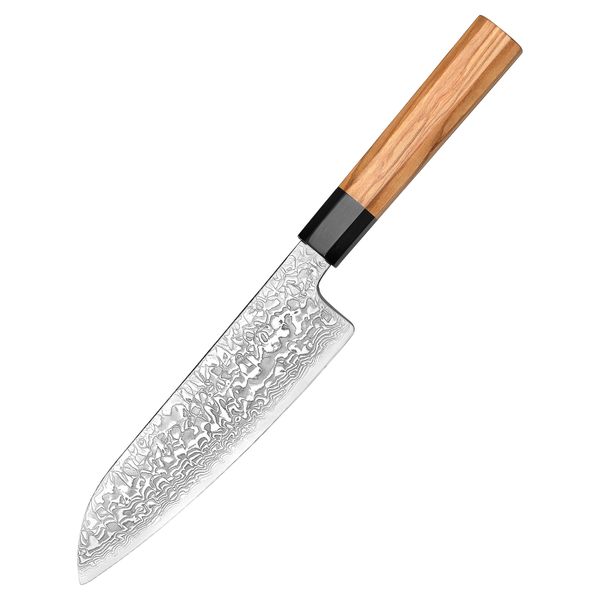
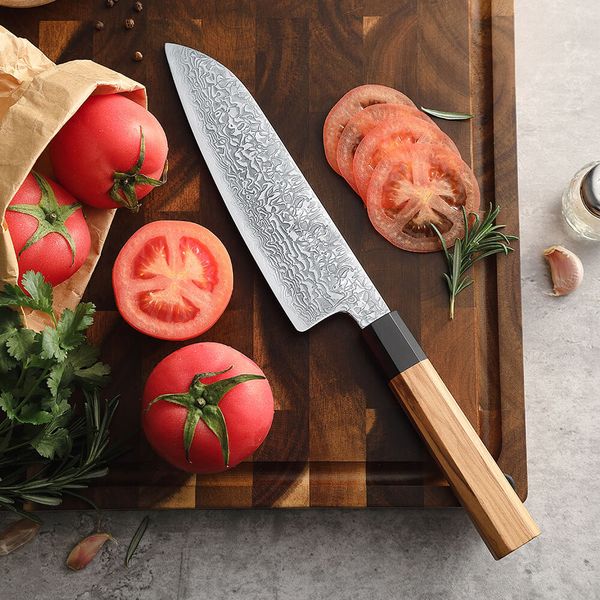
- ORIBU: 73-layer damascus powder steel, olive wood handle and an especially tall blade.
- DAIKI: 67-layer AUS-10 damascus steel with a walnut handle.
- BLACK: black G10 handle, stainless outer layers, low-maintenance and robust.
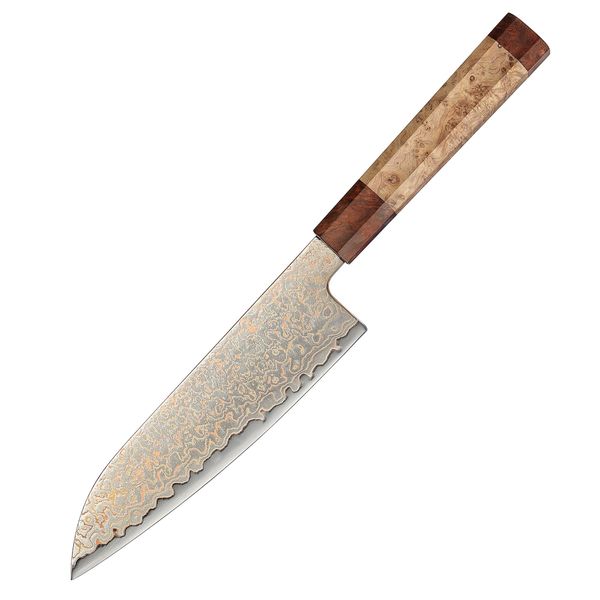
- HIIRO: blade of steel, copper and brass with a sycamore maple handle, a real eye-catcher.
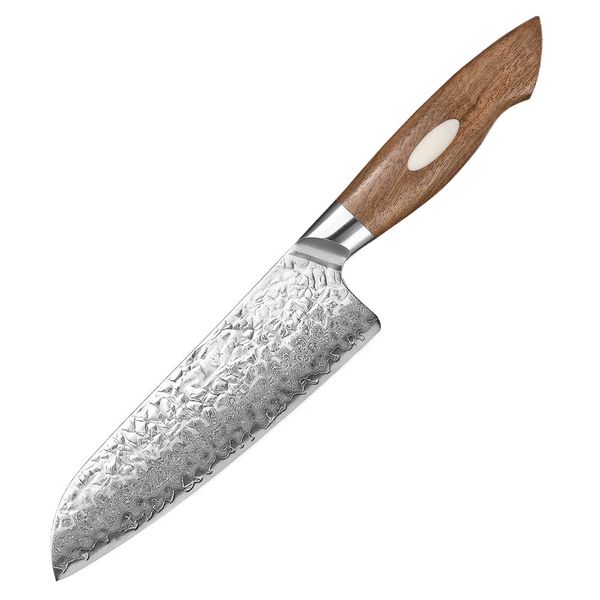
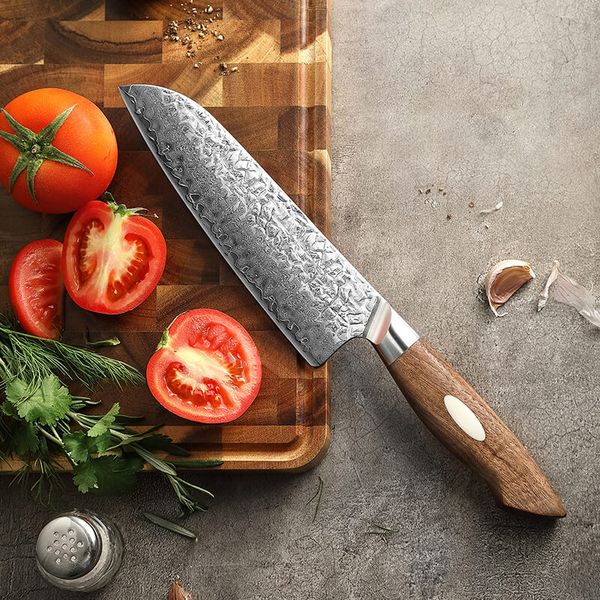
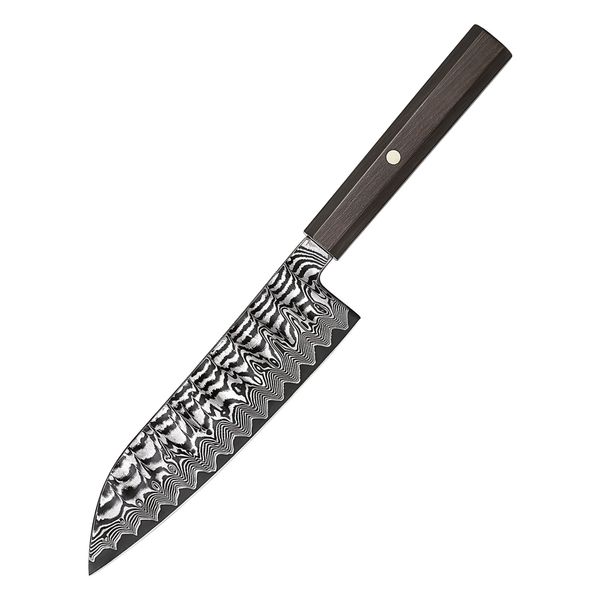
- NAMI: hammered, wavy surface and an octagonal ebony handle.
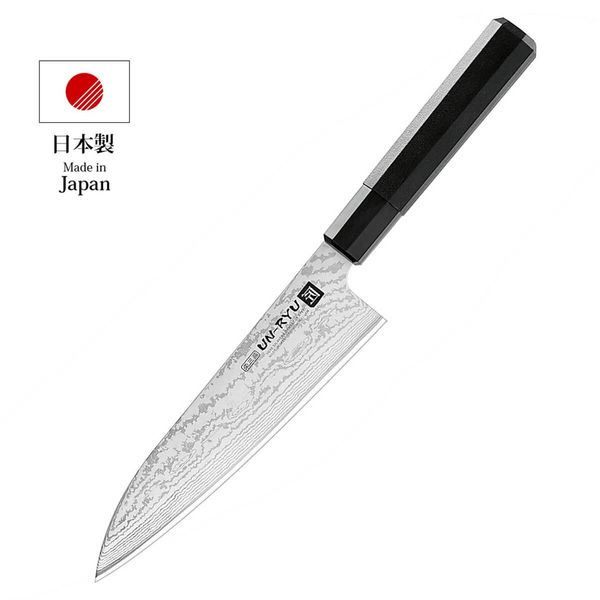
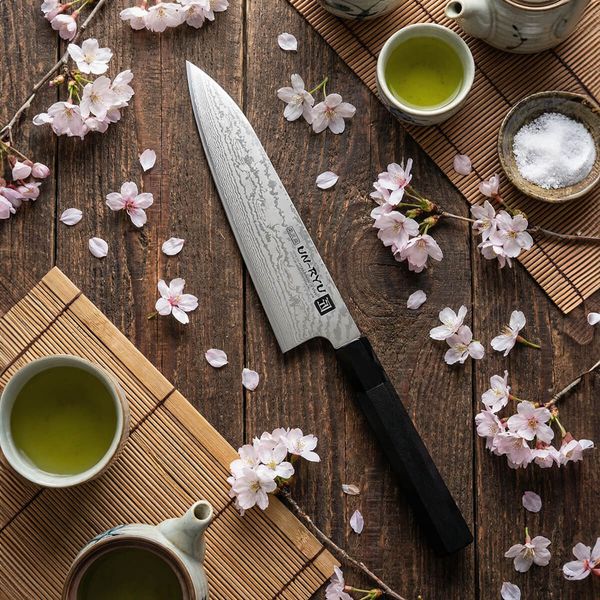
- UN-RYU: a santoku by the maker Shimomura from Tsubame-Sanjo in Japan, with a VG10 core and a maintenance-free handle.
Sharpening a santoku knife and keeping it sharp
It's best to sharpen your santoku on a whetstone, for example with 1000 grit for sharpening and 3000 or 6000 grit for finishing. Hold the blade at an angle of about 15 degrees and sharpen both sides evenly. In between, a ceramic honing rod keeps the edge in shape. To keep it sharp for longer: cut on wood or plastic, wash by hand, dry straight away and don't leave it loose in a drawer. With us you get a 30-day money-back guarantee and a 5-year warranty on every knife.
The best santoku knife for you
The best santoku knife is the one that suits your hand and your kitchen. For value for money, what counts most is how long the edge lasts and how easily the knife can be resharpened. We don't award our own test seals, and we don't call ourselves a "test winner". You're the best judge of whether a santoku knife suits you: with our 30-day money-back guarantee you can try it out at your leisure in your own kitchen.
Frequently asked questions
What is a santoku knife suitable for?
For almost everything you cut when cooking: vegetables, herbs, meat and fish without bones. It's not suitable for bones, frozen food or bread.
What does santoku mean?
Santoku roughly means "three virtues": the knife cuts meat, fish and vegetables equally well.
Which is better, santoku or chef's knife?
Neither is better in principle. The santoku is handier and ideal for straight, pushing cuts. The chef's knife is longer and suits the rocking cut. Many home cooks get along very well with just a santoku.
What blade length should a santoku knife have?
For most kitchens 17 to 19 cm is ideal. A small santoku of about 14 cm is nimbler and makes a good addition or a good start.
Is a santoku knife suitable for beginners?
Yes. The straight edge and wide blade make it easy to guide, and your knuckles have plenty of clearance from the board.
How do I sharpen a santoku knife?
Ideally on a whetstone at about 15 degrees per side, first with 1000 grit, then with a fine grit for finishing. A ceramic honing rod keeps the edge sharp in between.
What are the dimples on a santoku knife for?
Dimples (a granton edge) are small hollows in the blade. They're meant to stop slices of potato or cucumber sticking to the blade. A hammered surface like NAMI or DAIKI has a similar effect.
Can I sharpen, hone or strop a santoku knife myself?
Yes. Sharpening yourself works best on a whetstone at about 15 degrees. Honing on a ceramic rod or stropping on leather realigns the edge in between: it doesn't replace sharpening, but extends the time until the next sharpening.