
Damascus fillet knives
With a fillet knife you lift fish fillets cleanly off the bone, remove the skin and trim meat without waste. Our fillet knives have a narrow, pointed damascus steel blade that follows bones and contours precisely.
2 products
Guide
Damascus fillet knives
What is a fillet knife?
A fillet knife has a long, narrow, thin blade with a fine tip. It lets you get close to bones and remove skin, sinew and silverskin cleanly. A wide chef's knife would be too stiff and too coarse for this: the fillet knife is the specialist for long, precise cuts.
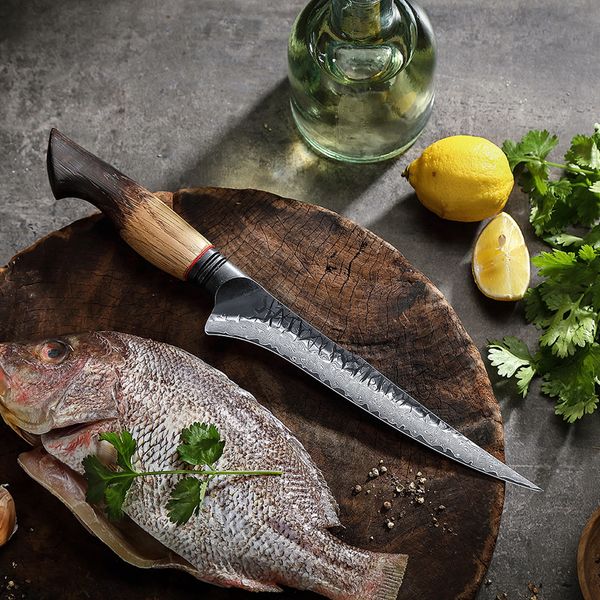
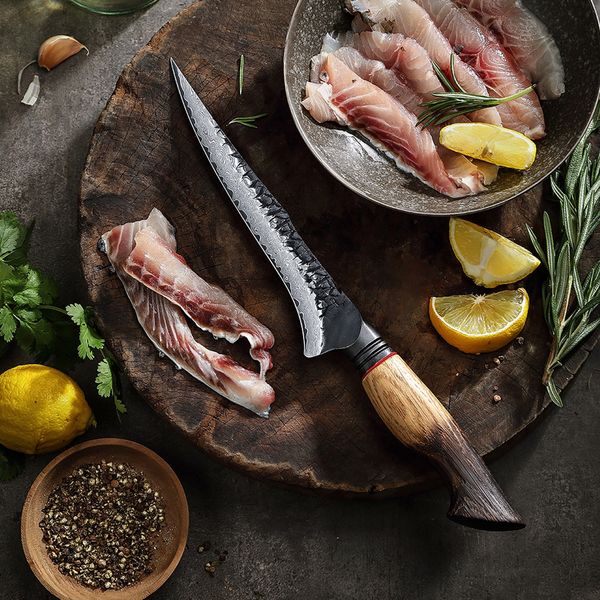
Fillet knife for fish
Whether it's a river trout, a sea bream from the market or a whole salmon: here's how to fillet a round fish in a few steps.
- Cut diagonally behind the head and gills down to the backbone.
- Turn the blade flat and guide it in long strokes along the backbone to the tail.
- Turn the fish over and repeat on the other side.
- To skin it, lay the fillet skin side down, hold the tail end firmly and push the blade flat forward between skin and flesh.
Fillet knife for anglers
For anglers, a sharp fillet knife at home matters as much as the rod by the water: the cleaner the cut, the more fillet you keep.
Fillet knife for meat and poultry
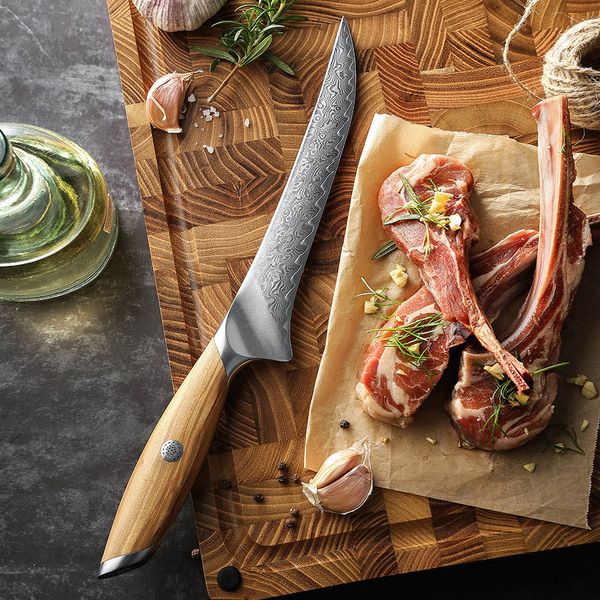
The fillet knife is great with meat too: use it to remove sinew and silverskin from beef fillet, take chicken breasts and legs off the bone or trim fat from pork tenderloin and rack of lamb. Thanks to the narrow blade, hardly any meat is left behind.
What to look for when buying
- Blade length: around 14 to 15 cm is ideal for trout, mackerel, sea bream and poultry. For salmon and larger cuts of meat, go for about 18 to 20 cm.
- Narrow blade: the narrower the blade, the better it follows the bones.
- Sharp tip: it lets you place the first cut exactly in the right spot.
- Secure grip: your hands are often wet when filleting. Look for a handle that doesn't slip.
- Hard steel: our fillet knives are 62 HRC. The edge holds even when you prepare several fish in a row.
Our fillet knives at a glance
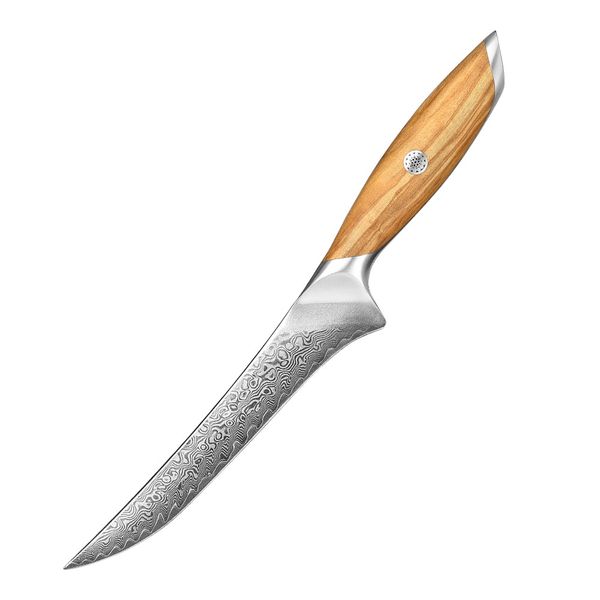
- ORIBU: 18.7 cm blade of 73-layer damascus powder steel with an olive wood handle, for salmon, large fillets and meat.
Sharpening and care
Sharpen your fillet knife on a whetstone at around 15 degrees per side so the thin edge stays fine. After filleting, rinse it by hand straight away in warm water (fish residue and salt attack steel and handle otherwise) and dry it thoroughly. With us you get a 30-day money-back guarantee and a 5-year warranty on every knife. For roasts and ham a carving knife is the better choice, and for cutting on the plate a steak knife.
Professional fillet knife for fish
A professional fillet knife for fish has a thin, sharp blade that glides cleanly along the bone and a handle that stays secure even with wet hands. The best fillet knife is the one that gets the most fillet off the fish. Our high-quality fillet knife from ORIBU has an 18.7 cm blade of damascus powder steel at 62 HRC. We don't award our own test seals, and we don't call ourselves a "test winner". You're the best judge of whether a fillet knife suits you: with our 30-day money-back guarantee you can try it out at your leisure in your own kitchen.
Frequently asked questions
What length should a fillet knife for fish be?
For trout, mackerel or sea bream, 14 to 15 cm is ideal. For salmon and other large fish a blade of around 18 to 20 cm is more comfortable, because you can lift the fillet in one stroke.
Can I also cut meat with a fillet knife?
Yes. It's excellent for trimming, i.e. removing sinew, silverskin and fat, and for boning poultry.
What's the difference between a fillet knife and a boning knife?
Both have a narrow blade. The boning knife is usually shorter and stiffer and made for separating meat from the bone. The fillet knife is longer and thinner, designed for long, flat cuts on fish and meat.
How do I sharpen a fillet knife?
On a whetstone at around 15 degrees per side, first with a medium grit, then a fine one. A ceramic honing rod keeps the edge sharp in between.
Can the fillet knife go in the dishwasher?
Please don't. Rinse it by hand straight after filleting and dry it. That way the edge and handle stay beautiful for a long time.