Good kitchen knives: how to recognise them
What makes a good kitchen knife, which details on the spec sheet really matter and what you can expect in each price range.
5 min read · 14 November 2026
"Good kitchen knives" – under this term you'll find knives for €15 and for €500. Price alone tells you little. What matters is how sharp a knife is, how long it stays sharp and whether it sits well in your hand.
Here you will learn how to recognise a good kitchen knife, which details on the spec sheet really count and what you can expect in which price range.
The five features of a good kitchen knife
1. The steel and its hardness
Hardness is given in HRC (Rockwell). Soft knives around 54–56 HRC are easy to resharpen but go blunt quickly. Good kitchen knives are between 58 and 62 HRC: they hold their edge considerably longer and are still easy to sharpen on a whetstone.
Even harder blades are possible but more brittle – they cope less well with bones and levering. You can find out more about the construction of a Damascus blade with a hard core under What is Damascus steel?.
2. The edge
How sharp a knife is depends mainly on the edge angle. Many classic kitchen knives are sharpened at 20 to 25 degrees per side, Japanese-style knives often at 15 degrees or less. The smaller the angle, the more easily the blade glides through food. You will find all the values in our sharpening angle chart.
3. The handle
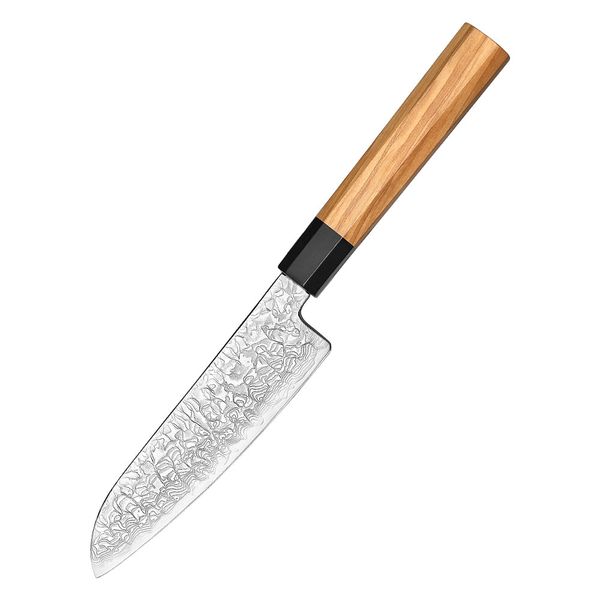
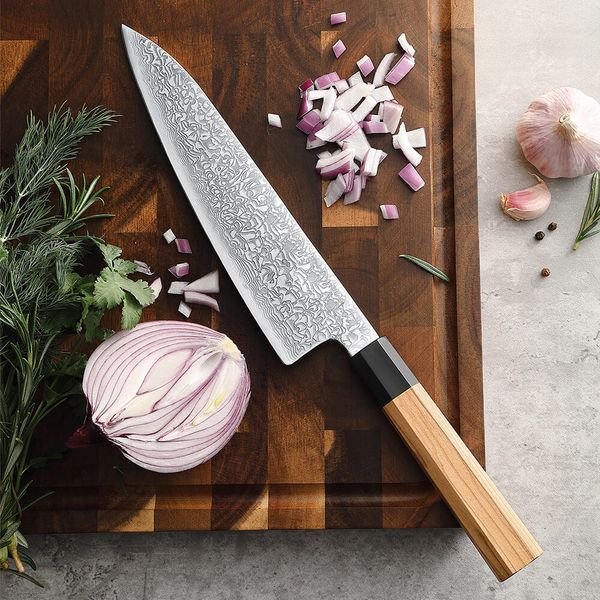
A knife can be as sharp as you like – if the handle digs in or slips, you won't enjoy using it. Make sure the handle suits the size of your hand, has no sharp edges and feels secure even with wet hands. Wood feels warm; synthetics such as G10 are particularly hard-wearing.
4. Balance and weight
Balance the knife on one finger where the handle meets the blade. If it doesn't tip heavily forwards or backwards, it's balanced. Whether you prefer a light or a heavy knife is a matter of taste: light knives are agile, heavy ones cut with more of their own weight.
5. The finish
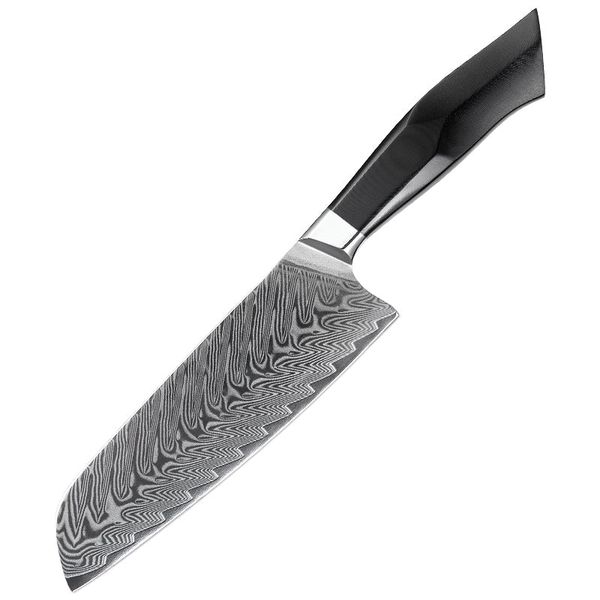
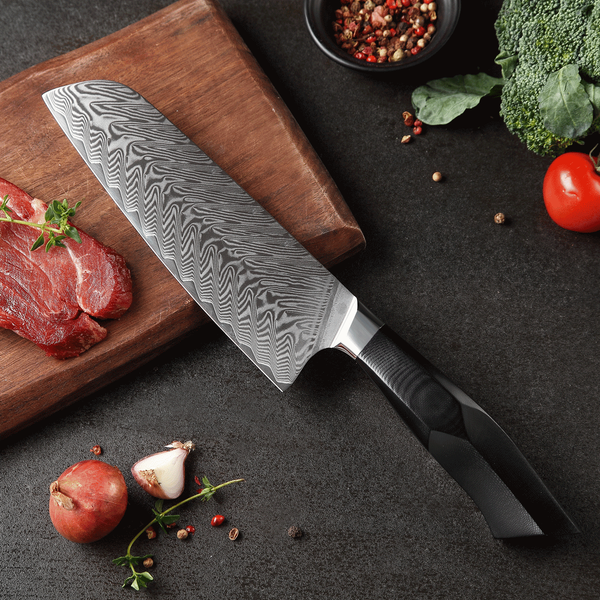
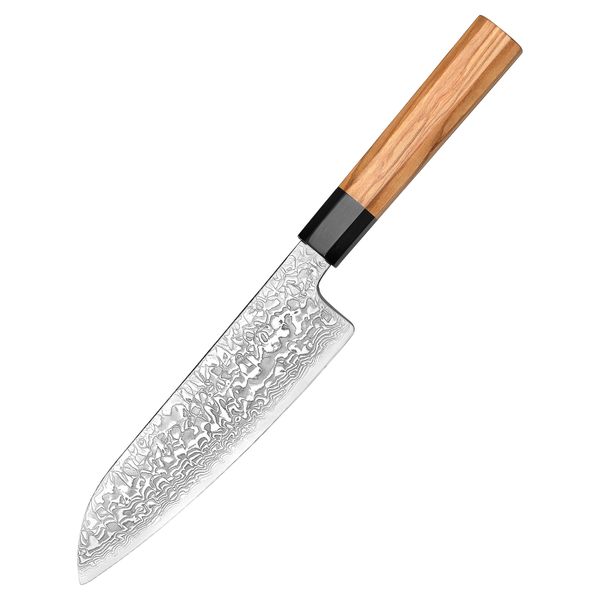
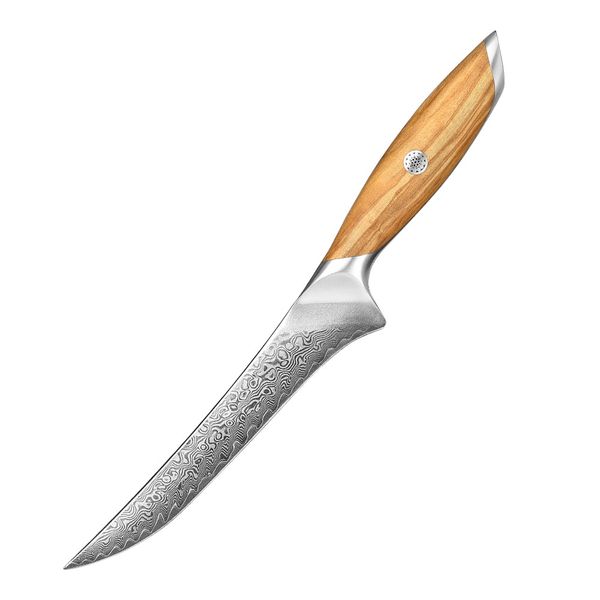
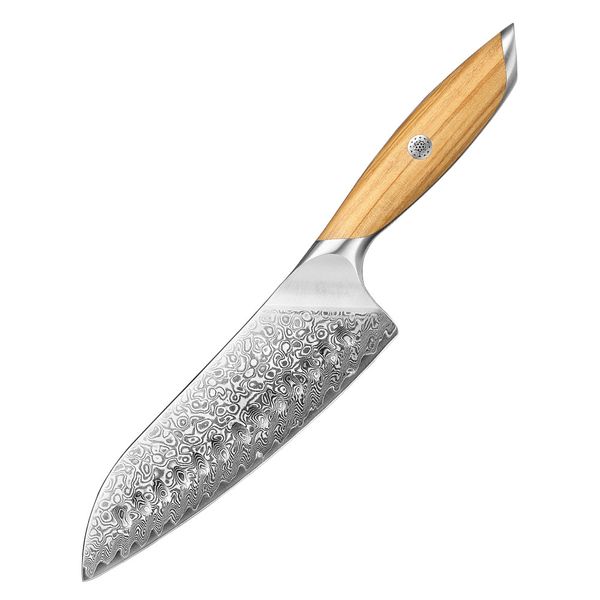
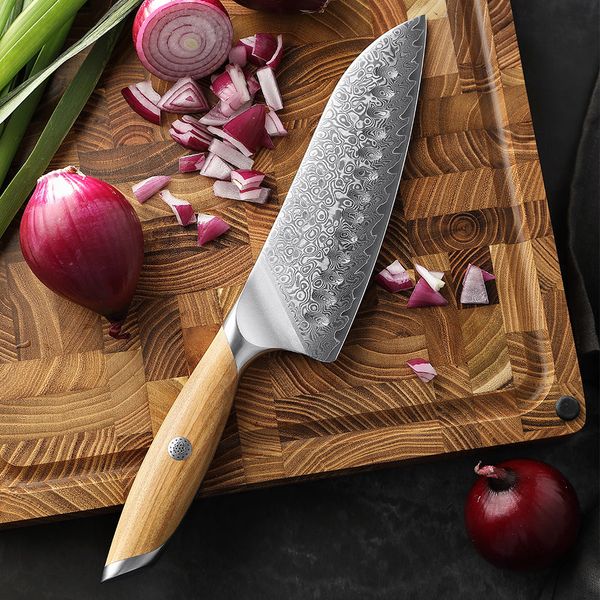
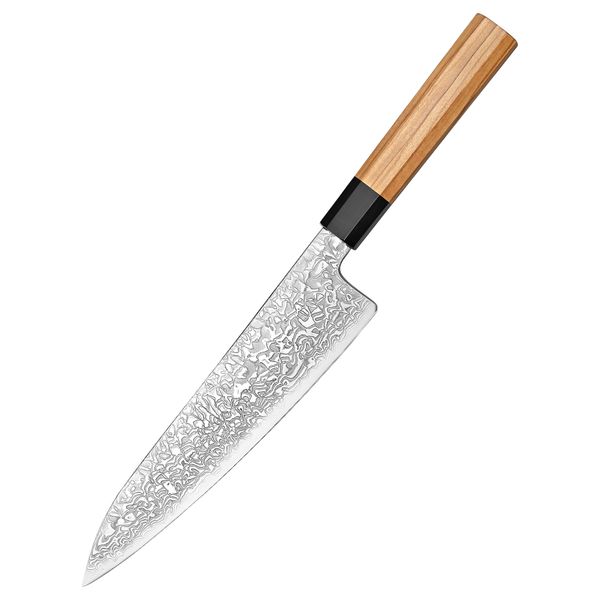
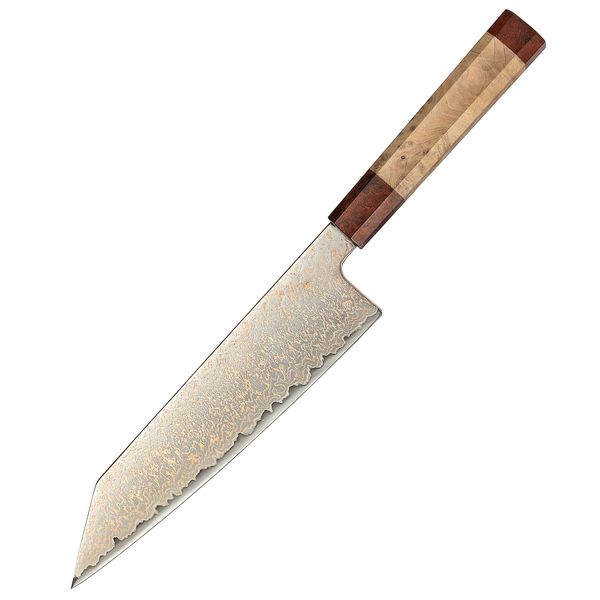
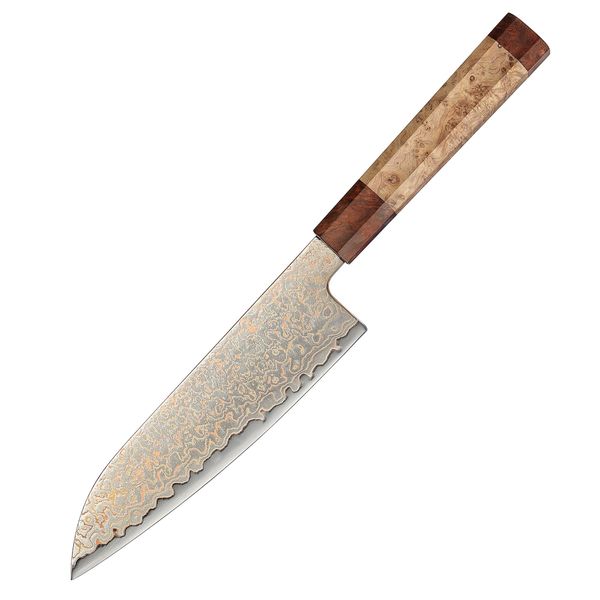
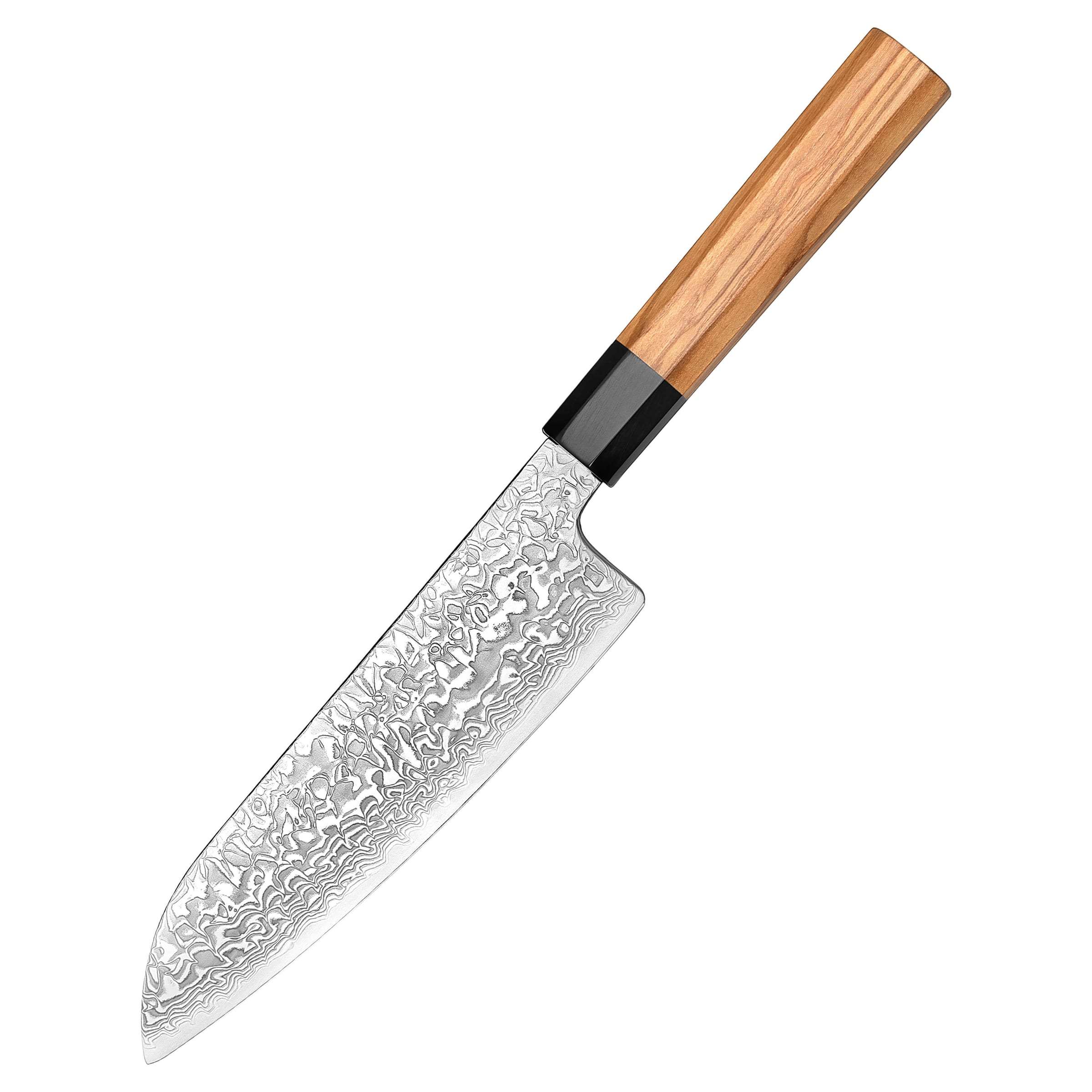
Check that handle and blade are joined without gaps, the spine is deburred and the edge runs evenly. On Damascus knives, the pattern should run cleanly through the blade – it comes from joining several layers of steel, not from printing.
| Feature | Good | Watch out for |
|---|---|---|
| Hardness | 58–62 HRC | below 56 HRC goes blunt quickly |
| Edge angle | 15–20° per side | angles that are too obtuse squash vegetables |
| Blade length (large knife) | 18–21 cm | longer only if you have plenty of space |
| Handle | suits the hand, no edges | hold it first if possible |
| Care | hand wash | the dishwasher damages any good knife |
How much do good kitchen knives cost?
Roughly speaking, there are three price ranges. The boundaries are fluid, but they help you get your bearings:
- Up to about €50: solid everyday knives, usually made of softer steel. They go blunt faster and need resharpening more often.
- About €50 to €150: this is where good kitchen knives begin, with harder steel, a fine edge and careful finishing.
- From about €150: special steels, elaborate Damascus blades, fine handle materials and hand finishing.
An expensive knife that ends up neglected in the dishwasher soon cuts worse than a cheap one that is sharpened regularly. Care is at least as important as the purchase price.
Which knives do you really need?
Many people buy a big set and end up using two knives. To start with, you need:
1. a large knife for the board – santoku or chef's knife, 2. a small knife for work in the hand – utility or paring knife, 3. a serrated bread knife, if you often cut crusty bread.
Which knife shape is made for what is explained in our overview Types of kitchen knives: which knife for what.
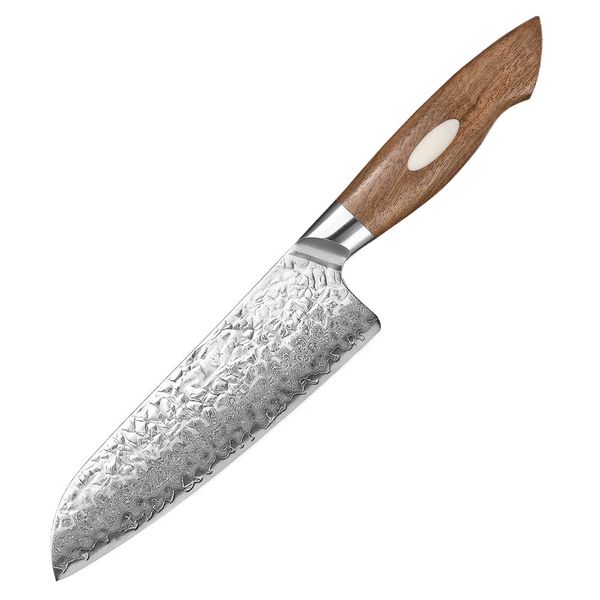
In the shop · DAIKI
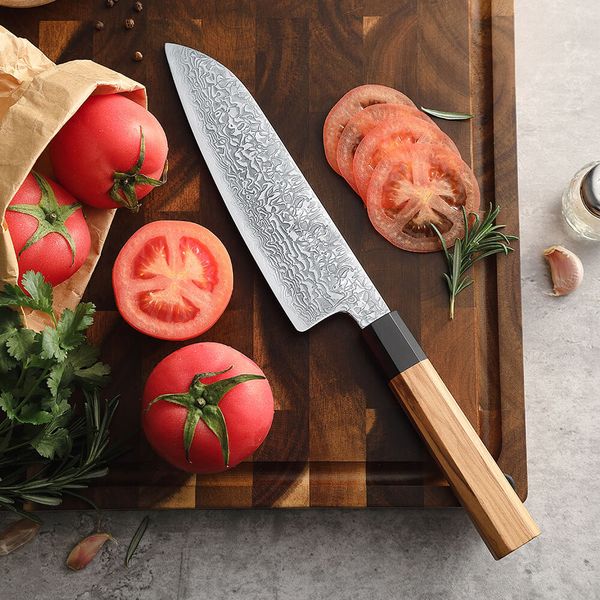
Santoku knife
€139,00
Keeping good kitchen knives sharp for longer
The four basic rules
Hand wash only and dry immediately. Dishwashers damage both blade and handle.
Wooden or plastic board instead of glass, stone or metal – hard surfaces blunt any edge in no time.
Sharpen regularly on a whetstone. The guide How to sharpen a knife shows you how.
Store safely on a magnetic strip or in a block, not loose in a drawer.
Frequently asked questions
How do I recognise a good kitchen knife?
By hard steel around 58–62 HRC, a fine edge of 15–20 degrees per side, a handle that sits well in your hand and clean finishing without gaps.
How much should a good kitchen knife cost?
Good kitchen knives start at around €50. Between €80 and €200 you get very high-quality knives; above that you mainly pay for special steels, Damascus and fine handles.
Are expensive knives really better?
Up to a point, yes: harder steel and a finer edge make a noticeable difference. Beyond that, you're paying more for looks and materials. What matters is that the knife is looked after.
Which kitchen knife is the most important?
A large all-purpose knife for the board – santoku or chef's knife. It handles around 80 per cent of all cutting.
Have you done a kitchen knife test?
We have summarised the most important criteria in our kitchen knife test – without test seals, but with everything you should look out for when buying.
Matching in the shop