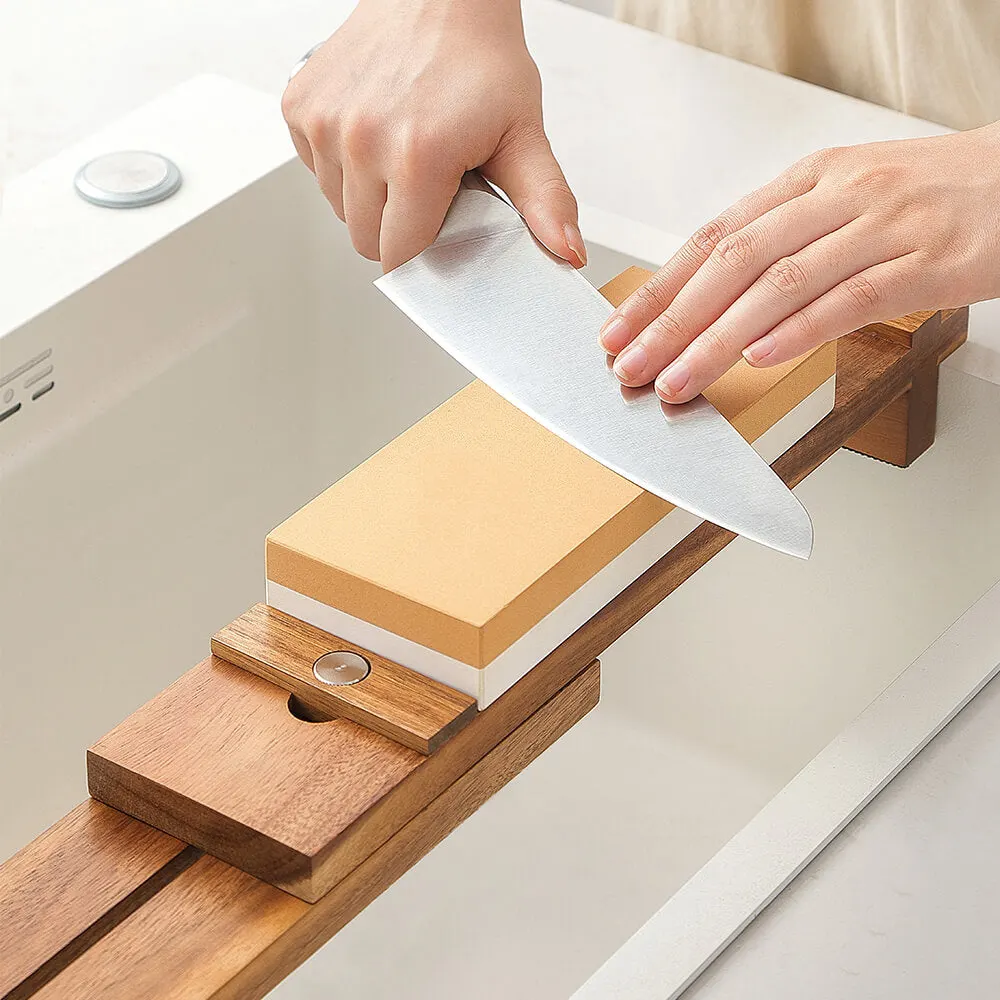
Knife sharpening angle: chart for all kitchen knives
15 or 20 degrees? The sharpening angle chart for all common kitchen knives – with a simple method for finding the angle without any tools.
4 min read · 11 November 2026
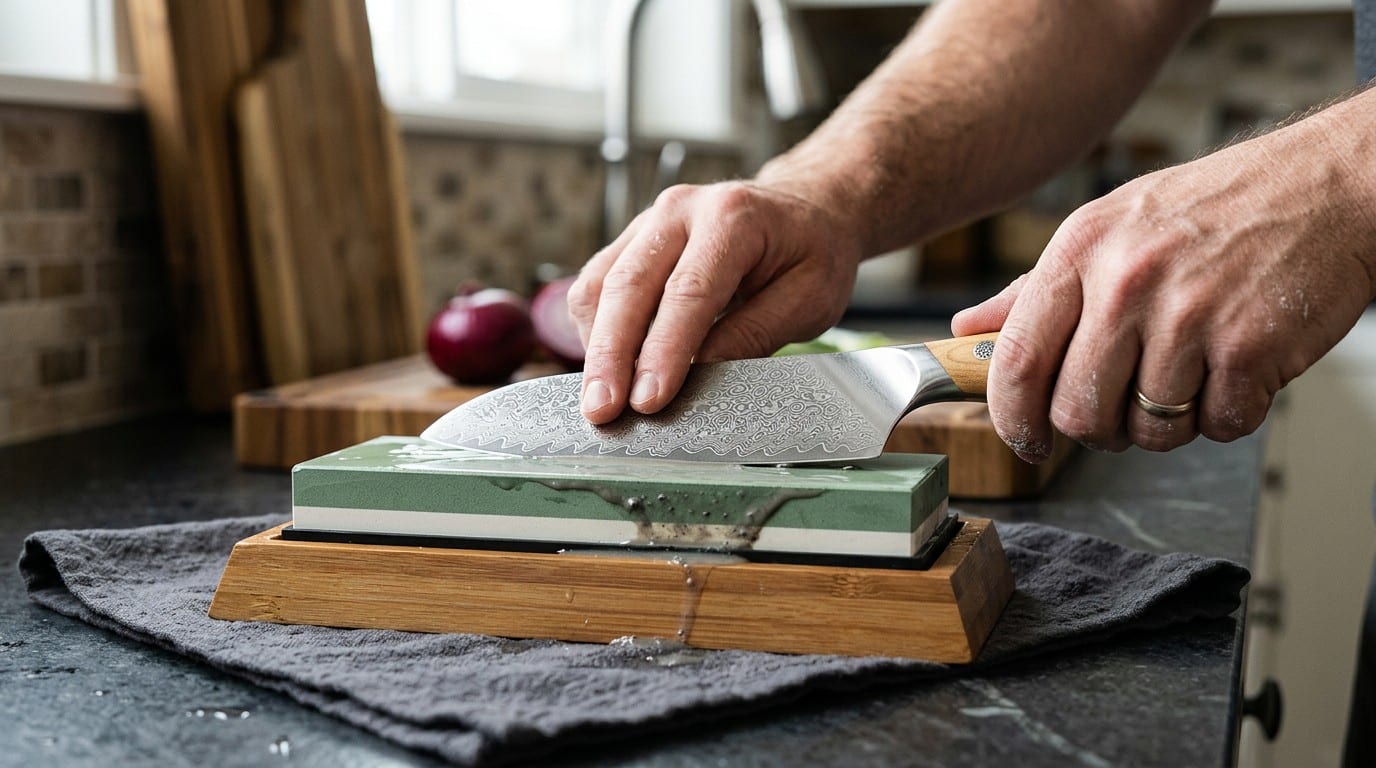
The sharpening angle decides how sharp a knife gets and how long it stays sharp. A low angle cuts more finely, a steeper one is more durable. Which one is right depends on the knife and the steel.
Here you will find a sharpening angle chart for all common kitchen knives, a simple way to hit the angle without tools, and the answer to the most common question: 15 or 20 degrees?
What is the sharpening angle?
The sharpening angle is the angle between the blade and the whetstone. It almost always means the angle per side. A knife sharpened at 15° on both sides therefore has a total edge angle of 30°.
With manufacturers' specifications, check which figure is meant: "15°" usually means one side, "30°" the total angle.
Sharpening angle chart
| Knife | Angle per side | Note |
|---|---|---|
| Damascus knife with hard core (from 60 HRC) | approx. 15° | fine, long-lasting edge |
| Santoku, nakiri, bunka | 12–15° | thin blades, hard steel |
| European chef's knife (56–58 HRC) | 18–20° | softer steel needs a steeper angle |
| Fillet knife | 15–18° | thin, flexible blade |
| Paring knife, utility knife | 15–20° | depending on steel hardness |
| Carving knife | 15–18° | for long, drawing cuts |
| Cleaver, meat cleaver | 25–30° | has to withstand impacts |
| Pocket and outdoor knives | 20–25° | robust edge |
| Single-bevel knives | 10–15°, one side only | back stays flat |
Guide values. What counts is the angle your knife was sharpened at in the factory.
15 or 20 degrees?
Both are right – for different knives.
15 degrees suits hard, thinly ground blades from around 60 HRC. The hard steel supports the fine edge, which glides through tomato skin and onions with little pressure. Our Damascus knives are sharpened to 15° per side in the factory.
20 degrees suits knives made of softer steel, as is common with many European chef's knives. At 15° their edge would roll over too quickly. The steeper angle makes them more stable.
The rule of thumb: stick to the angle the knife came with. Regrinding a 20° knife to 15° means removing a lot of steel and gives you an edge the steel can't hold.
How to find the angle
Nobody measures with a protractor at the stone. A height is more practical: how far does the spine need to be above the stone?
That depends on the height of the blade. For 15°, lift the spine by a little over a quarter of the blade height; for 20°, by a little over a third.
| Blade height | at 15° | at 20° |
|---|---|---|
| 20 mm (paring knife) | approx. 5 mm | approx. 7 mm |
| 30 mm (utility knife) | approx. 8 mm | approx. 10 mm |
| 45 mm (santoku, chef's knife) | approx. 12 mm | approx. 15 mm |
| 55 mm (nakiri) | approx. 14 mm | approx. 19 mm |
Hitting the angle and holding it
Marker trick: colour the edge bevel – the narrow, angled strip right at the edge – on both sides with a permanent marker.
Test stroke: place the knife on the wet stone at the estimated angle and draw it across two or three times.
Check: if the colour has gone across the whole width of the bevel, the angle is right. If it's only gone right at the edge, you're holding it too steep. If it's only gone at the top of the bevel, you're holding it too flat.
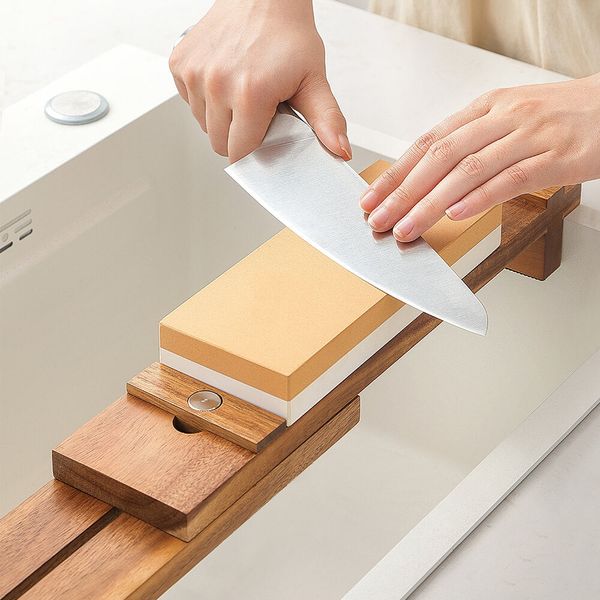
Holding: lock your wrist and move the knife from your shoulder and elbow. Two fingers of the other hand press lightly on the blade, close to the edge.
Stay consistent: better a degree off and consistent than exactly right and wobbly. An uneven bevel never gets properly sharp.
Special cases
- Serrated bread knives are usually sharpened on one side only. They are resharpened serration by serration with a sharpening rod, not on a flat stone.
- Single-bevel knives such as the yanagiba or deba are only sharpened on the bevelled side. The back is laid flat and only deburred.
- Asymmetric grinds – such as 70/30 – are found on some Japanese-style knives. Follow the factory bevel here.
Read on
You will find the complete step-by-step guide under How to sharpen a knife: kitchen knives and Damascus knives done right. Which grit the stone should have is explained in our whetstone guide.
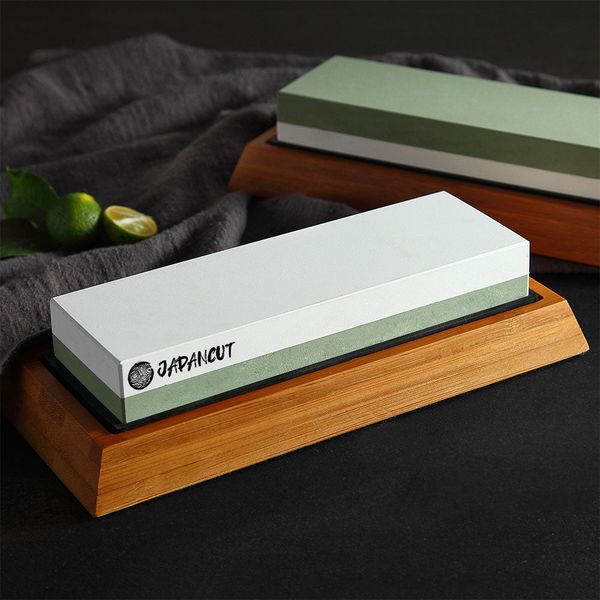
In the shop · MODOSU
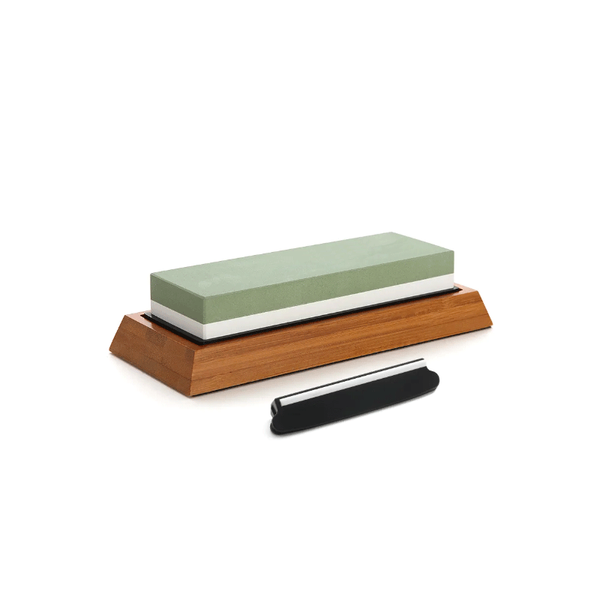
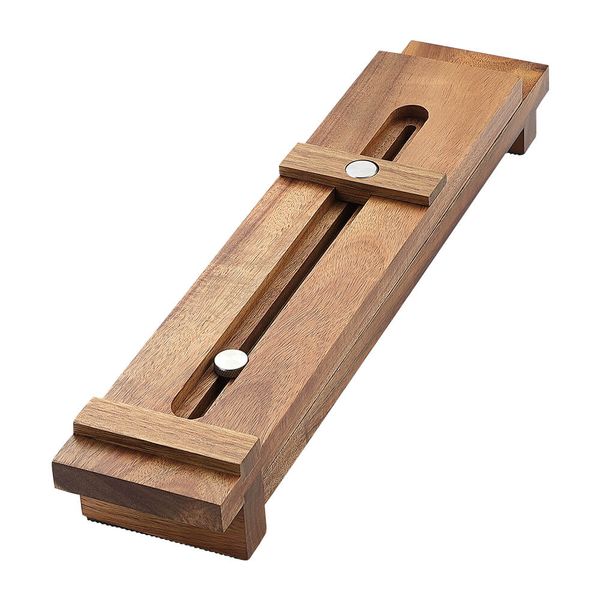
Whetstone
€55,00
Frequently asked questions
Which sharpening angle for kitchen knives?
For hard blades from around 60 HRC, about 15° per side; for European chef's knives made of softer steel, 18 to 20° per side.
Which sharpening angle for Damascus knives?
About 15° per side. Damascus knives have a hard core that holds this fine edge well.
What happens if the angle is too flat?
The edge becomes very fine but delicate: it can roll over or chip. You also grind the flat of the blade and scratch it.
What happens if the angle is too steep?
The knife doesn't get properly sharp. It cuts more like a wedge and needs more pressure.
Does 15° mean the angle per side or in total?
Usually per side. The total edge angle is then 30°.
Matching in the shop