How to sharpen a knife: kitchen knives and Damascus knives done right
A sharp knife is safer and more fun to use. We show you how to sharpen kitchen knives and Damascus knives on a whetstone, which edge angle is right and when honing is enough.
4 min read · 10 November 2026
Even the best knife goes blunt over time. That isn't a quality defect but completely normal: every cut on the board bends the wafer-thin edge over a tiny bit. The good news: with a whetstone you can get your knife back into shape yourself – and better than with any pull-through sharpener.
In this guide you will learn how to sharpen kitchen knives and Damascus knives properly, which edge angle you need and when a honing rod is enough.
Sharpening, stropping, honing – what's the difference?
- Sharpening: on the stone, a little material is removed and a new, sharp edge is formed. You need this when the knife is really blunt.
- Finishing: on the fine side of the stone, the edge is smoothed and the fine burr created during sharpening is removed. Only then does the knife become truly sharp.
- Honing: with a honing rod you straighten the bent edge without removing any significant material. This keeps a knife sharp between sharpenings but doesn't replace them.
The right edge angle
The edge angle is the angle between blade and stone. The flatter it is, the finer and sharper the edge – but also the more delicate.
- About 15 degrees per side: typical of thin, hard blades. This is how our Damascus knives are sharpened.
- About 20 degrees per side: typical of many classic European kitchen knives made of softer steel.
Finding 15 degrees without tools: lay the knife flat on the stone and lift the spine. With a blade height of about 5 cm, a gap of just over 1.3 cm between spine and stone corresponds to roughly 15 degrees. More important than the exact angle is keeping it constant while sharpening. An angle guide that clips onto the spine helps a lot at the beginning.
Which grit do you need?
The number on the whetstone tells you how fine it is. The higher, the finer.
- #200 to #600: coarse – only for chips or very worn knives.
- #1000: the standard grit for sharpening. This is where you form the new edge.
- #3000 to #8000: fine – for finishing and polishing. Afterwards the knife glides through tomato skin.
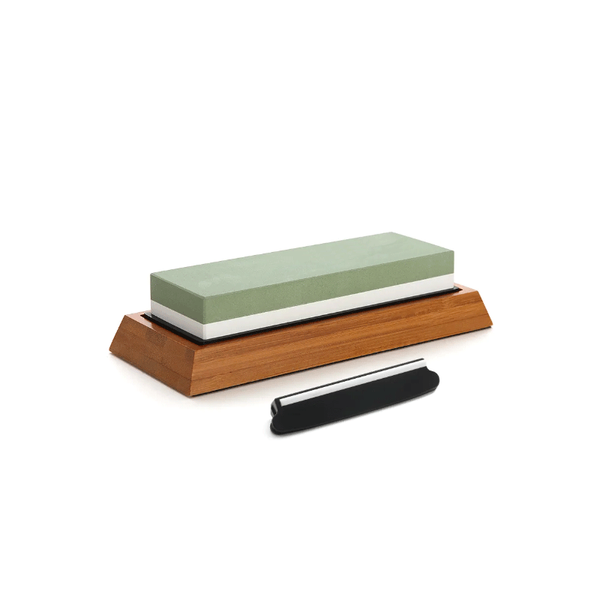
For most kitchens, a combination stone with #1000 on one side and #6000 on the other is enough.
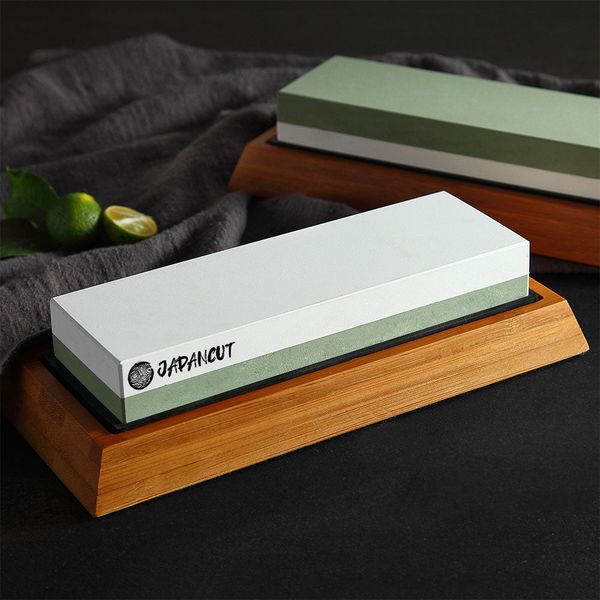
In the shop · MODOSU
Whetstone
€55,00
Step by step: sharpening a knife on a whetstone
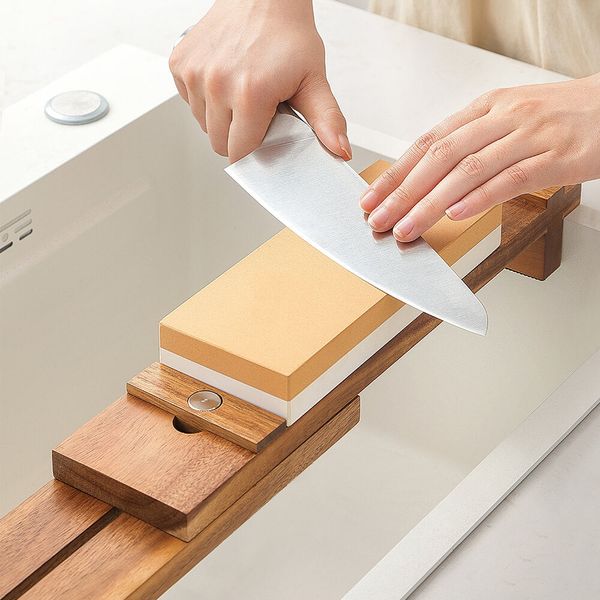
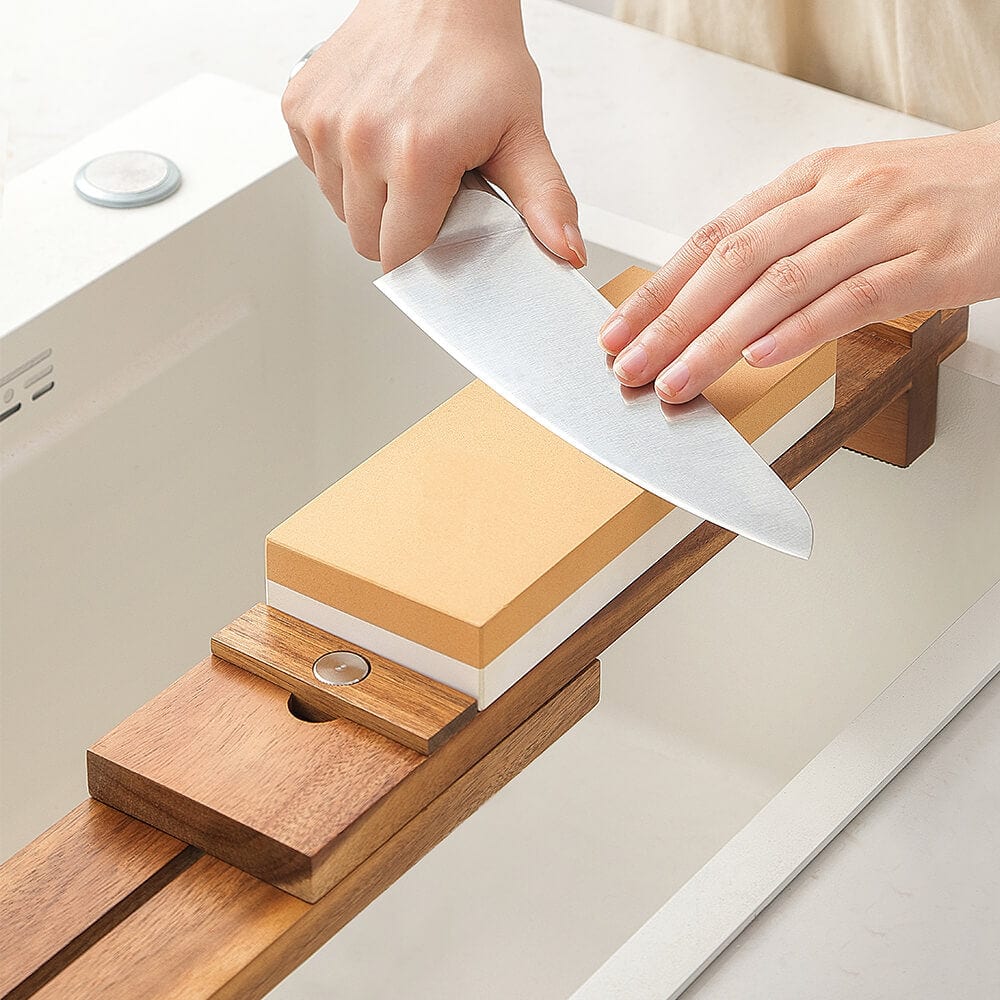
Soak the whetstone until no more air bubbles rise. Then place it on a non-slip mat or a holder over the sink – coarse side (#1000) up.
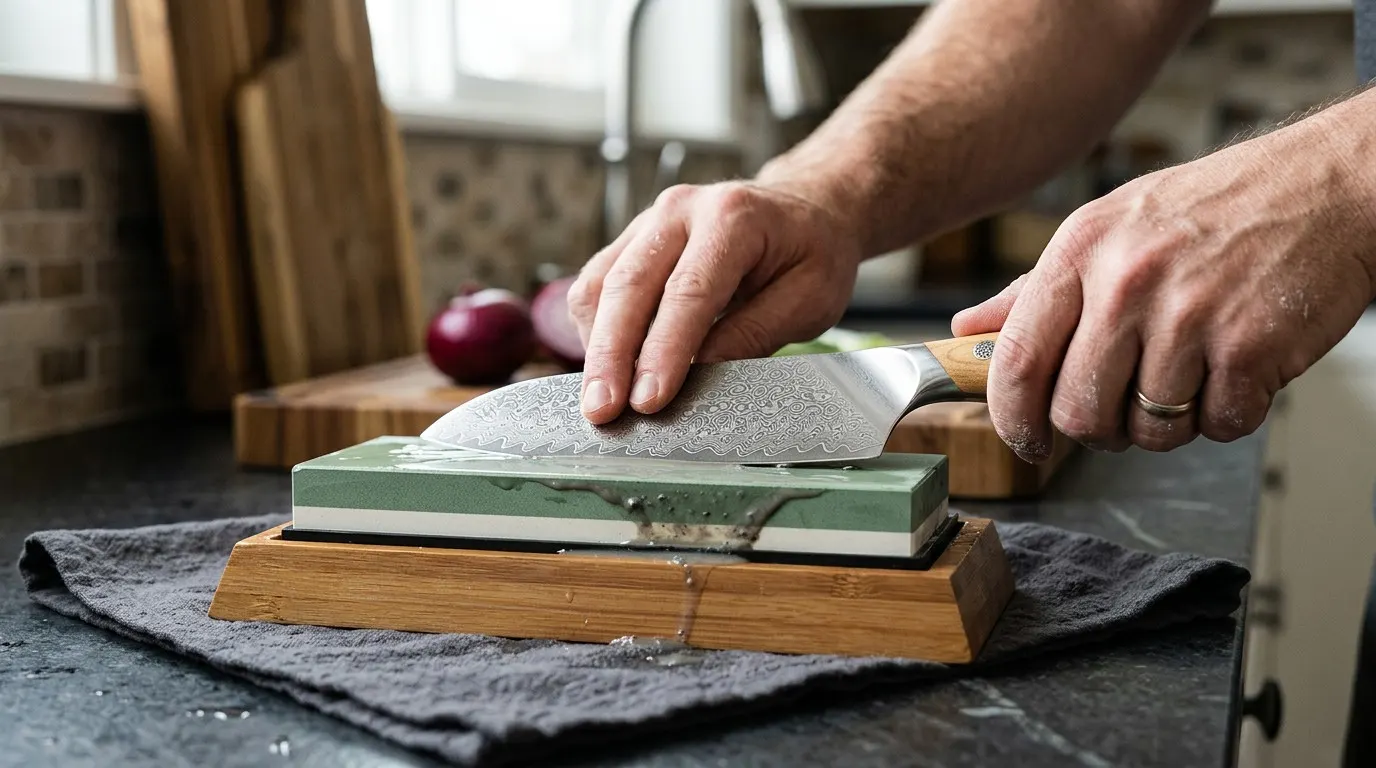
Lay the knife on the stone at an angle of about 15 degrees, edge pointing away from you. Press lightly on the blade with two or three fingers of your other hand.
Guide the blade over the stone with light, even pressure, as if you wanted to slice a thin layer off the stone. Work from heel to tip so the whole edge gets sharpened.
About 10 to 15 strokes on one side, until you can feel a fine burr on the other side with your thumb, across the edge. Then switch sides and do the same number of strokes.
Turn the stone over and, on the fine side (#6000), finish both sides alternately with very light pressure – five to ten strokes each, ending with single alternating strokes. This removes the burr.
Rinse the knife and stone, and dry the knife thoroughly. Let the stone air-dry before putting it away.
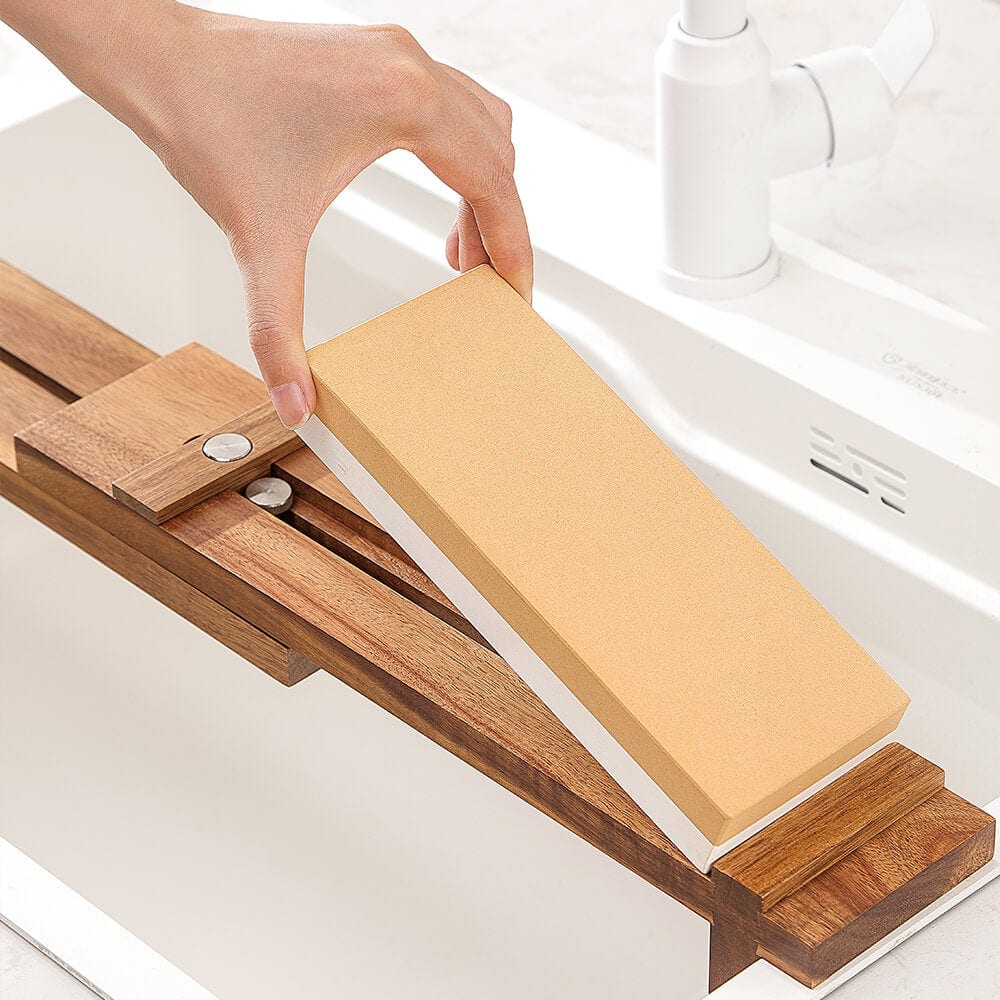
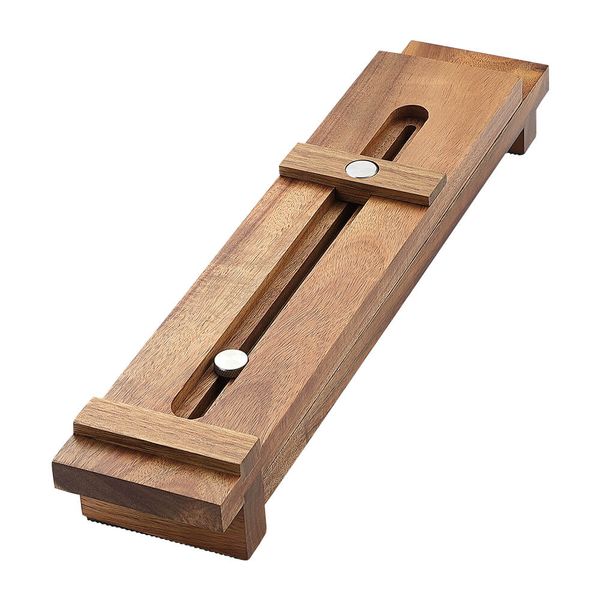
In the shop
Adjustable whetstone holder
€39,00
Sharpening Damascus knives – what's different
Damascus knives usually have a very hard core of 60 to 62 HRC. This makes them particularly sharp, but also less forgiving. So:
- No pull-through sharpener: it tears the hard edge and can cause small chips.
- No steel honing rod: if it's softer than the blade, it does nothing – and if the blade is very hard, the edge can chip. A ceramic rod is suitable for honing.
- Light pressure: hard blades sharpen well but don't need force. Better more strokes with little pressure.
No need to worry about the pattern: the Damascus pattern runs through the whole blade and stays intact when sharpening. More on care in our Damascus knife care guide (in German).
How can you tell a knife is blunt?
- The blade slides off tomato or pepper skin instead of biting straight away.
- Onions get squashed rather than cut – and your eyes water more.
- A sheet of paper tears instead of being cut cleanly.
- If you hold the edge up to the light, you see shiny spots. That is where the edge is rounded.
Matching in the shop