What is Damascus steel? How it's made, layers and patterns explained
How does the pattern form, what do 67 layers mean, and how can you spot real Damascus? Damascus steel explained in plain terms.
6 min read · 11 November 2026
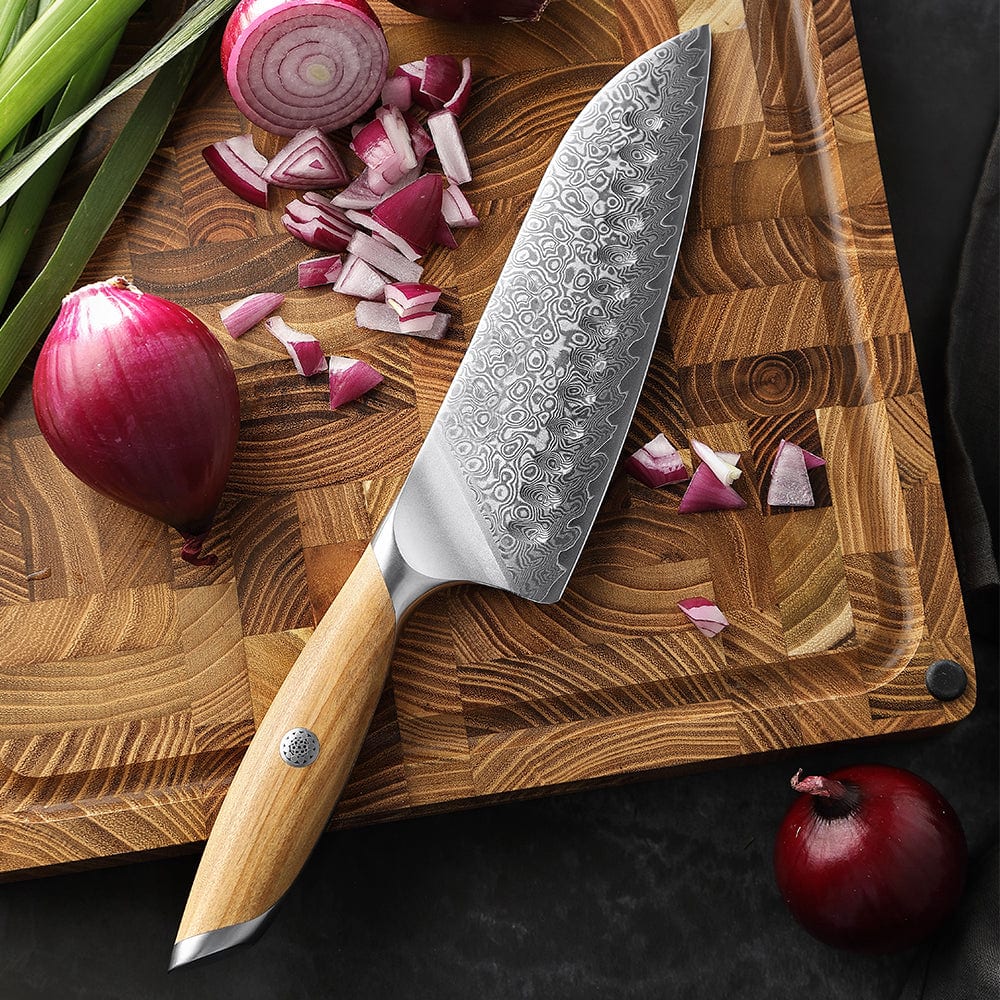
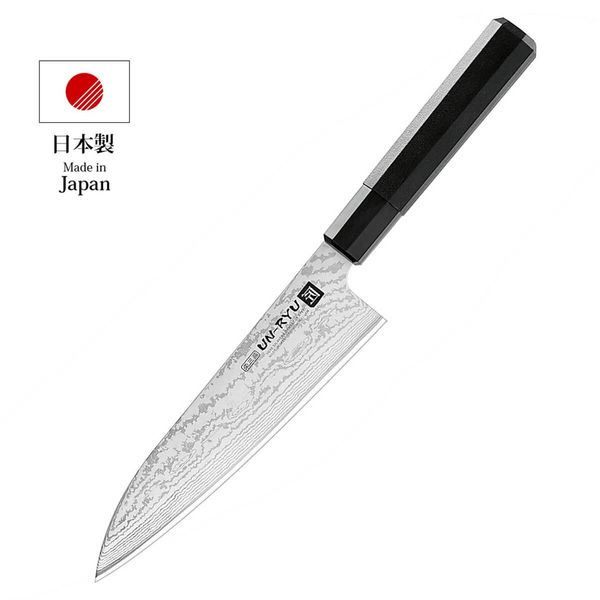
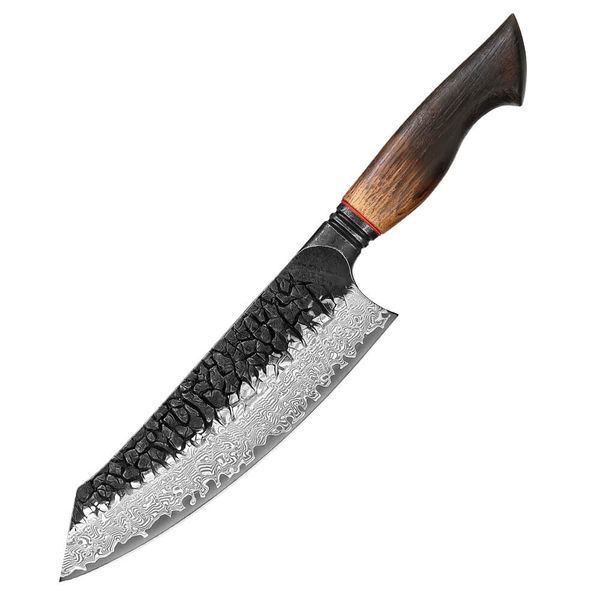
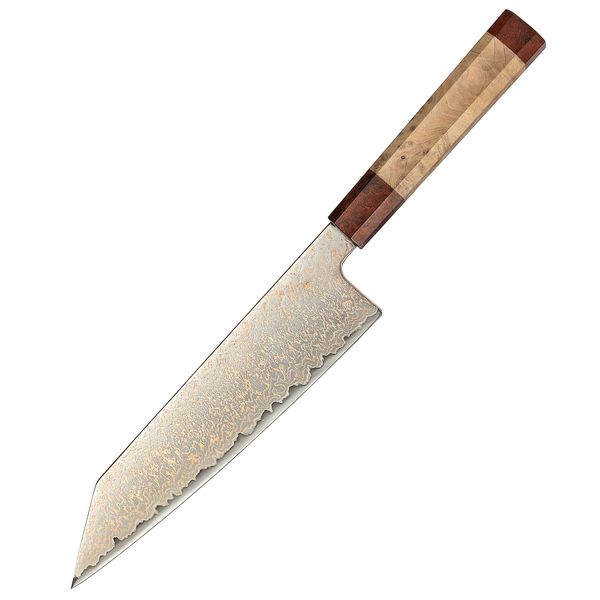
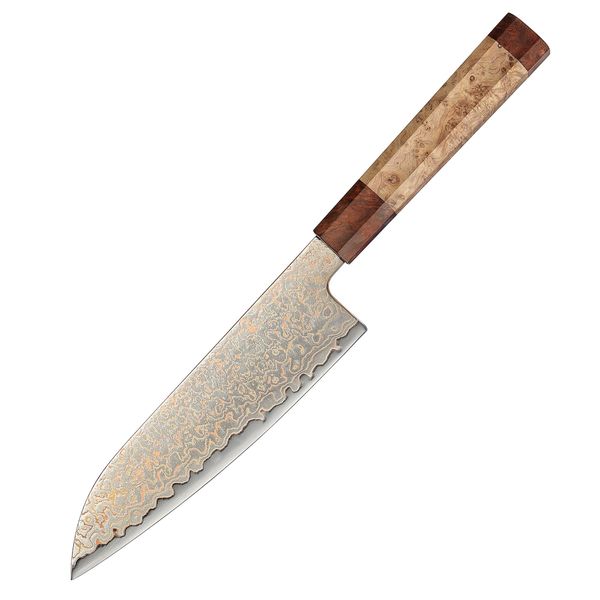
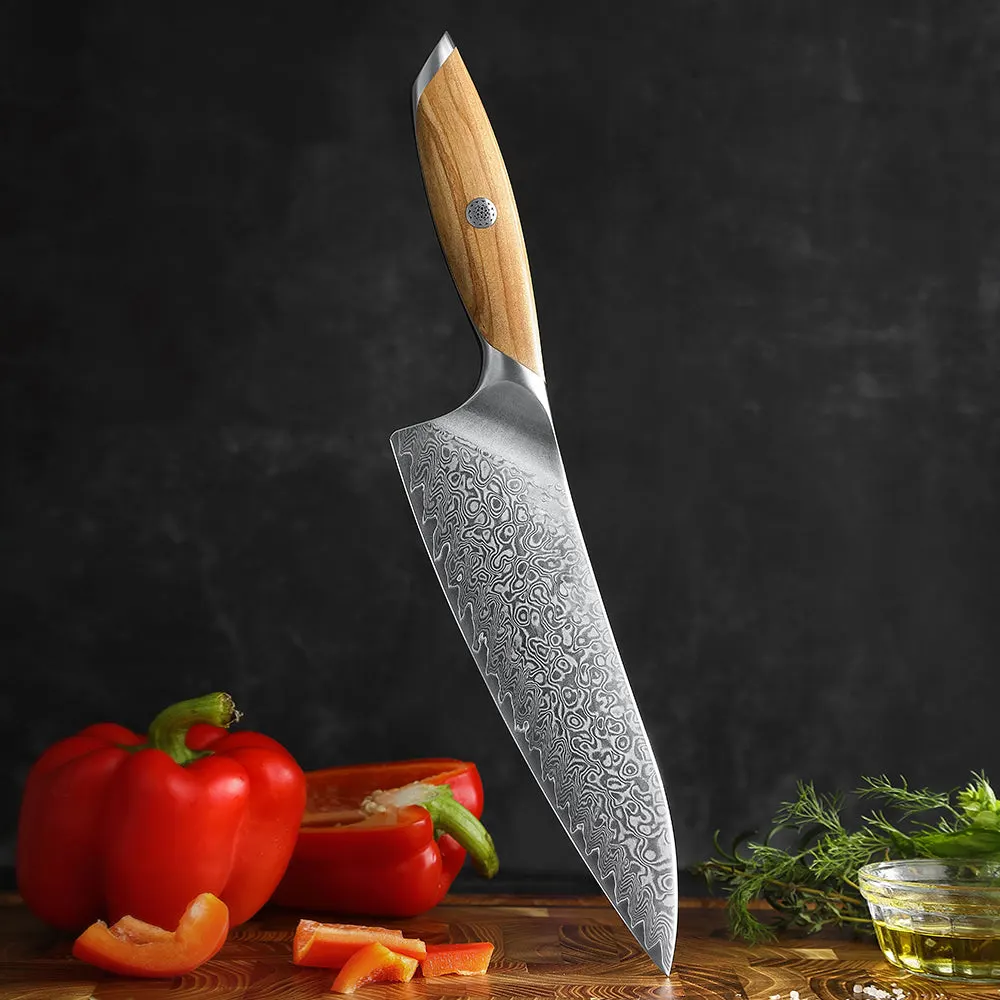
You can spot Damascus steel straight away: by the flowing, wavy pattern on the blade. But what lies behind it – is it just for looks, or does a Damascus knife really cut better?
The short answer: Damascus steel is a composite of several types of steel forge-welded together in many layers. The pattern isn't printed on – it is the visible structure of those layers. How sharp a Damascus knife is, however, depends above all on its core.
Where does the name come from?
The name goes back to the city of Damascus, through which blades with a striking grain were traded in the Middle Ages. These historical blades were made of so-called wootz steel, a crucible steel from India whose pattern formed by itself as it solidified and was forged. The knowledge of how to make it was largely lost in the 18th century.
What is sold as Damascus steel today is pattern-welded Damascus: different steels are joined layer by layer. This technique is old too – Celtic and early medieval smiths already used it for swords.
By the way: damask is also a fabric with a woven-in pattern, familiar from tablecloths and bed linen. Apart from the name, it has nothing to do with steel.
How is Damascus steel made?
From billet to blade
Stacking: two or more types of steel with different compositions are stacked alternately into a billet.
Forge-welding: the billet is heated strongly and fused under pressure into a single piece.
Folding or restacking: by repeatedly drawing out and folding, or by stacking again, the number of layers doubles with each pass.
Shaping: the blade is formed from the layered steel. For kitchen knives, the Damascus is usually wrapped around a hard core.
Hardening: the blade is heated and quenched. Only then does the core gain its hardness.
Grinding and etching: after grinding, the blade is dipped in acid. The steels react to different degrees – some darken, others stay light. That is how the pattern emerges.
How does the pattern form?
The pattern is a cross-section through the layers. If you simply ground the layered steel flat, you would see parallel lines. The typical waves, eyes and roses appear because the surface is worked before the final forging: hollows are pressed or ground in, and when the steel is forged flat the deeper layers come to the surface.
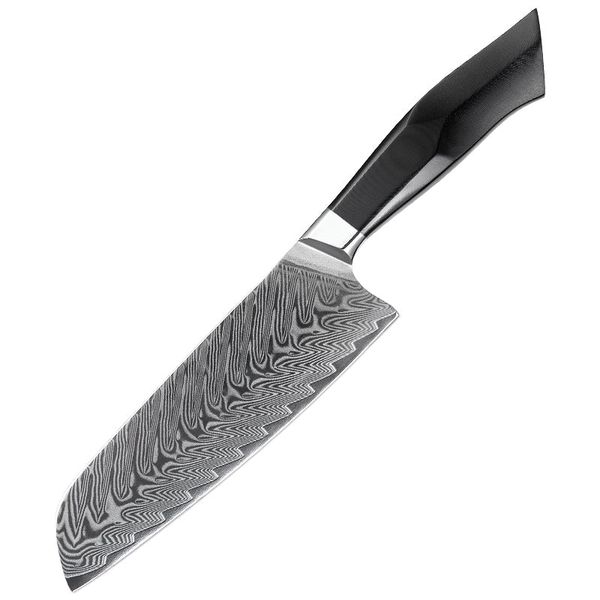
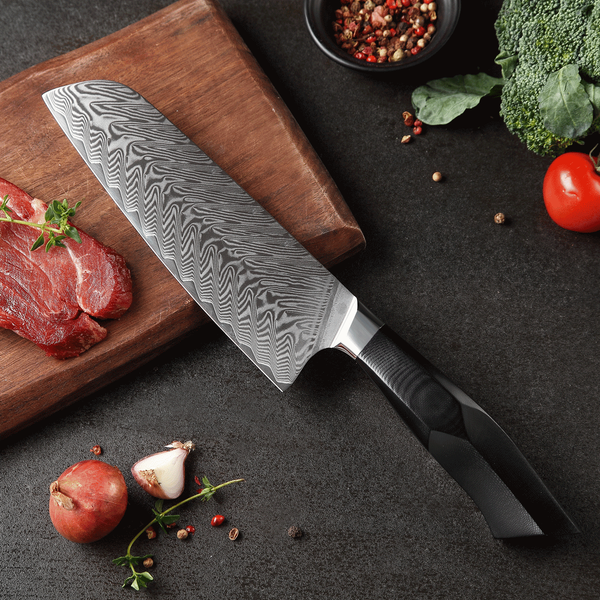
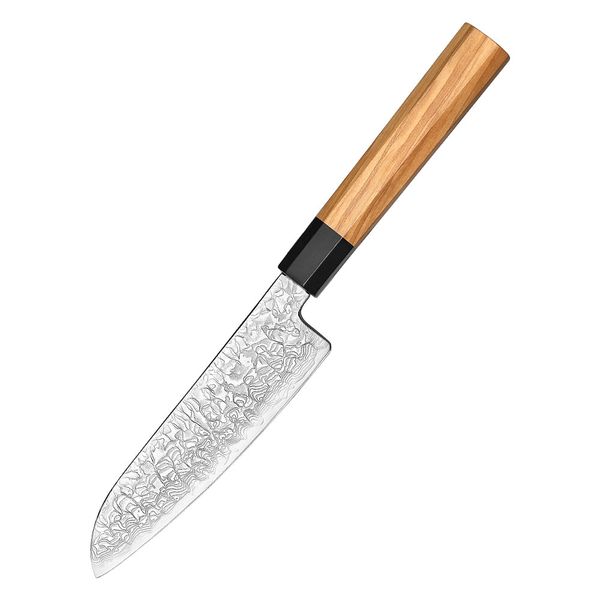
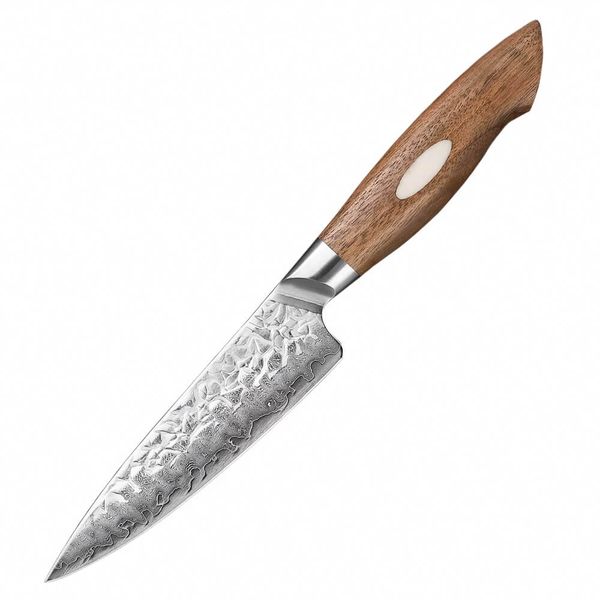
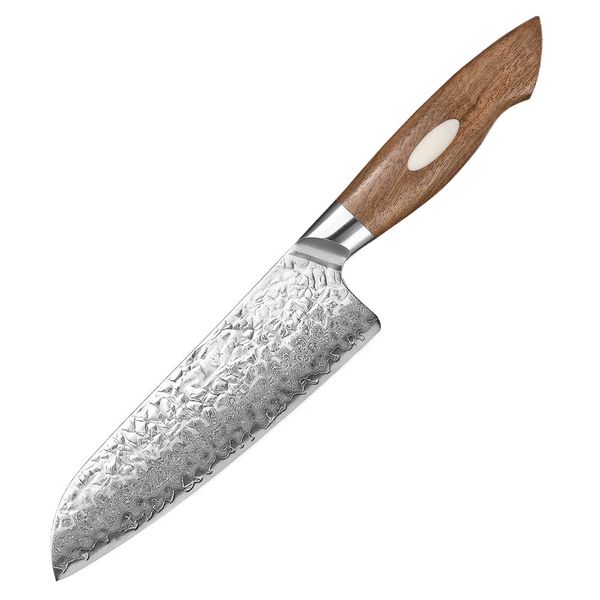
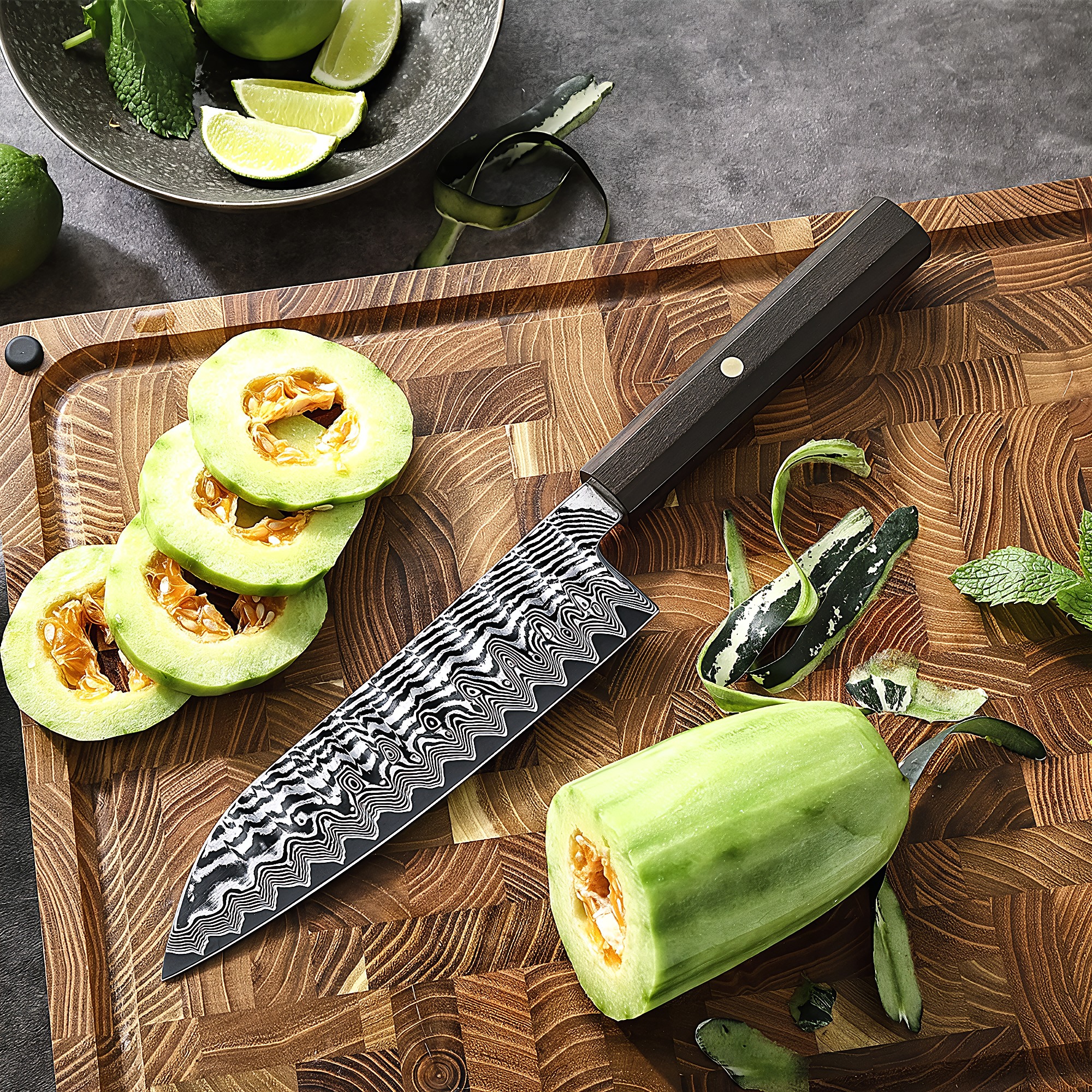
Depending on the technique, different patterns emerge – random Damascus, rose Damascus, ladder Damascus or the wave pattern of our NAMI series. Because the layers never run exactly the same way, every blade is one of a kind.
What does the number of layers mean?
With kitchen knives you often read "67 layers". This usually means: a core in the middle and 33 layers of Damascus on each side.
More layers don't make a knife sharper. They change the pattern – the more layers, the finer the figure. For cutting performance, it is the core that counts.
The core determines sharpness
On a Damascus knife with a core, the actual cutting edge lies in the core steel. It is particularly hard and holds its edge. The outer Damascus layers are somewhat tougher: they support the hard core, make the blade less prone to breaking and carry the pattern.
What matters in the core:
- Hardness: from around 60 HRC, an edge stays sharp considerably longer than with the 54 to 56 HRC of ordinary kitchen knives.
- Type of steel: common choices are 10Cr15CoMoV, VG-10 or AUS-10 – stain-resistant steels with a high carbon content. Powder steels are harder still.
- Edge angle: a hard core allows a fine edge of about 15° per side.
| Series | Construction | Hardness |
|---|---|---|
| KAYA | 67 layers of Damascus steel | 60 ± 2 HRC |
| NAMI, NATSUMI | 67 layers, 10Cr15CoMoV core | 60 ± 2 HRC |
| DAIKI | 67 layers of AUS-10 Damascus steel | 60 HRC |
| ORIBU | 73 layers of Damascus powder steel | 62 HRC |
How can you recognise real Damascus?
Not every knife with a wavy pattern is made of Damascus steel. On cheap knives the pattern is sometimes just lasered or etched on. Here is what to look out for:
- The pattern runs into the edge bevel. On real Damascus with a core, you can see a clear line near the edge where the layers end and the core begins.
- The layers are visible on the spine – as fine lines, if the spine isn't mirror-polished.
- The pattern is irregular. A laser pattern repeats exactly and looks the same on both sides.
- The pattern stays. Real Damascus can't be polished away: after sharpening the figure may fade, but re-etching brings it back. A lasered pattern is gone after sharpening.
- The specifications are concrete: number of layers, core steel and hardness are stated.
Advantages and limits
Advantages: high sharpness and edge retention thanks to the hard core, a stable blade thanks to the tougher outer layers, and a pattern that exists only once.
Limits: hard, thinly ground steel doesn't like force. Bones, frozen food and levering can chip the edge. And even stain-resistant Damascus isn't stainless – leave it wet and you risk spots.
How to care for Damascus steel
- Wash by hand and dry immediately – never in the dishwasher.
- Cut on wood or plastic, not on glass, stone or ceramic.
- Don't keep it loose in a drawer – use a knife block or a magnetic strip.
- Treat the blade and wooden handle now and then with a drop of camellia oil.
- Sharpen on a whetstone – our guide How to sharpen a knife shows you how.
Frequently asked questions
Is Damascus steel better than ordinary steel?
Not automatically. What matters is the core steel and its hardness. A good Damascus knife combines a very hard core with excellent edge retention and tougher outer layers – and looks special too.
Does Damascus steel rust?
Modern Damascus kitchen knives are mostly made of stain-resistant steels. They aren't stainless in the strict sense: if they're left wet or put in the dishwasher, spots can form.
How many layers should a Damascus knife have?
67 layers are common for kitchen knives and perfectly sufficient. More layers change the pattern, not the sharpness.
Does the Damascus pattern disappear when sharpening?
No. When sharpening, you only work on the narrow edge bevel. The pattern on the flat of the blade remains untouched.
What is the difference between Damascus and damascene steel?
Both terms mean the same thing. "Damascene steel" is the older name; "Damascus steel" or simply "Damascus" is the one used today.
Matching in the shop