Damascus knife test: how to spot real Damascus
Not every knife with a wavy pattern is Damascus. These are the signs of real Damascus steel – and what really matters in a Damascus knife.
4 min read · 14 November 2026
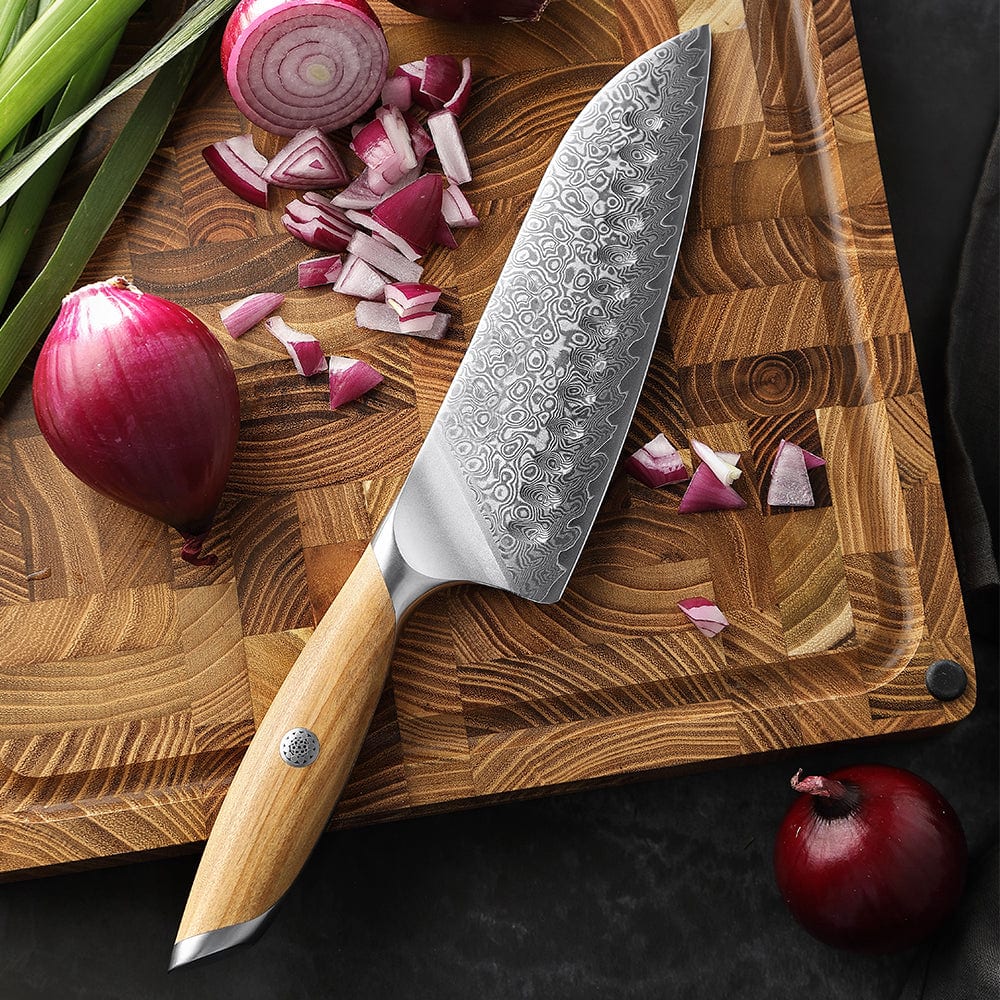
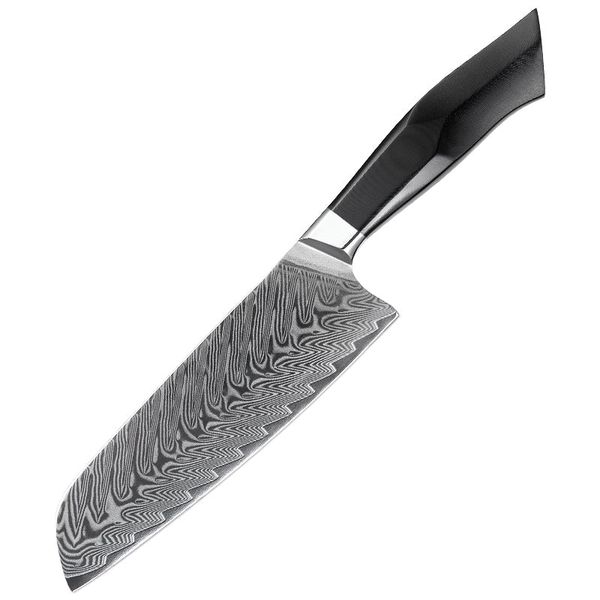
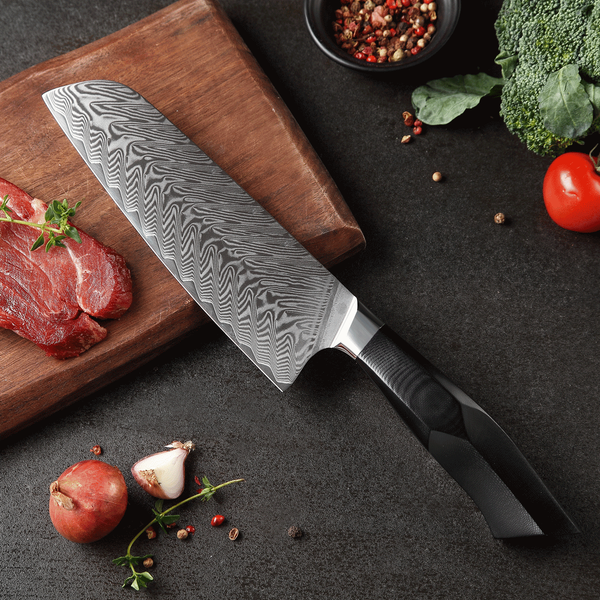
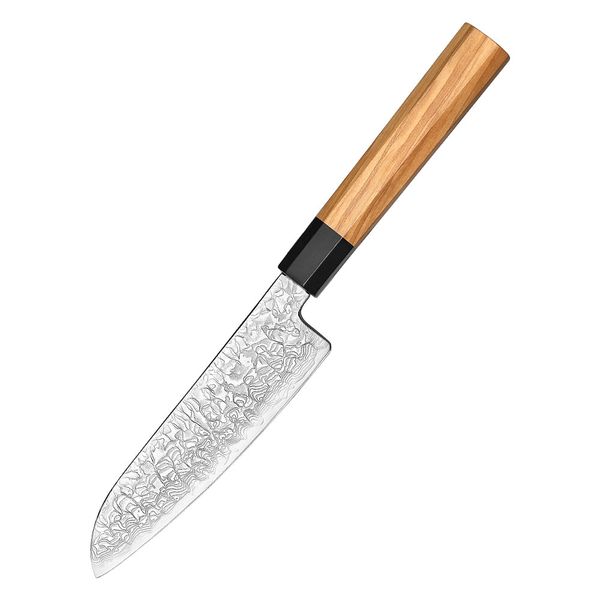
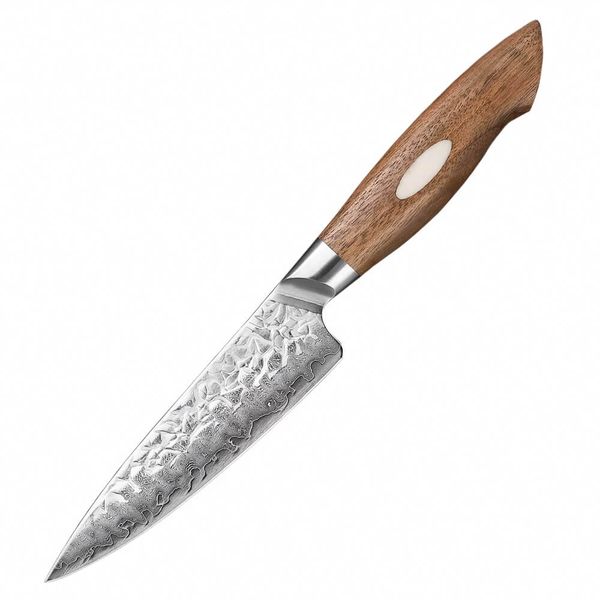
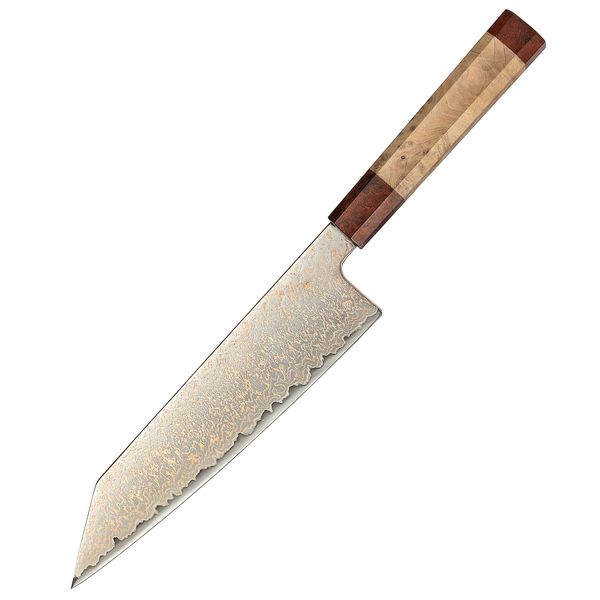
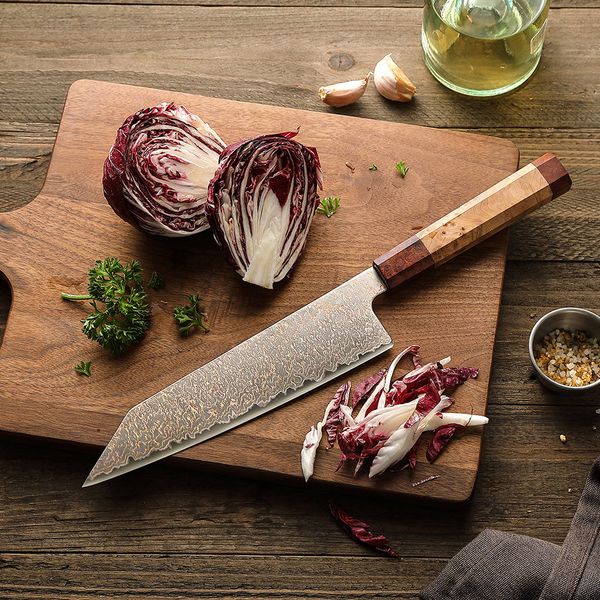
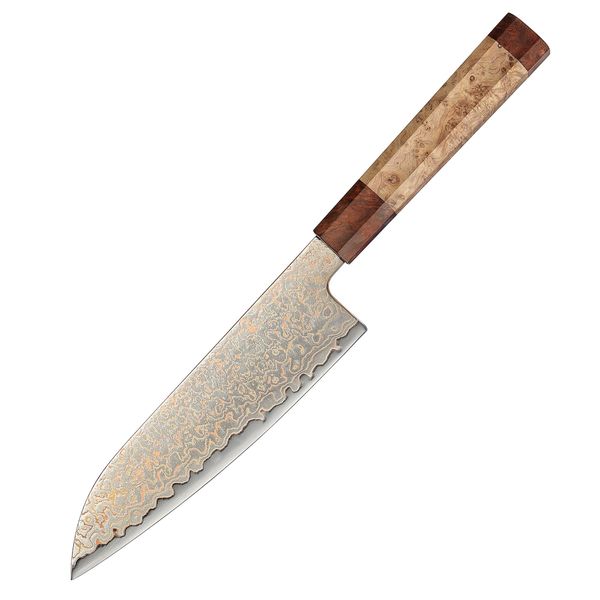
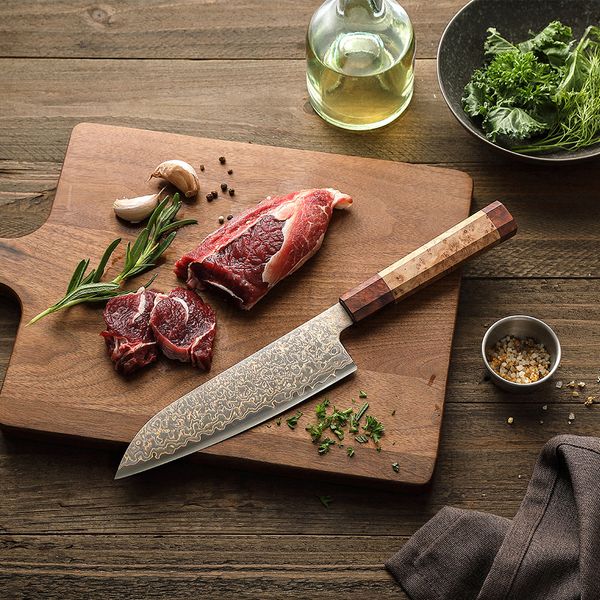
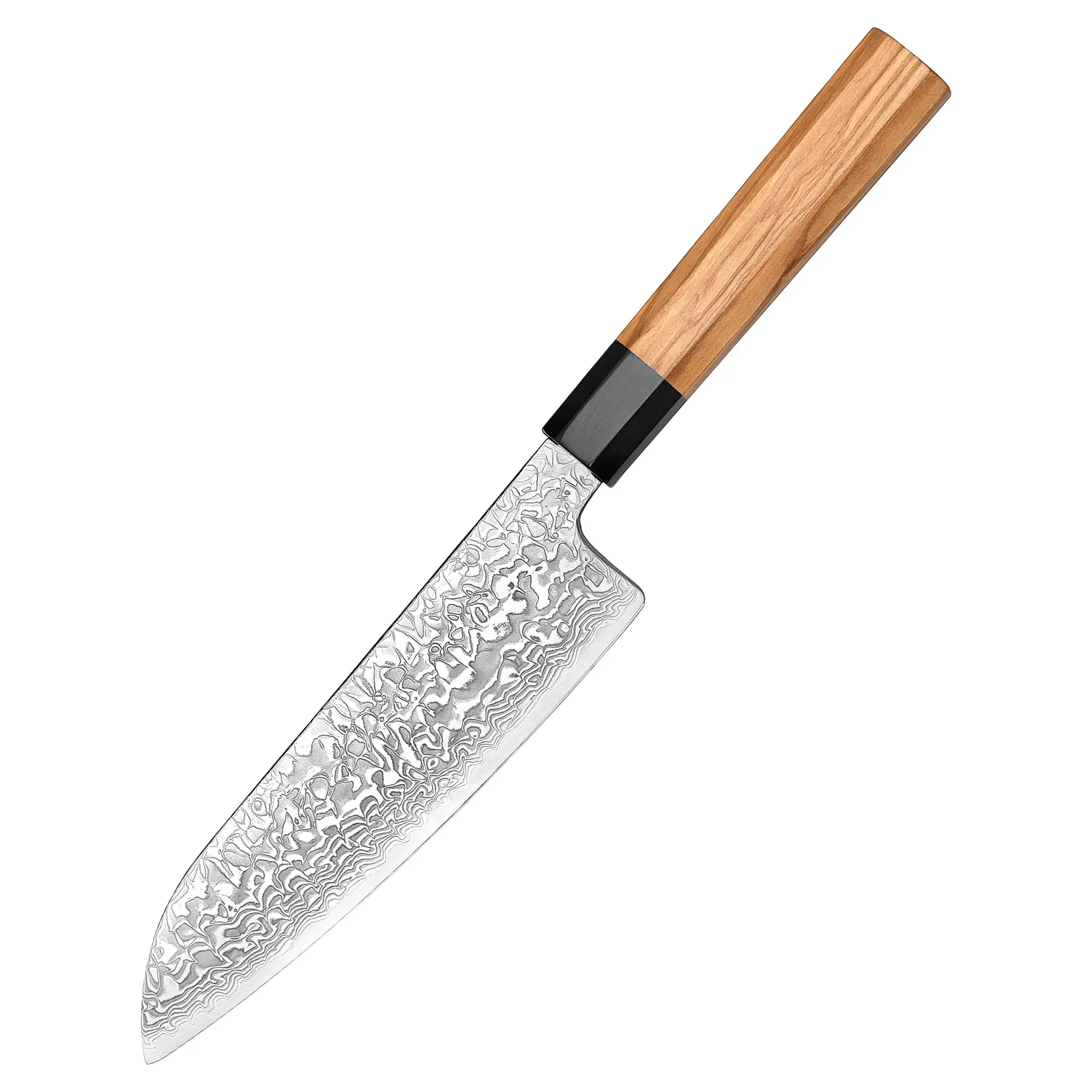
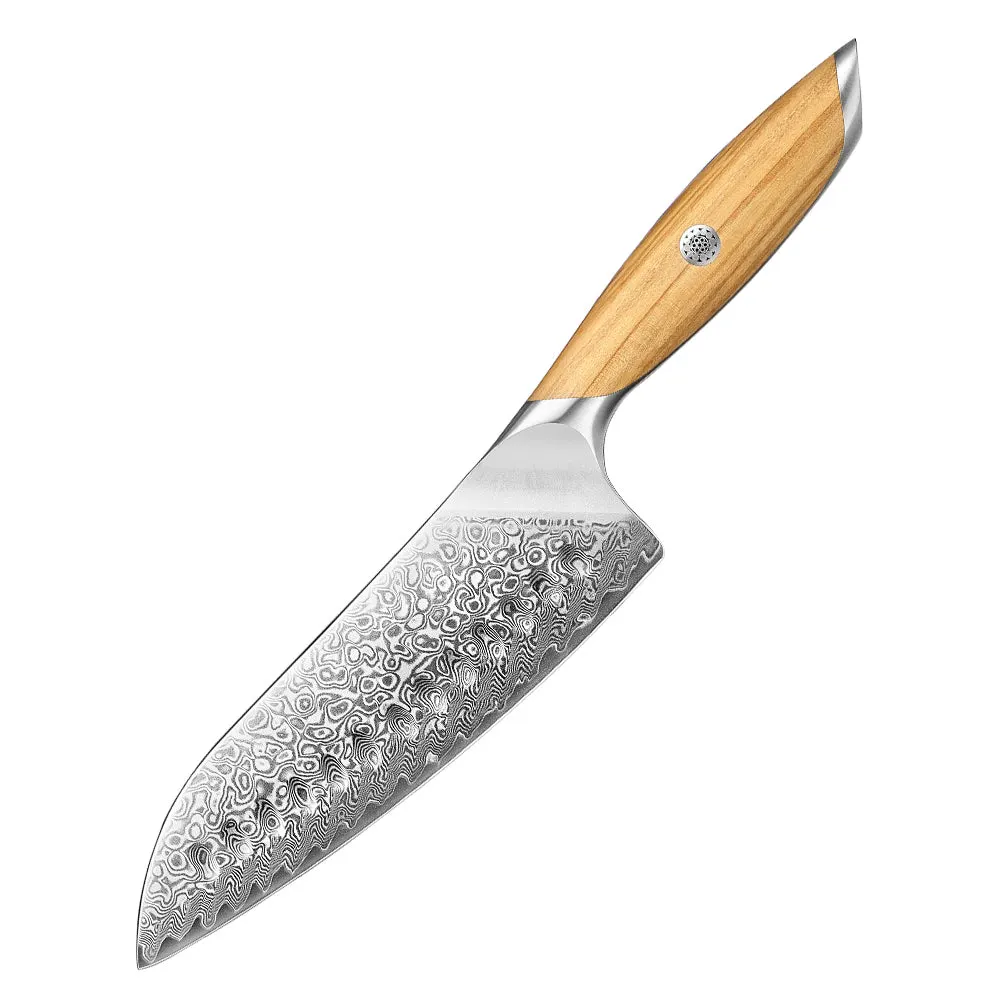
The typical wavy pattern is what makes Damascus knives so sought-after. Because it's so popular, there are also knives that only look the part: the pattern is printed or laser-etched, and the blade is made of a single steel.
In this Damascus knife test, we show you how to recognise real Damascus – and what really matters besides the pattern.
What is real Damascus?
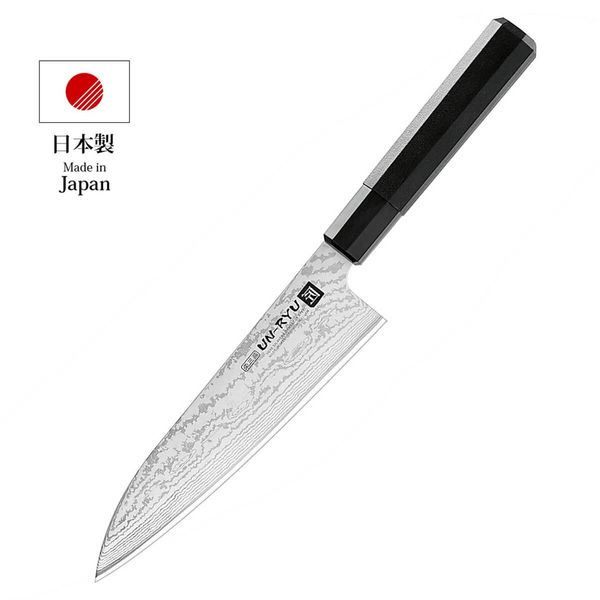
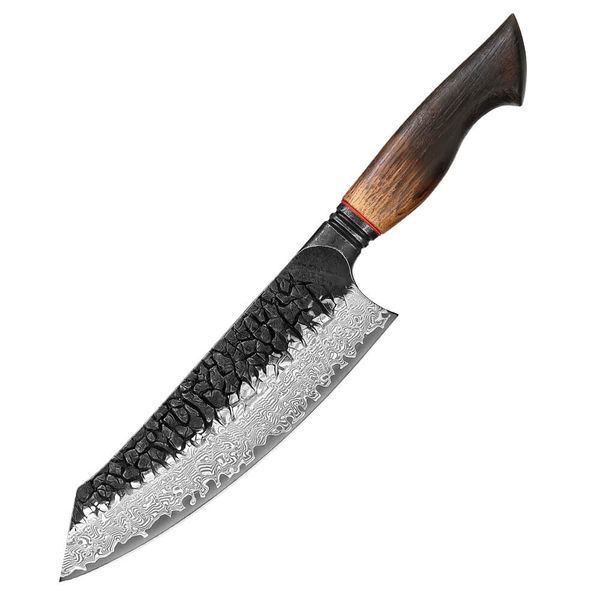
Real Damascus steel is made by forge-welding and forging several types of steel in many layers. When etched, the types react differently – that's how the pattern becomes visible. In kitchen knives, a hard core steel usually sits in the middle, surrounded by Damascus layers. Explained in detail in What is Damascus steel?.
Six signs of real Damascus
1. The pattern runs over the spine
Look at the spine of the blade. On real Damascus you can see the individual layers as fine lines. With a printed pattern, the spine is uniform.
2. The pattern continues into the edge bevel
Where the blade is ground towards the edge, a real Damascus pattern changes: it gets tighter and follows the grind, because the layers are cut at an angle. A printed pattern stops at the bevel or carries on unchanged.
3. The core line is visible
On knives with a steel core, you can often see a fine line just above the edge where the core begins. Below it the steel is uniform – that's the hard core that forms the edge.
4. The pattern is irregular
Real Damascus is never completely uniform. Small irregularities in the pattern are a good sign. A pattern that repeats exactly, like wallpaper, points to printing.
5. The specifications are concrete
Reputable sellers state the number of layers, the core steel and the hardness. Terms like "Damascus look", "Damascus pattern" or "Damascus design" without further details often mean: not real Damascus.
6. The price is plausible
Forging many layers takes a lot of work. A "Damascus knife" for a few pounds or euros is almost always just printed.
| Feature | Real Damascus | Damascus look |
|---|---|---|
| Spine | layers visible as lines | uniform |
| Edge bevel | pattern changes | pattern stops or stays the same |
| Pattern | irregular | often repeats exactly |
| Specifications | layers, core steel, hardness | "look", "design", little data |
| Wear | pattern stays when sharpening | print can fade |
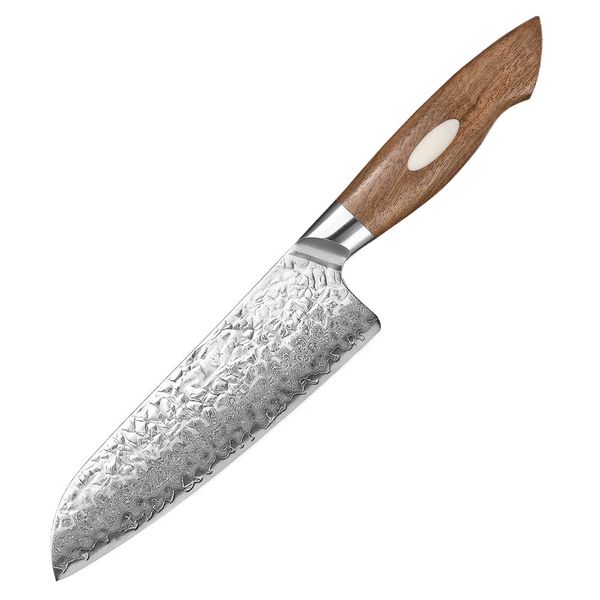
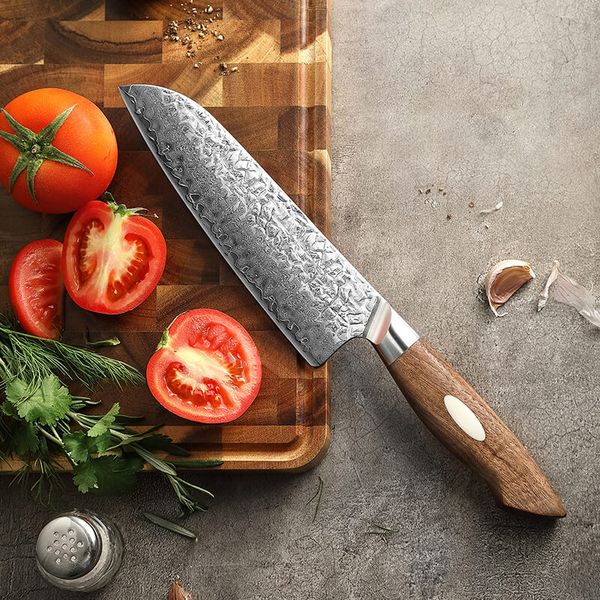
In the shop · DAIKI
Santoku knife
€139,00
What matters besides the pattern
The pattern is beautiful – but for the edge, it's mainly the core steel and its hardness that count. A well-hardened core of AUS-10, VG-10 or 10Cr15CoMoV at around 60 HRC delivers sharpness and edge retention. The knife steel chart shows which steels there are.
Other points: a fine edge of around 15 degrees per side, a well-finished handle and good balance. The general criteria are covered in the kitchen knife test.
Are more layers better?
Not necessarily. The number of layers mainly determines how the pattern looks, not the sharpness. 67 layers are common in kitchen knives; there are also knives with 37 or over 100 layers. What decides the edge is still the core.
Frequently asked questions
How do I recognise a real Damascus knife?
By the spine, on which the layers are visible as lines, by a pattern that changes in the edge bevel and by concrete details about layers, core steel and hardness.
What is a Damascus look?
A knife made of a single steel onto which a Damascus pattern has been printed or lasered. It looks similar but has no layers.
Are Damascus knives better than normal knives?
Sharpness depends on the core steel, not the pattern. A good Damascus knife has a hard core and is particularly beautiful too.
Does the Damascus pattern disappear when sharpening?
A real Damascus pattern doesn't, because it comes from the layers in the steel. A printed pattern, on the other hand, can fade.
How many layers should a Damascus knife have?
The number of layers mainly affects the pattern. 37 to 73 layers are usual in kitchen knives.
Matching in the shop