Knife steel chart: the most important steels compared
X50CrMoV15, AUS-10, VG-10, 10Cr15CoMoV, powder steel: the main knife steels compared – hardness, edge retention, stain resistance and typical use.
4 min read · 14 November 2026
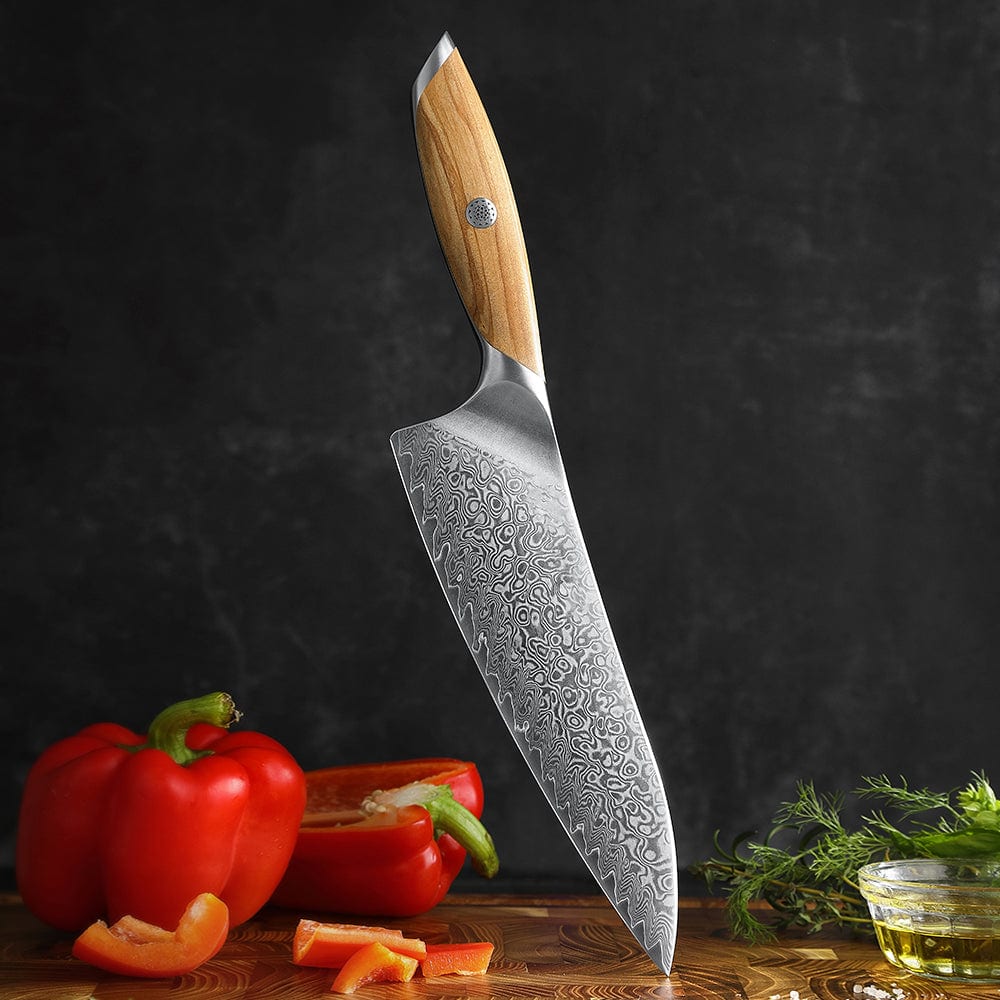
Kitchen knife spec sheets often list cryptic names: X50CrMoV15, AUS-10, VG-10, 10Cr15CoMoV. Behind them are steels with very different properties. The steel determines how sharp a knife gets, how long it stays sharp and how much care it needs.
Here you'll find the most important knife steels compared – and what the specifications mean for everyday use.
What the ingredients do
| Element | Effect |
|---|---|
| Carbon (C) | makes the steel hardenable – more carbon, higher hardness and edge retention |
| Chromium (Cr) | protects against rust; from about 13% steel is considered stain-resistant |
| Molybdenum (Mo) | improves toughness and corrosion resistance |
| Vanadium (V) | forms hard carbides, fine grain – the edge lasts longer |
| Cobalt (Co) | supports hardness and a fine grain structure |
The name often gives away the composition: X50CrMoV15 stands for about 0.5% carbon, 15% chromium plus molybdenum and vanadium. 10Cr15CoMoV means around 1% carbon, 15% chromium, plus cobalt, molybdenum and vanadium.
The knife steel chart
| Steel | Carbon | Typical hardness | Edge retention | Stain resistance | Typical for |
|---|---|---|---|---|---|
| X50CrMoV15 (1.4116) | approx. 0.5% | 54–57 HRC | medium | very good | classic European kitchen knives |
| 440C | approx. 1.0% | 58–60 HRC | good | good | kitchen and pocket knives |
| AUS-8 | approx. 0.75% | 57–59 HRC | good | good | solid everyday knives |
| AUS-10 | approx. 1.0% | 58–61 HRC | very good | good | Damascus knife cores |
| VG-10 | approx. 1.0% | 60–61 HRC | very good | good | Damascus knife cores |
| 10Cr15CoMoV | approx. 1.0% | 58–62 HRC | very good | good | Damascus knife cores, similar to VG-10 |
| Powder steel (e.g. SG2/R2) | 1.2–1.5% | 62–64 HRC | excellent | good | high-end knives, very fine edges |
| Carbon steel (e.g. Shirogami, Aogami) | 1.0–1.4% | 61–64 HRC | excellent | low – rusts | knives for enthusiasts, needs care |
Guide values; the actual hardness depends on the manufacturer's heat treatment.
Hardness isn't everything
Higher hardness means: the edge stays sharp longer and can be ground thinner. But it also means: the steel becomes more brittle. Very hard blades can chip when they hit bones, frozen food or hard surfaces.
Softer steels are more robust and quicker to resharpen, but also go blunt faster. For most home cooks, the range of 58 to 62 HRC is the best compromise. More on this in the kitchen knife test.
Stainless or carbon steel?
- Stain-resistant steels with plenty of chromium are low-maintenance: rinse, dry, done.
- Carbon steels without significant chromium get extremely sharp but discolour and rust if left wet. Over time they form a dark protective layer (patina).
No knife is completely rustproof: even stain-resistant steel gets spots if left wet for hours or put in the dishwasher.
And with Damascus knives?
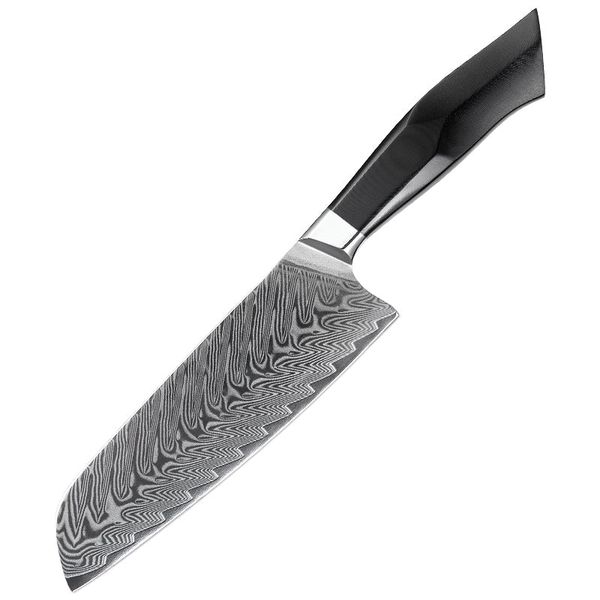
A Damascus knife consists of several layers of steel. In the middle sits a hard core steel that forms the edge; on the outside are softer, stain-resistant layers that protect it and create the pattern. For cutting performance, it's therefore mainly the core that counts. How the layers are made is explained in What is Damascus steel?.
| Series | Blade | Hardness |
|---|---|---|
| DAIKI | 67 layers, AUS-10 core | 60 HRC |
| NAMI | 67 layers, 10Cr15CoMoV core | 60 ±2 HRC |
| NATSUMI | 67 layers, 10Cr15CoMoV core | 60 ±2 HRC |
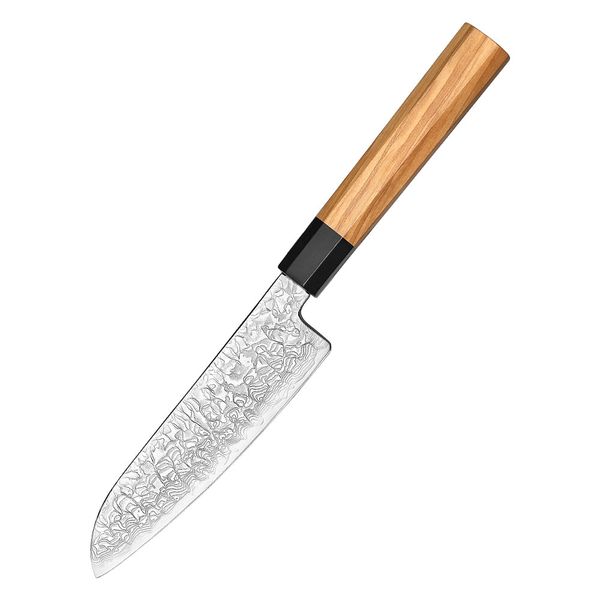
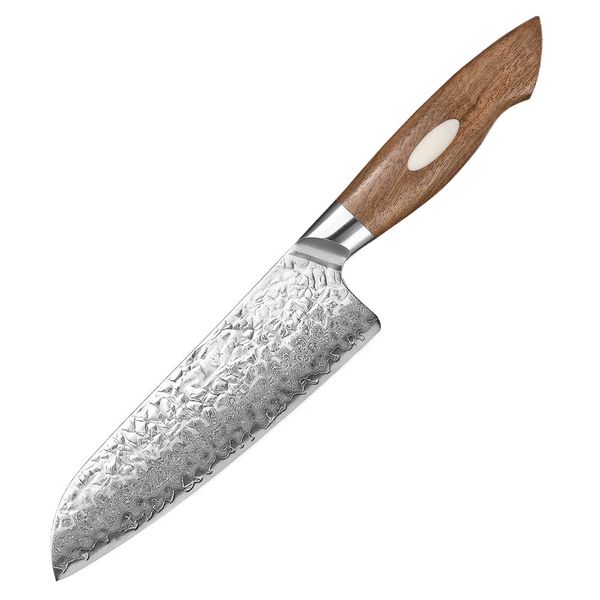
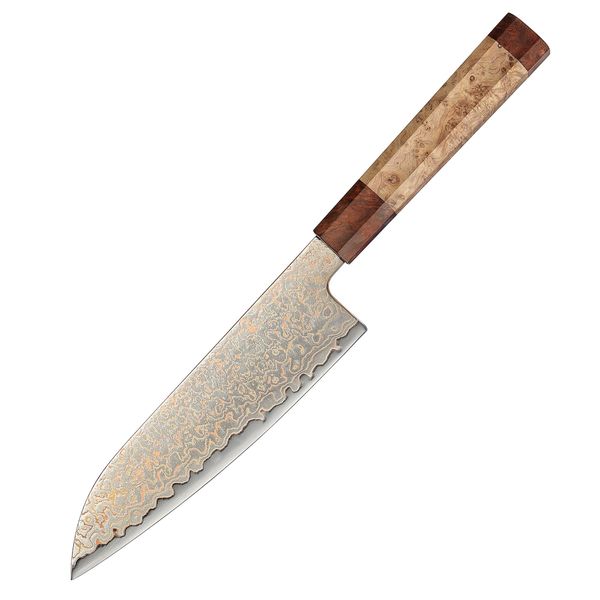
| ORIBU | 73 layers of Damascus powder steel | 62 HRC |
| HIIRO | 37 layers with copper and brass | 62 HRC |
Details according to the product data in the shop, as of 14/11/2026.
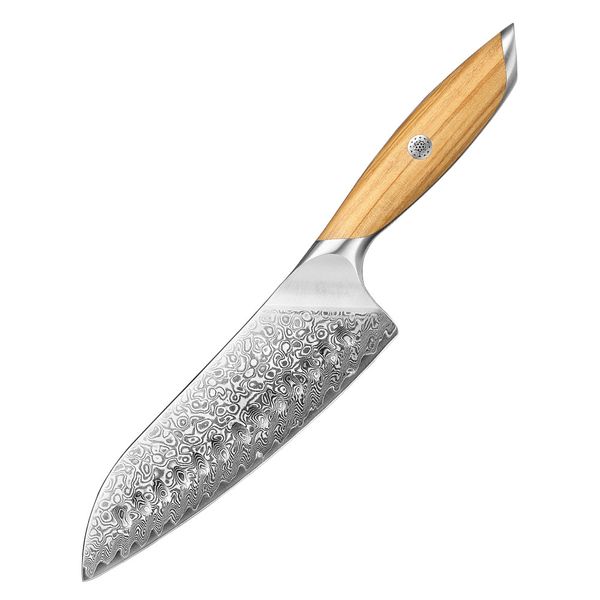
In the shop · ORIBU
Santoku knife
€159,00
Which knife steel is the best?
There is no single best steel for everyone. It depends on what matters to you:
- Low-maintenance and robust: X50CrMoV15 or AUS-8.
- Stays sharp for a long time, yet easy to care for: AUS-10, VG-10, 10Cr15CoMoV – the range of most Damascus knives.
- Maximum sharpness and edge retention: powder steel.
- For enthusiasts who enjoy the care: carbon steel.
What makes a good knife beyond the steel is covered under Good kitchen knives.
Frequently asked questions
Which steel is good for kitchen knives?
For most home cooks, steels with around 1% carbon and 14–15% chromium are ideal, such as AUS-10, VG-10 or 10Cr15CoMoV. They get very sharp, last a long time and are easy to care for.
What does X50CrMoV15 mean?
It's the designation of a knife steel with about 0.5% carbon, 15% chromium plus molybdenum and vanadium. It's robust and stain-resistant, but softer than typical Damascus cores.
Is VG-10 better than AUS-10?
The two are very close. VG-10 also contains cobalt and is often hardened slightly harder. In everyday use, the heat treatment matters more than the name.
What is powder steel?
Steel pressed from fine metal powder under pressure and heat. This produces a very even structure with many hard carbides – the edge becomes extremely fine and lasts a long time.
Does a Damascus knife rust?
The outer layers are usually stain-resistant. Even so, no knife belongs in the dishwasher or should be left wet. Tips in the care guide (in German).
Matching in the shop