Kiritsuke: what makes the knife with the angled tip special
Its sloping tip makes the kiritsuke unmistakable. Where the shape comes from, what it's good for and which knives bring it into everyday cooking.
3 min read · 14 November 2026
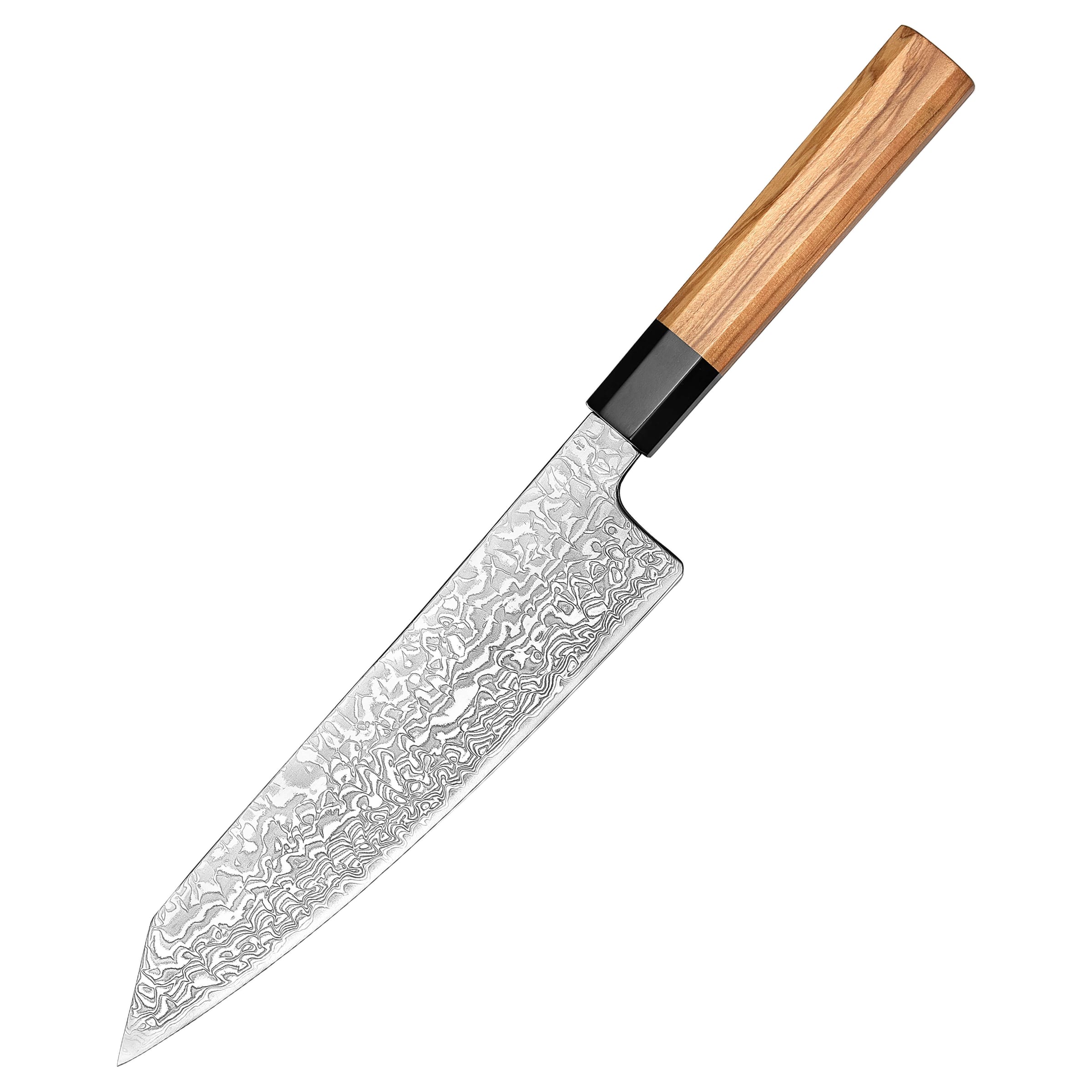
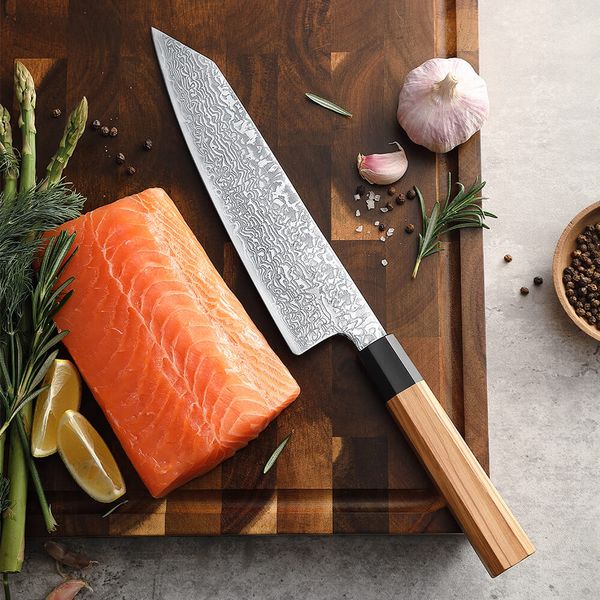
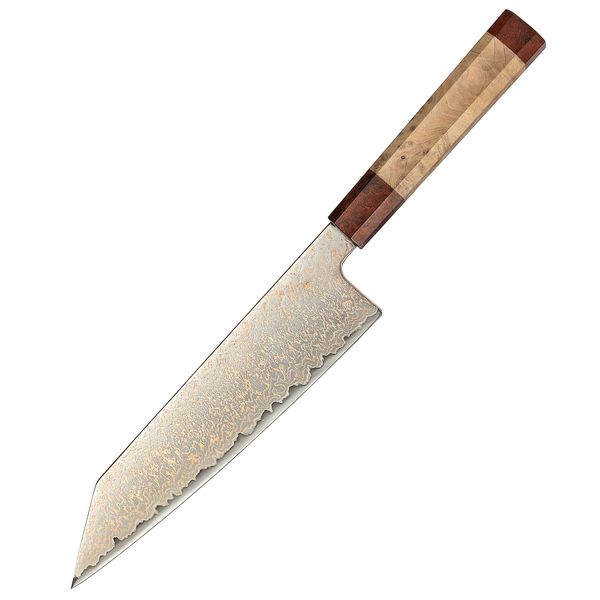
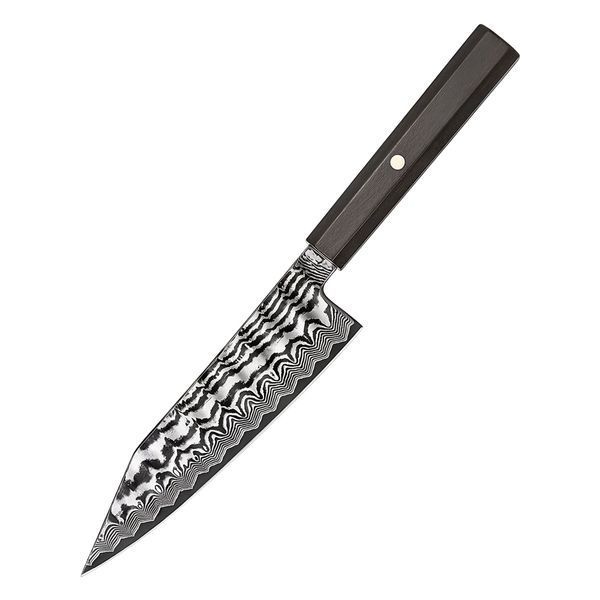
The kiritsuke catches the eye straight away: the blade doesn't end in a curved tip but in a straight, sloping tip reminiscent of a sword point. The shape has many admirers – and raises questions: what is it good for, and do you need such a knife?
Here you'll learn what a kiritsuke is, how it differs from the gyuto, bunka and santoku, and who the shape is worth it for.
What is a kiritsuke?
The traditional kiritsuke combines two classic Japanese-style knife shapes: the long, narrow knife for fish and the straight vegetable knife. It used to be sharpened on one side only and was considered a demanding tool that takes a lot of practice.
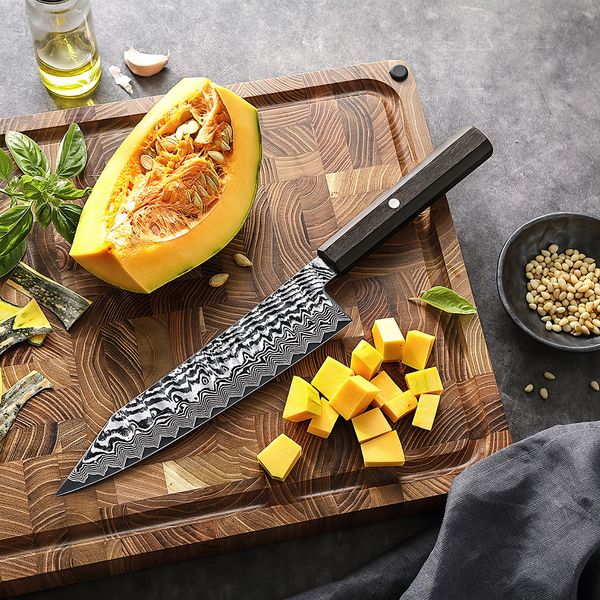
Today the kiritsuke mostly comes in a double-bevel version. It's often called a kiritsuke gyuto and is essentially a chef's knife with a flatter edge and the typical angled tip.
Kiritsuke, gyuto, bunka and santoku compared
| Kiritsuke | Gyuto | Bunka | Santoku | |
|---|---|---|---|---|
| Tip | straight, angled | curved, pointed | straight, angled | rounded |
| Edge | very flat | flat with a belly | flat | flat |
| Blade length | 21–27 cm | 18–27 cm | 16–21 cm | 16–19 cm |
| Rocking cut | hardly | yes | hardly | a little |
| Strength | long, clean cuts | all-rounder | fine work with the tip | handy all-rounder |
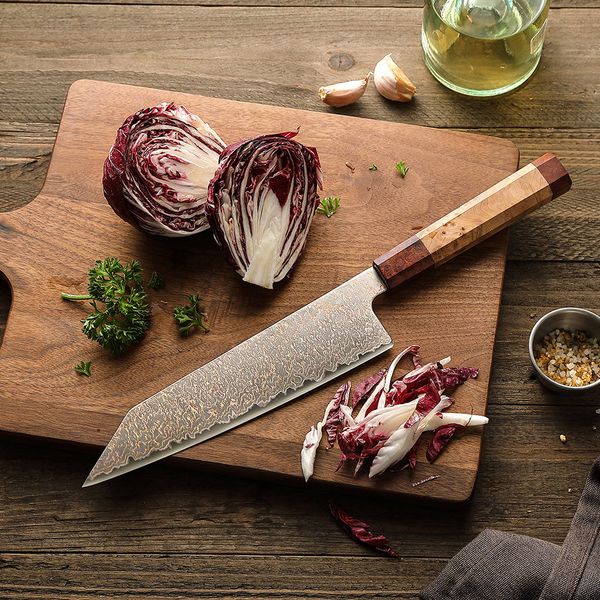
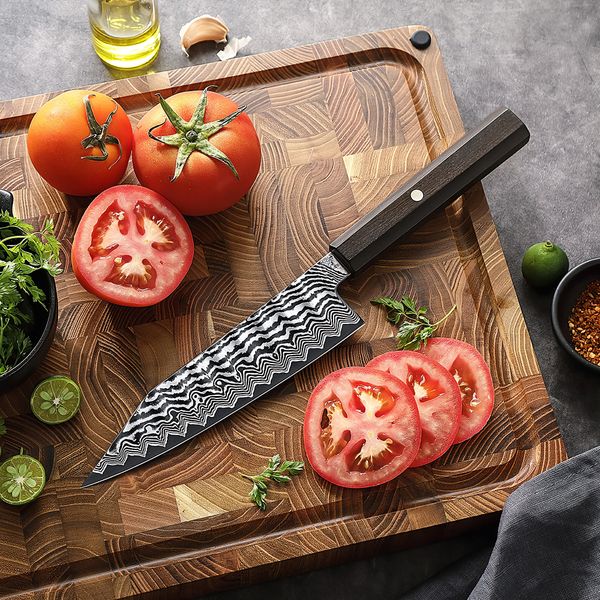
The angled tip isn't just for looks: it lets you make fine incisions, for instance in onions before dicing, or cut herbs very precisely with the tip. The flat edge suits push and pull cuts rather than rocking.
The bunka: the compact sister
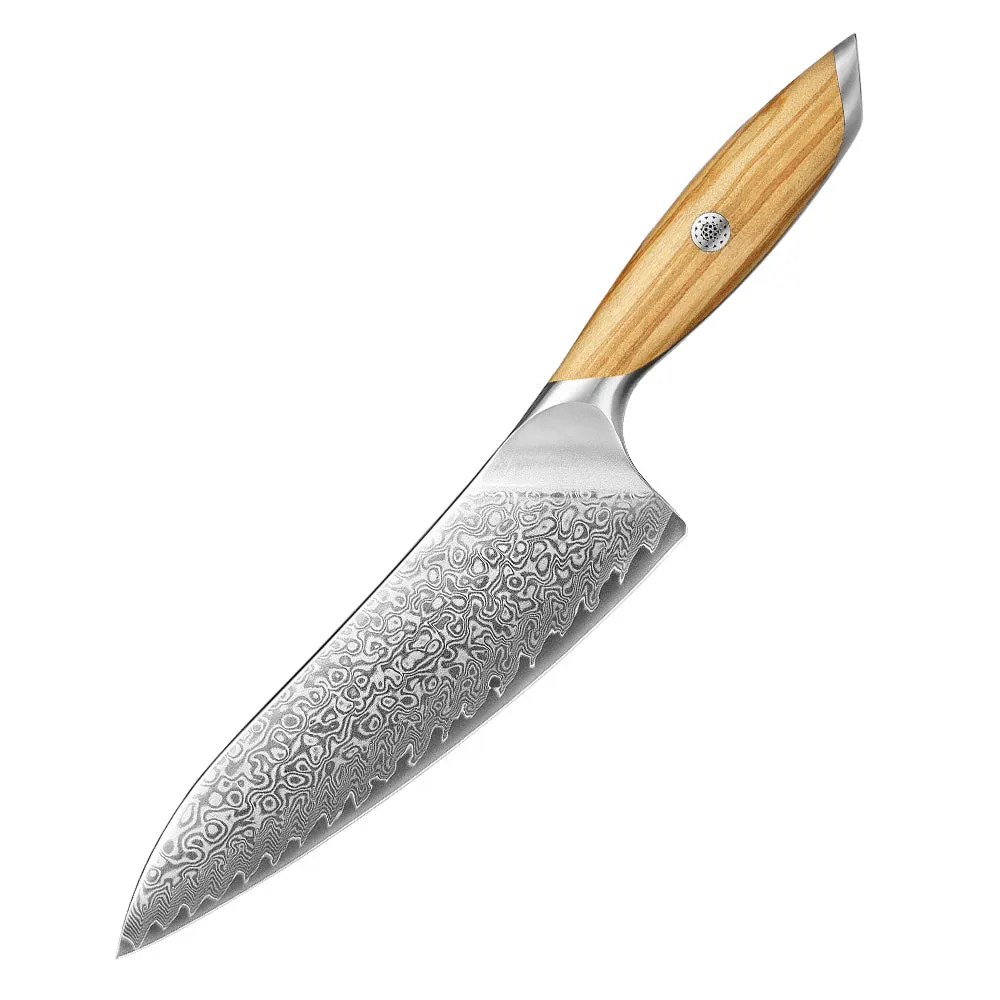
If you like the shape of the kiritsuke but want a handier knife, you'll end up with the bunka. It has the same straight, sloping tip but is shorter, with a taller blade – similar to a santoku. That makes it a versatile knife for vegetables, meat and fish that's easier to handle day to day.
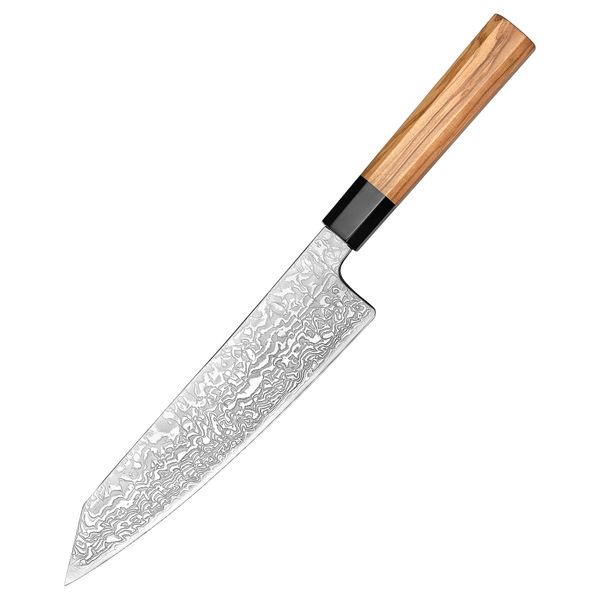
In the shop · KAYA
Bunka knife
€129,00
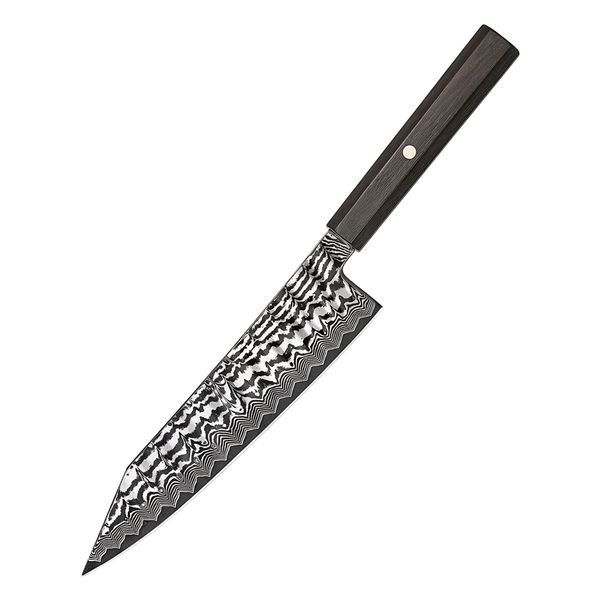
In the shop · NAMI
Bunka knife
€149,00
Who is a kiritsuke for?
- You cut a lot of vegetables and fish and like long, even cuts.
- You have a large worktop and a big board.
- You like working with pull and push cuts rather than the rocking cut.
If you're looking for one knife for everything and like to rock, a gyuto or classic chef's knife is the better choice. For an overview of all the shapes, see Types of kitchen knives: which knife for what.
Sharpening a kiritsuke and bunka
Double-bevel kiritsukes and bunkas are sharpened like any other knife on a whetstone, usually at about 15 degrees per side. The tip needs particular attention: lift the handle slightly at the end of each stroke so the tip touches the stone too. The full guide is under How to sharpen a knife.
Frequently asked questions
What is a kiritsuke?
A long Japanese-style knife with a flat edge and a straight, sloping tip. Traditionally single-bevel, today usually double-bevel as an all-rounder.
What is the difference between a kiritsuke and a gyuto?
The gyuto has a curved tip and a little more belly for the rocking cut; the kiritsuke has a straight angled tip and a flatter edge for long push and pull cuts.
Is a bunka a small kiritsuke?
In shape, yes: both have the straight, angled tip. But the bunka is shorter with a taller blade – it's more closely related to the santoku.
Is a kiritsuke suitable for beginners?
The double-bevel version is, if you have a large worktop. The traditional single-bevel kiritsuke takes practice.
Matching in the shop