Gyuto: the Japanese-style chef's knife explained
The gyuto is the Japanese-style chef's knife: thinner, lighter and more pointed than its European counterpart. What makes it special and who it suits.
4 min read · 14 November 2026
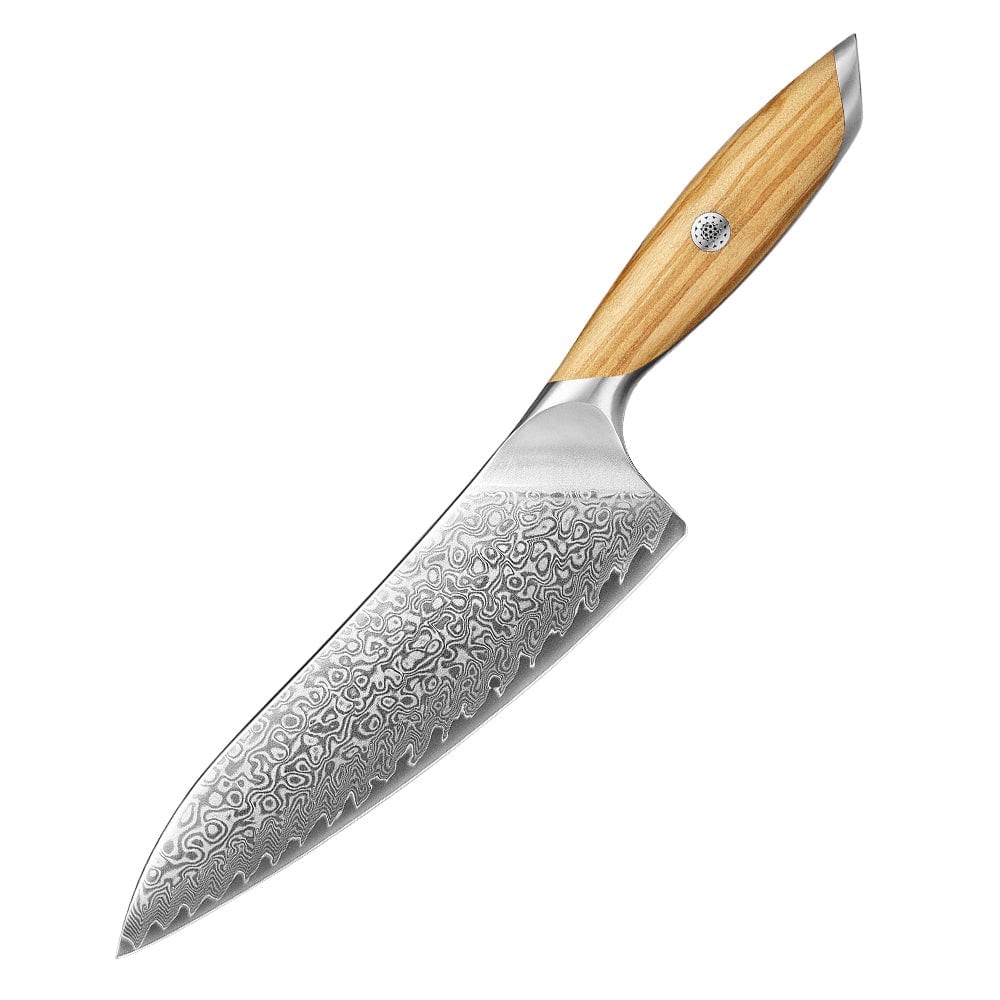
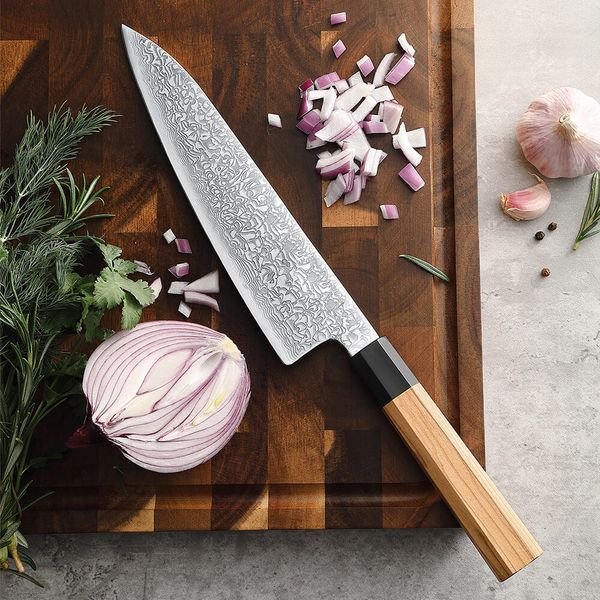
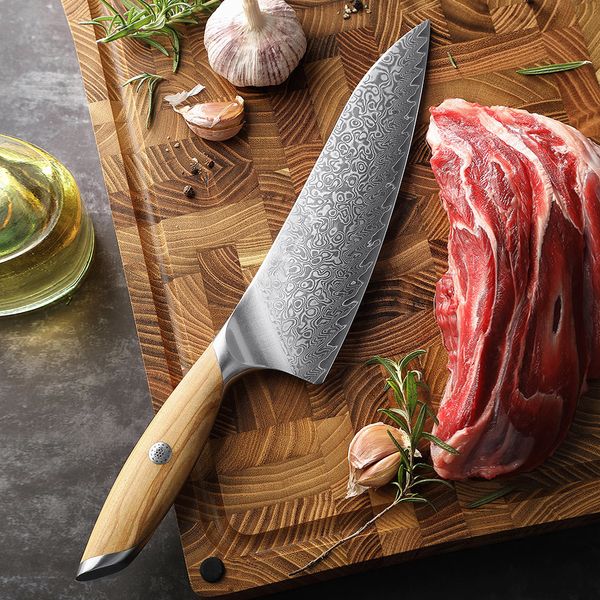
Anyone looking into Japanese-style knives soon comes across the gyuto. At first glance it looks like a perfectly ordinary chef's knife. The difference is in the detail: thinner blade, flatter belly, harder steel.
Here you will learn what a gyuto is, how it differs from the European chef's knife and the santoku, and who it is the right choice for.
What is a gyuto?
Gyuto is a Japanese word meaning roughly "beef knife". The shape emerged when meat became more common in Japanese cooking and cooks needed a knife modelled on the European chef's knife. Today the gyuto plays the same role there as the chef's knife does here: the big all-purpose knife for almost every task.
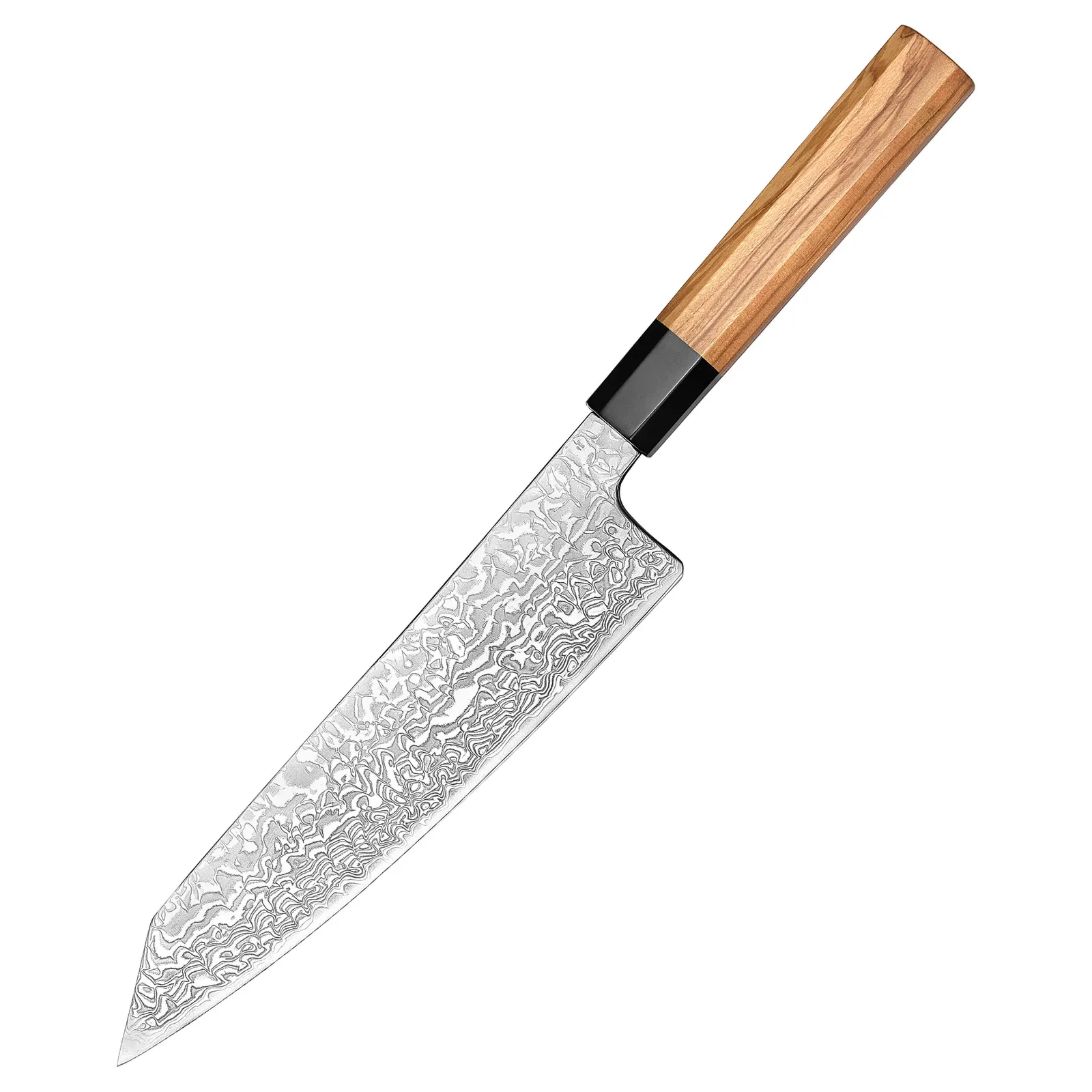
The blade is long and tapers to a point. The edge curves towards the tip but is flatter towards the heel than on many European chef's knives.
Gyuto or European chef's knife?
| Gyuto | European chef's knife | |
|---|---|---|
| Blade thickness | thin | usually sturdier |
| Weight | rather light | rather heavy |
| Hardness | often 60 HRC or more | often 56–58 HRC |
| Edge angle per side | around 15° | around 20° |
| Edge profile | flat belly, pointed tip | more curved |
| Cutting style | pull and push cuts, little rocking | rocking cut |
| Bones and frozen food | no | with caution |
The gyuto is the knife for precise, clean cuts: paper-thin carpaccio, finely chopped herbs, neatly separated diced onion. The European chef's knife is sturdier and more forgiving – but tends to squash soft food more.
What to look for in a chef's knife in general is covered in our chef's knife test.
Gyuto or santoku?
Both are all-rounders, but with different characters:
- The gyuto is longer and has a pronounced tip. It suits large quantities, big pieces of meat and jobs where you need the tip.
- The santoku is shorter, with a taller blade and a flatter edge. It is handier and particularly pleasant for vegetables.
If you have plenty of worktop space and like cutting large quantities, the gyuto will make you happy. If you have a small kitchen and mainly cut vegetables, the santoku is more likely the one. We compared the two in detail under Chef's knife or santoku (in German).
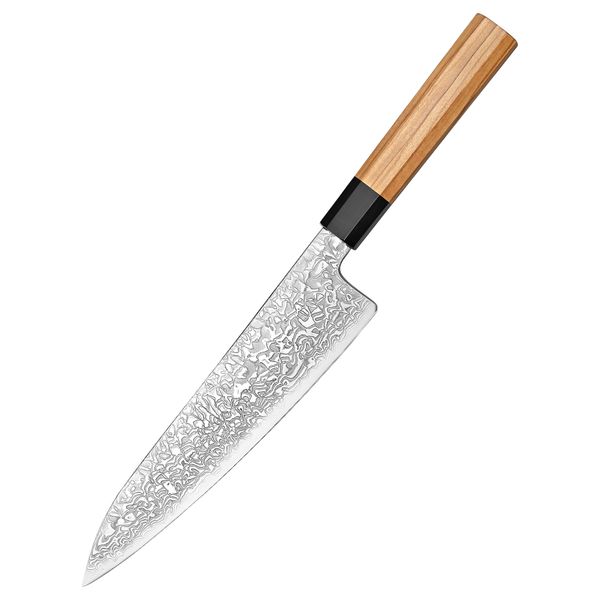
In the shop · KAYA
Chef's knife
€129,00
Which length?
- 18 cm: easy to handle, good for small kitchens and smaller hands.
- 21 cm: the standard – long enough for squash and roasts, still easy to control.
- 24 cm and more: for professionals and large quantities. Needs a large board.
For most home cooks, 21 cm is the best choice.
How to cut with a gyuto
Pull and push cuts
Grip: thumb and index finger pinch the blade just in front of the handle, the other fingers wrap around the handle. This lets you guide the knife precisely.
Push cut: place the tip at the front on the board and push the blade forwards and down through the food.
Pull cut: for meat and fish, draw the blade towards you in one long movement – don't saw, don't press.
Little rocking: the flat rear part of the edge is made for cuts where the blade rests fully on the board. Heavy rocking uses the curved tip instead.
Sharpening a gyuto
A gyuto is sharpened on a whetstone, usually at an angle of around 15 degrees per side. A fine grit is suitable for finishing. Exactly how it works is explained in our guide How to sharpen a knife.
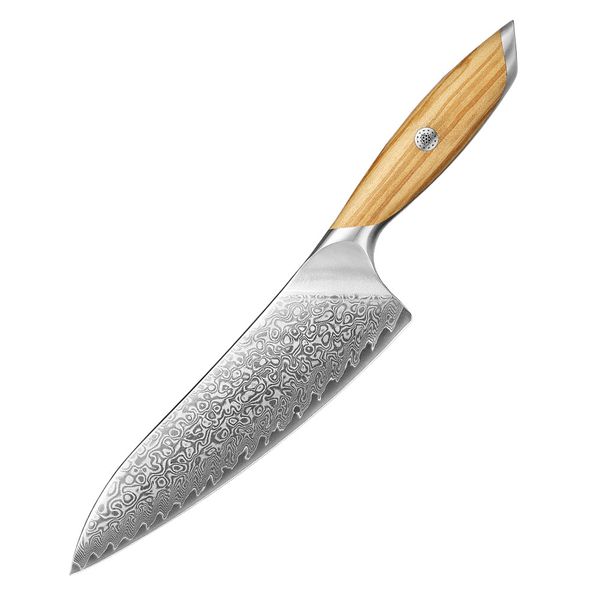
In the shop · ORIBU
Chef's knife
€169,00
Frequently asked questions
What does gyuto mean?
Gyuto is Japanese and means roughly "beef knife". It refers to the big all-purpose knife that corresponds to the European chef's knife.
Is a gyuto a chef's knife?
Yes. The gyuto is a Japanese-style chef's knife – usually thinner, lighter and with a flatter edge profile than the European chef's knife.
What length should a gyuto be?
For most home cooks, 21 cm is ideal. 18 cm is handier; from 24 cm it becomes more of a professional's knife.
Gyuto or santoku – which is better?
Neither is better, they are different. The gyuto is longer and more pointed, the santoku shorter and handier. For large quantities, go for the gyuto; for vegetables in a small kitchen, the santoku.
Can I cut meat with a gyuto?
Yes, that is what it was developed for – cut boneless meat with long pull cuts. Bones and frozen food are off limits.
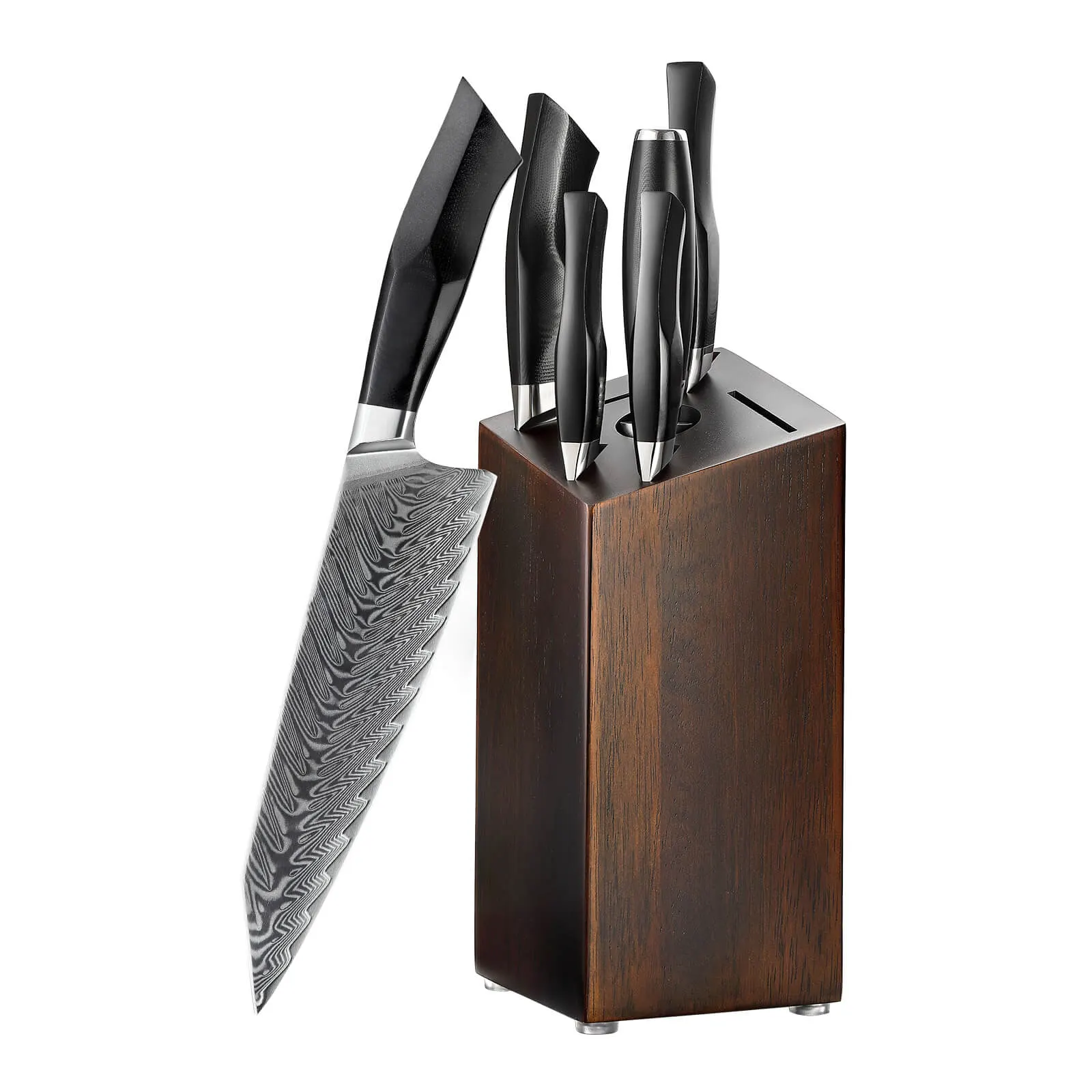
Matching in the shop