Cleaver: meat cleaver, Chinese chef's knife or nakiri?
The heavy meat cleaver for bones, the thin Chinese chef's knife and the nakiri look alike – but are used in completely different ways. Which one suits your kitchen?
4 min read · 11 November 2026
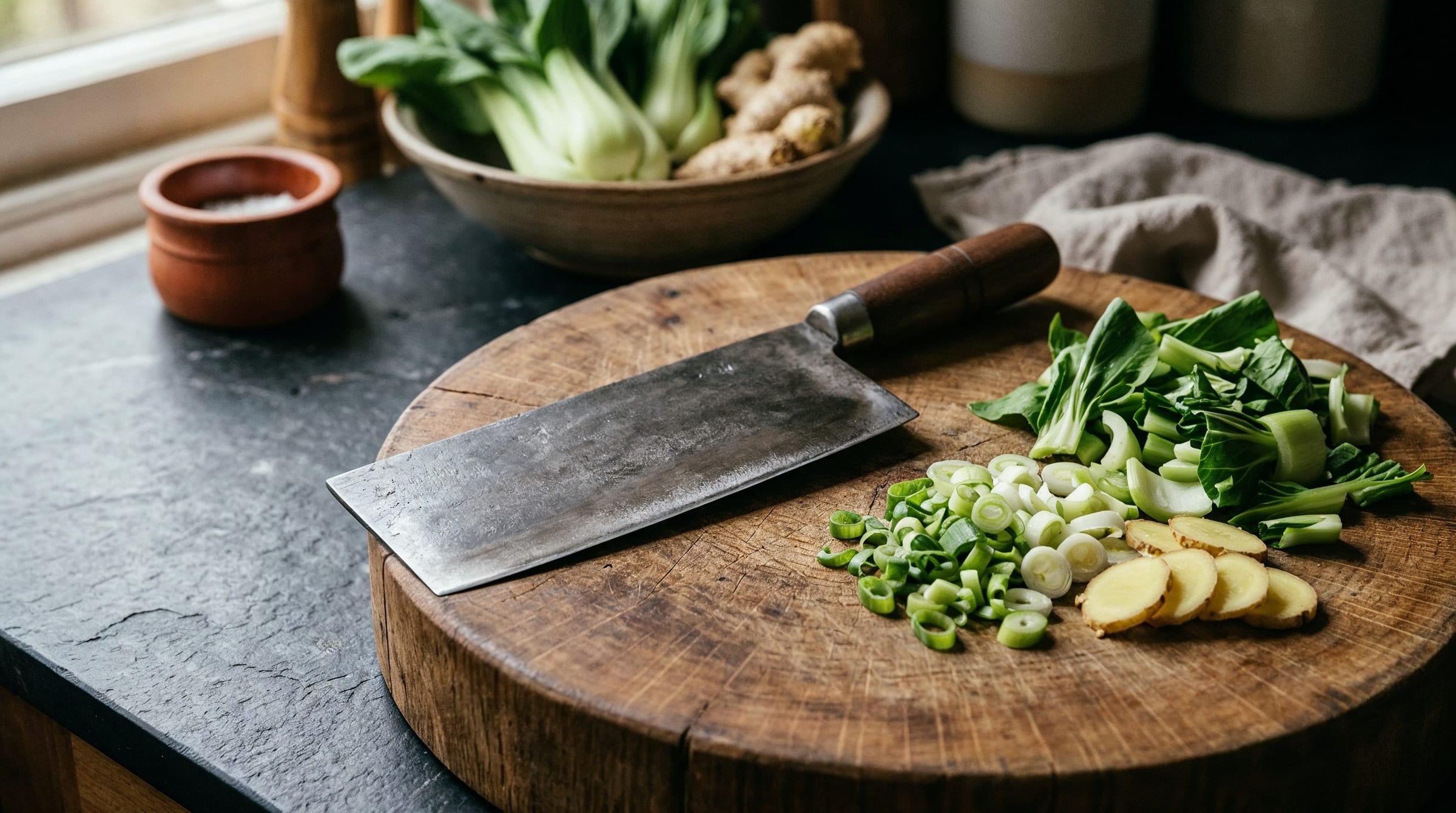
When people say "cleaver", they can mean three very different knives. They look similar – a tall, rectangular blade – yet are used in completely different ways. Pick the wrong one and, at worst, you'll ruin the edge.
Here you'll learn which types of cleaver there are, what they are made for and which one suits your kitchen.
Three knives, one name
| Meat cleaver | Chinese chef's knife | Nakiri | |
|---|---|---|---|
| Blade | thick, heavy | thin, tall | thin, light |
| Weight | approx. 400–900 g | approx. 250–400 g | approx. 150–220 g |
| Blade length | 15–20 cm | 18–22 cm | 16–18 cm |
| Edge angle per side | 25–30° | 15–20° | 12–15° |
| Made for | bones, jointing poultry | vegetables, boneless meat, herbs | vegetables and herbs |
| Bones? | yes | no | no |
The meat cleaver: the real chopper
The meat cleaver – also called a butcher's cleaver – is the only knife in the kitchen you really chop with. The blade is several millimetres thick and heavy, with a steep edge of 25 to 30 degrees per side. This lets the edge withstand blows on bone.
For: jointing poultry, separating ribs, cracking bones for stock, splitting hard squash.
Not for: fine cuts. A cleaver isn't a precision tool – thin tomato slices won't work with it.
The Chinese chef's knife: the underrated all-rounder
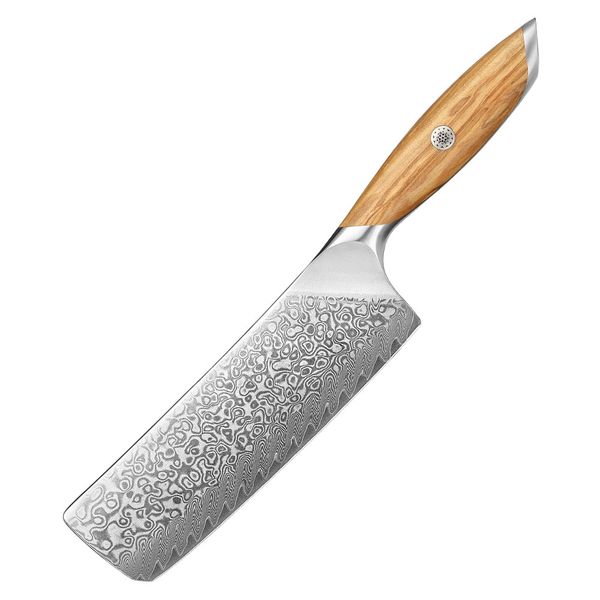
It looks like a cleaver but is the opposite: the Chinese chef's knife – originally caidao, literally "vegetable knife" – has a thin, finely sharpened blade. In many Chinese kitchens it's the only knife and does almost everything.
For: vegetables of every kind, boneless meat, fish, herbs, garlic.
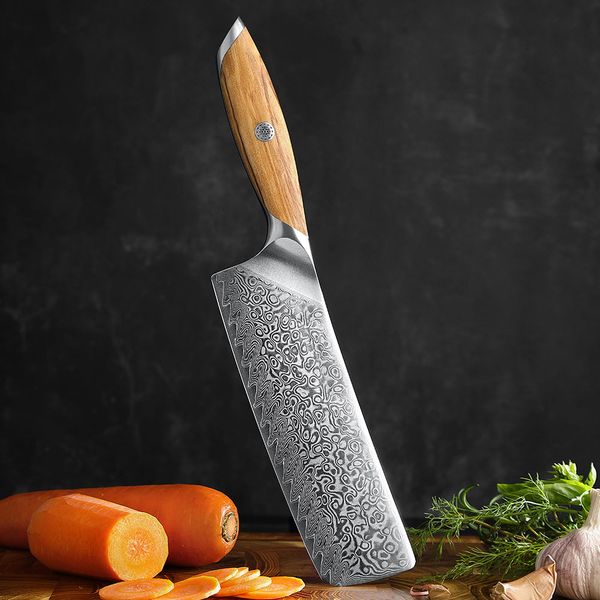
What makes it special: the tall blade guides safely along your knuckles. You can crush garlic and ginger with the flat side, and use the wide blade to scoop what you've cut from board to pan.
Not for: bones. The thin edge will chip.
The nakiri: the Japanese-style vegetable knife
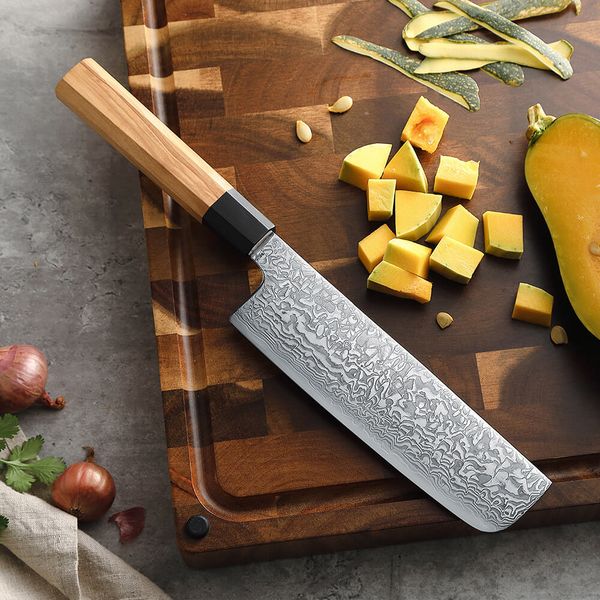
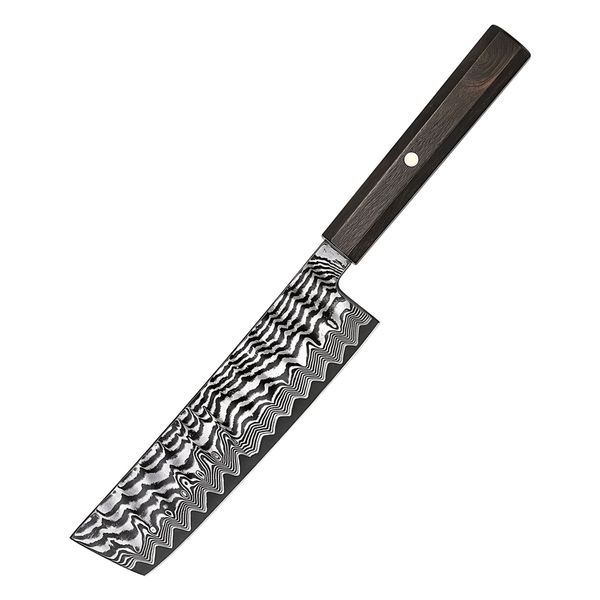
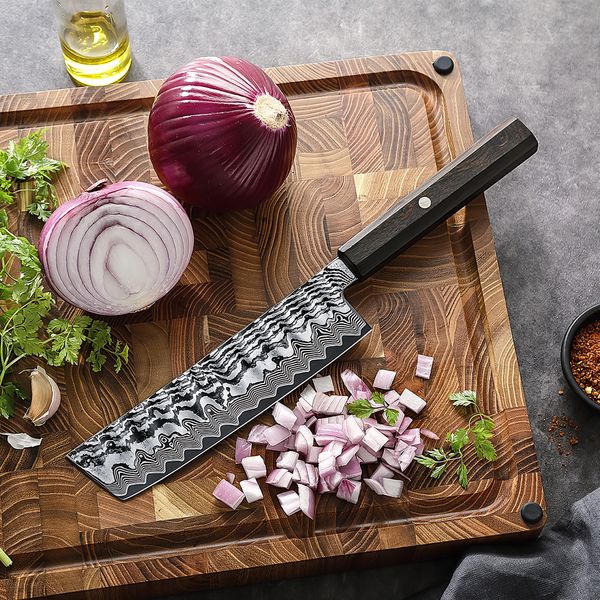
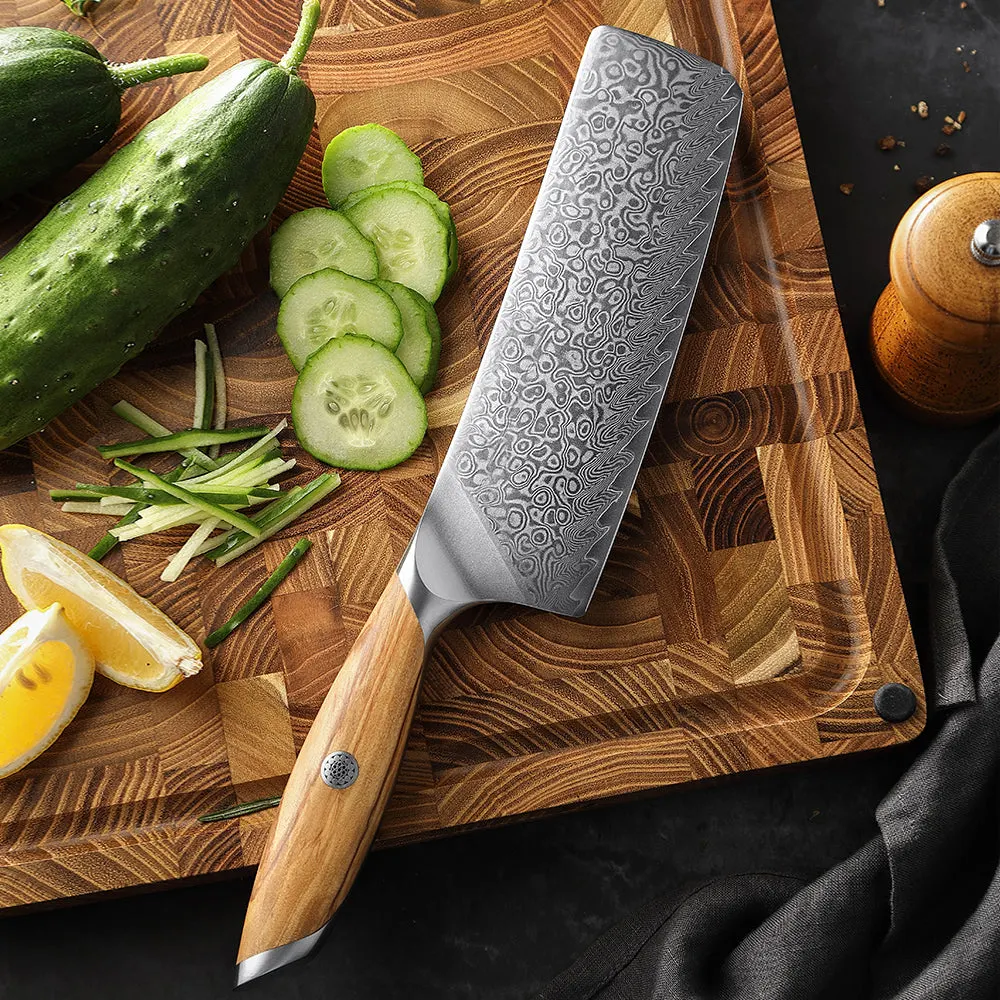
The nakiri is smaller and lighter than the Chinese chef's knife but shares the same basic idea: a straight edge and a rectangular blade. Because the edge is flat, it rests on the board along its whole length. Vegetables are cut cleanly, without slices hanging together by a thread.
For: vegetables, salad, herbs – from wafer-thin cucumber slices to a cabbage cut in half.
Not for: bones, frozen food and anything that requires levering. More on this in our article on vegetable knives.
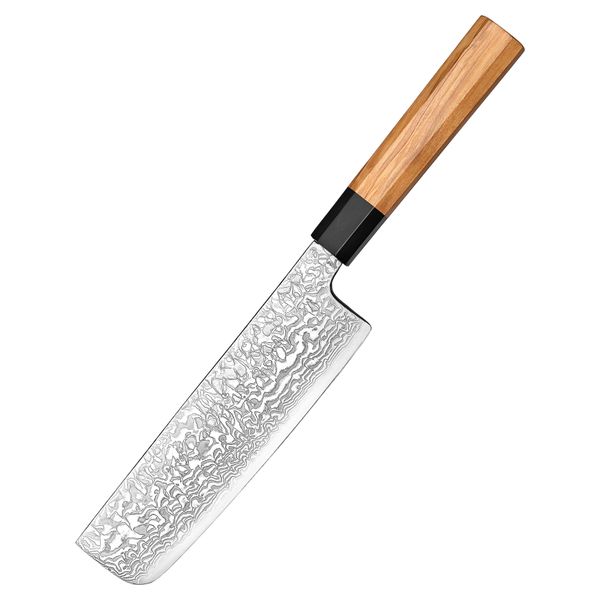
In the shop · KAYA
Nakiri knife
€139,00
And the mezzaluna?
The mezzaluna is sometimes called a chopper too: a curved blade with two handles that you rock back and forth over herbs. It can do exactly one thing – finely chop herbs and nuts. A sharp chef's knife or santoku does that just as well with a rocking cut.
Which cleaver do you need?
- You regularly joint poultry on the bone or make stock from bones: a meat cleaver.
- You want one knife for almost everything and like tall blades: a Chinese chef's knife.
- You cut lots of vegetables and want precise, fine cuts: a nakiri.
- You're looking for an all-rounder for vegetables, meat and fish: then a santoku or chef's knife is usually the better choice.
Cutting properly with a tall blade
The technique for nakiri and Chinese chef's knife
Claw grip: the fingertips of your holding hand curl inwards, knuckles forward. The flat of the blade rests against the knuckles.
Push cut: place the edge at the front and push the knife forwards and down through the vegetable – don't press straight down.
Stay flat: the straight edge meets the board along its whole length. There's no need to rock as with a chef's knife.
Scooping up: gather what you've cut with the spine, not the edge – that protects the sharpness.
Frequently asked questions
What is the difference between a cleaver and a meat cleaver?
Strictly speaking they are the same: a heavy knife with a thick blade for bones. In everyday language, though, the thin Chinese chef's knife and the nakiri are also called cleavers – and they aren't made for chopping bones.
Can I chop bones with a Chinese chef's knife?
No. The classic Chinese chef's knife is thinly ground and intended for vegetables and boneless meat. For bones there are dedicated, much thicker cleavers.
Is a nakiri a cleaver?
It looks like one, but it's a vegetable knife. With a nakiri you slice, you don't chop.
Which sharpening angle for a cleaver?
A meat cleaver for bones is sharpened at 25 to 30 degrees per side, a Chinese chef's knife at 15 to 20 degrees. You'll find all the values in our sharpening angle chart.
Matching in the shop