Vegetable knives: every shape and what it's for
From small paring knife to large nakiri: vegetable knives at a glance, what each shape is made for – and the two knives that equip you for almost any vegetable.
4 min read · 11 November 2026
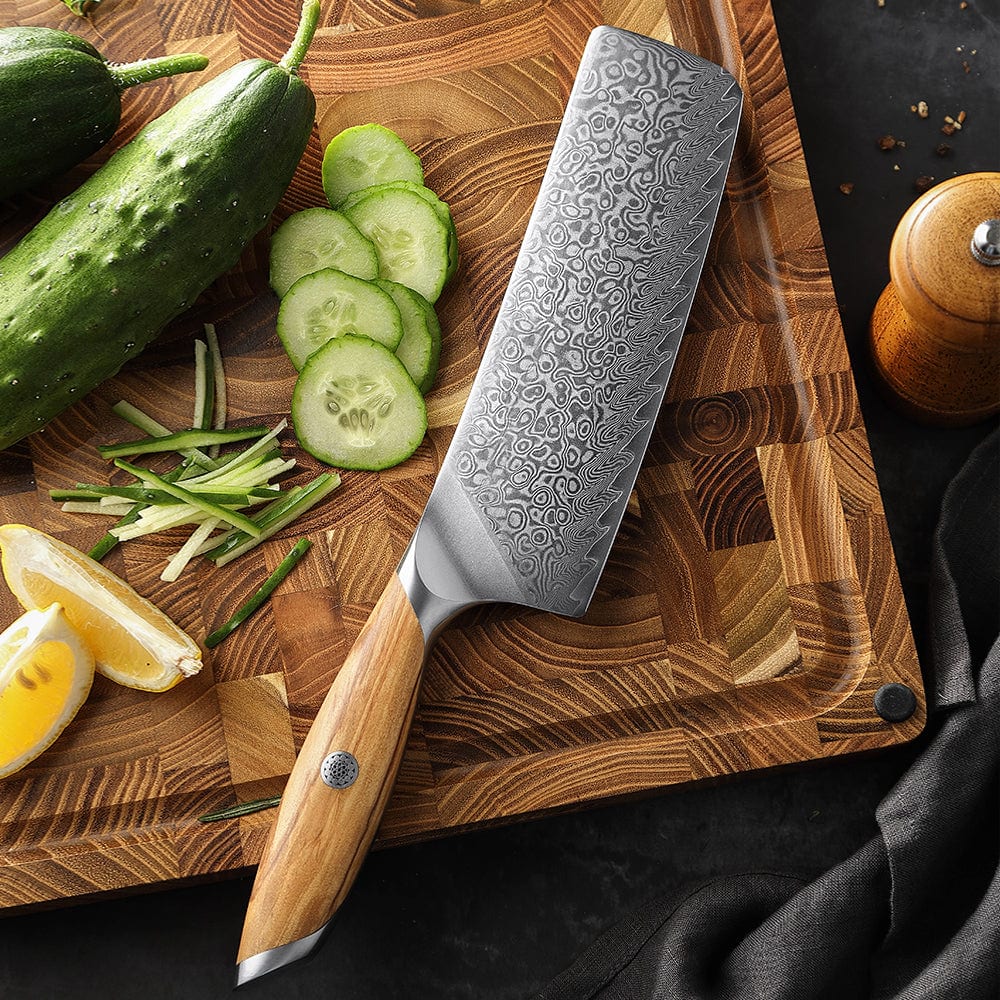
In most kitchens, vegetables make up the largest share of the cutting work. Accordingly, there are plenty of knives for the job – from the small paring knife used in the hand to the large nakiri for the board.
This overview shows you which vegetable knives there are, what each shape is made for and which two knives equip you for almost any vegetable.
Small vegetable knives: work in the hand
The classic vegetable knife is small: a blade of 8 to 10 cm, used in the hand rather than on the board. It comes in several shapes.
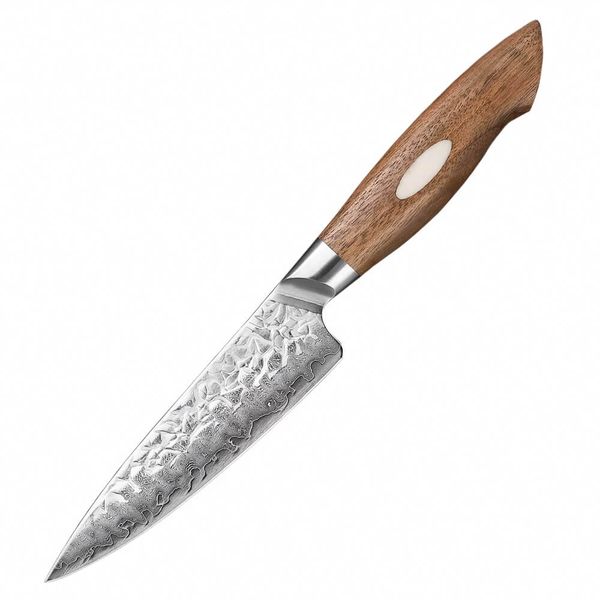
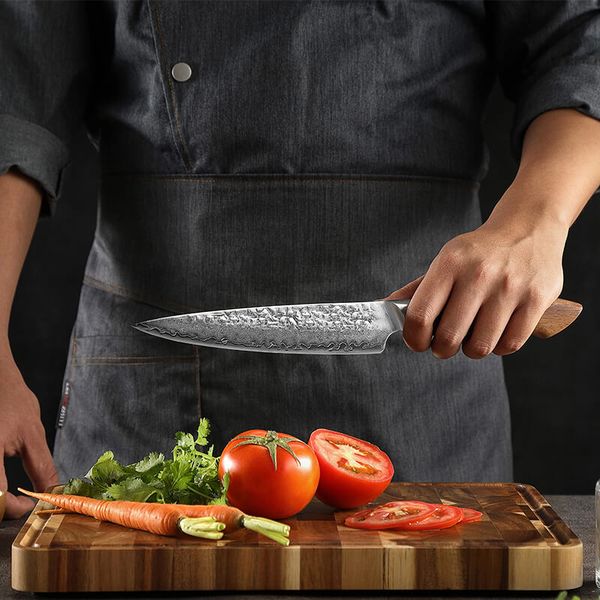
Paring knife
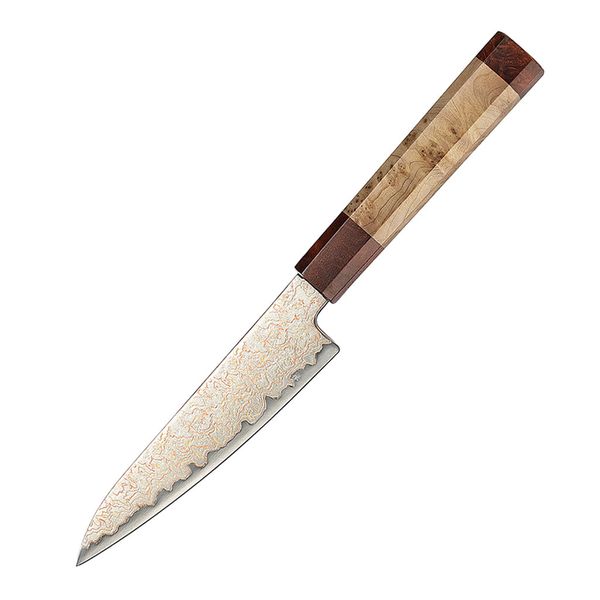
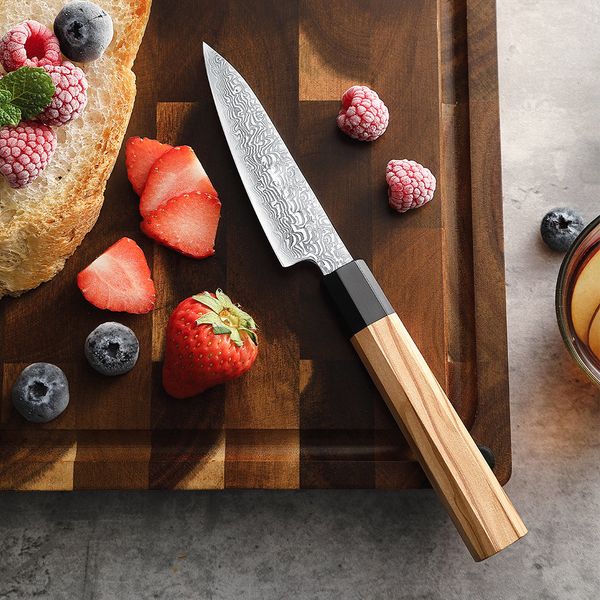
Short, straight or slightly curved blade with a point. For peeling fruit and vegetables, removing eyes and stalks, scoring and trimming. The paring knife is the one you pick up most often on the side.
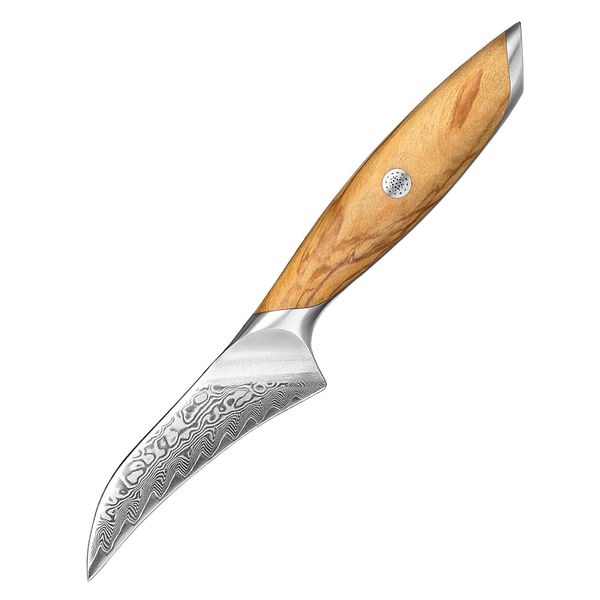
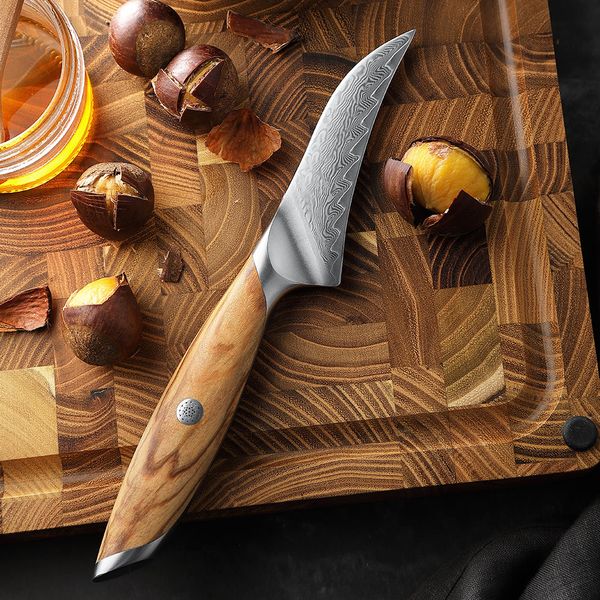
Bird's beak knife
The blade curves downwards like a bird's beak. Made for round shapes: turning potatoes and carrots into even barrel shapes – known as tourné – or peeling round fruit.
Small utility knife
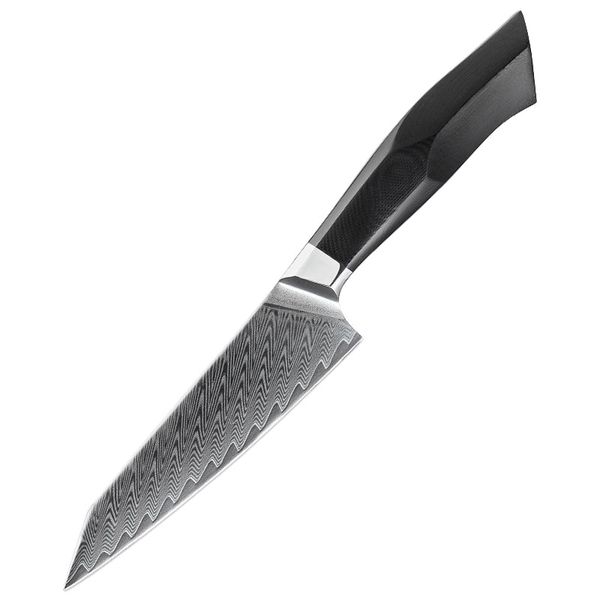
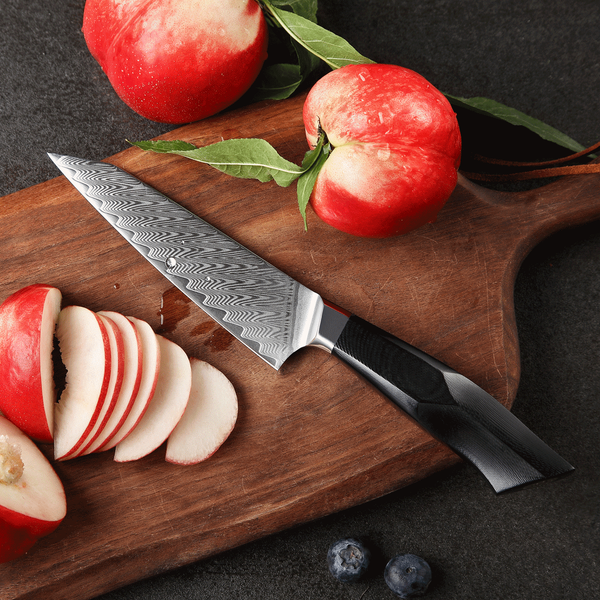
A little longer and more pointed than the paring knife, with an 8 to 12 cm blade. A small all-rounder for onions, garlic, mushrooms and larding.
Tomato knife and decorating knife
The tomato knife has a serrated edge that saws through the smooth skin. If you have a really sharp knife with a straight edge, you don't need one – it cuts tomatoes more cleanly. The crinkle-cut knife with its wavy blade is purely decorative: it cuts carrots or cucumbers with a ridged pattern.
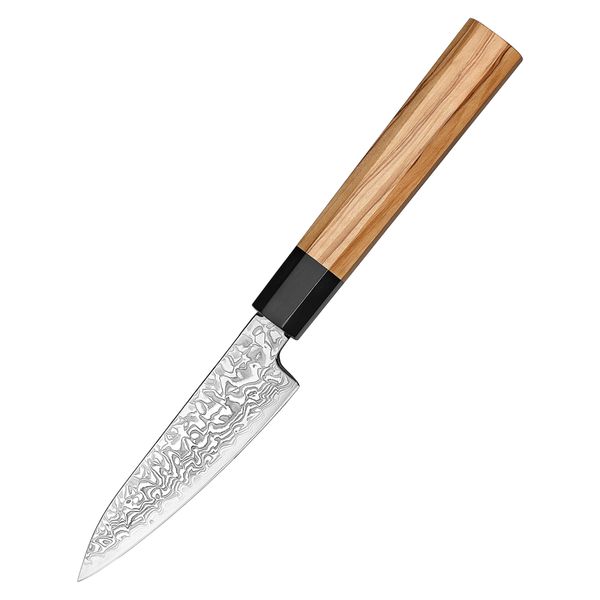
In the shop · KAYA
Paring knife
€95,00
Large vegetable knives: work on the board
For large quantities and big vegetables, you need a knife for the board. Here it's about length, blade height and an edge that rests cleanly on the board.
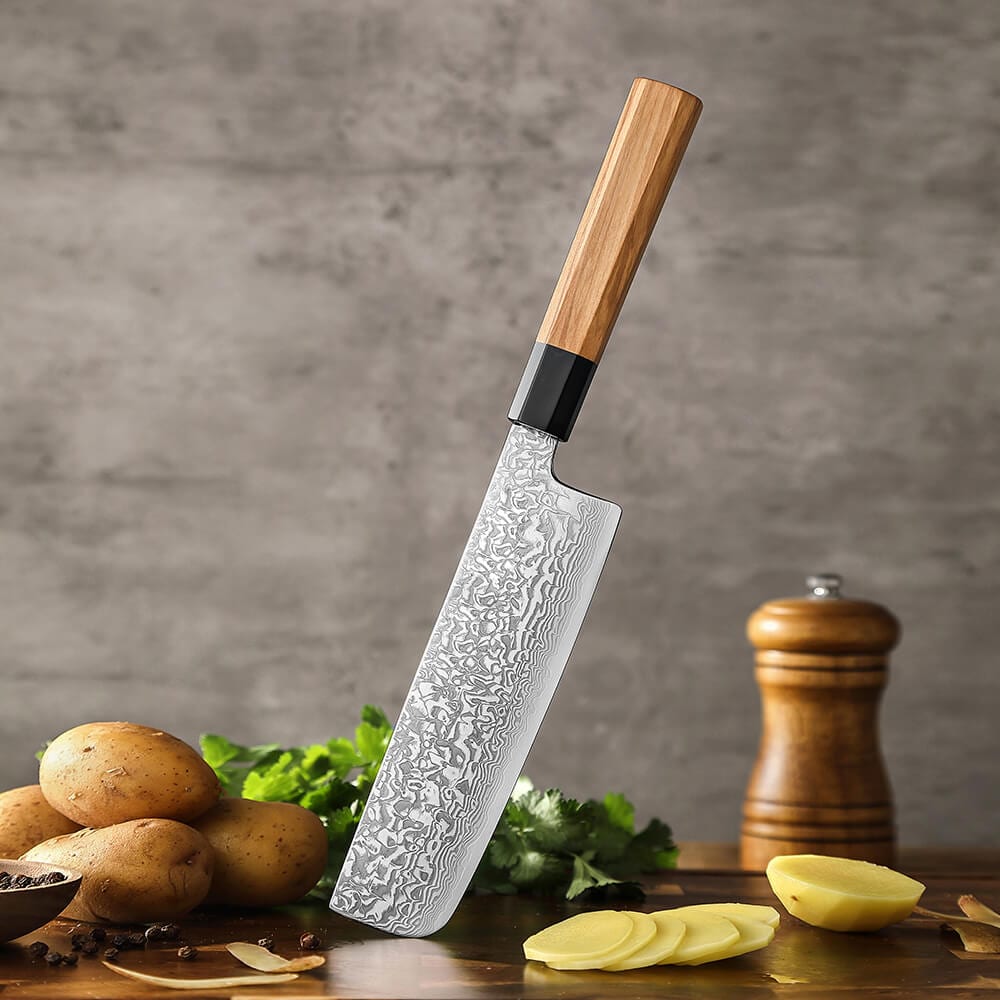
Nakiri
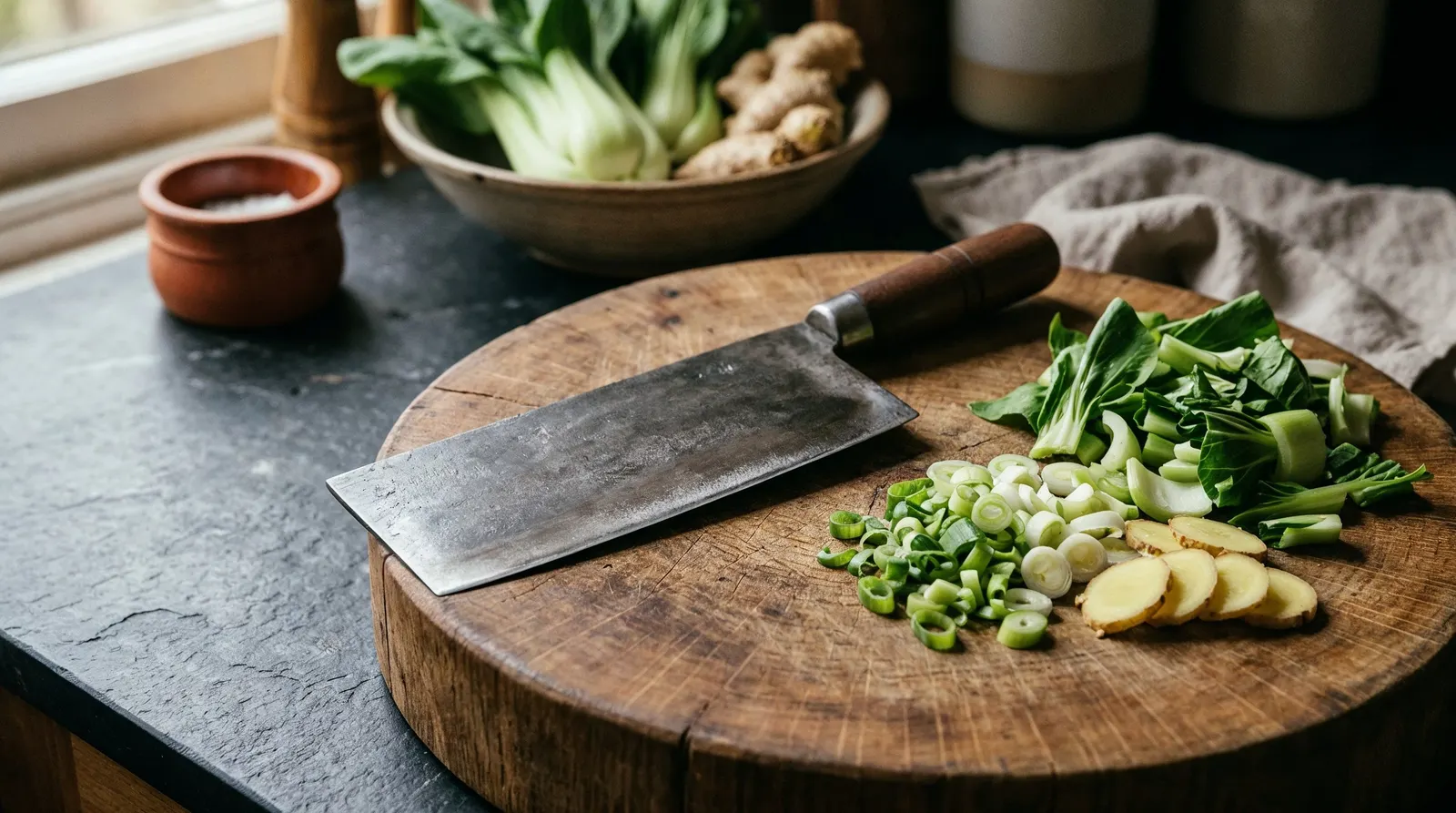
The nakiri is the Japanese-style vegetable knife: rectangular blade, straight edge, sharpened on both sides. The edge rests on the board along its whole length, so everything is cut through in one stroke. The tall blade guides safely along your knuckles and serves as a scoop for what you've cut.
Usuba
Looks similar to the nakiri but is sharpened on one side only. It allows extremely thin cuts, such as wafer-thin ribbons of daikon. Single-bevel sharpening and handling take practice – the usuba is a knife for professionals.
Santoku and chef's knife
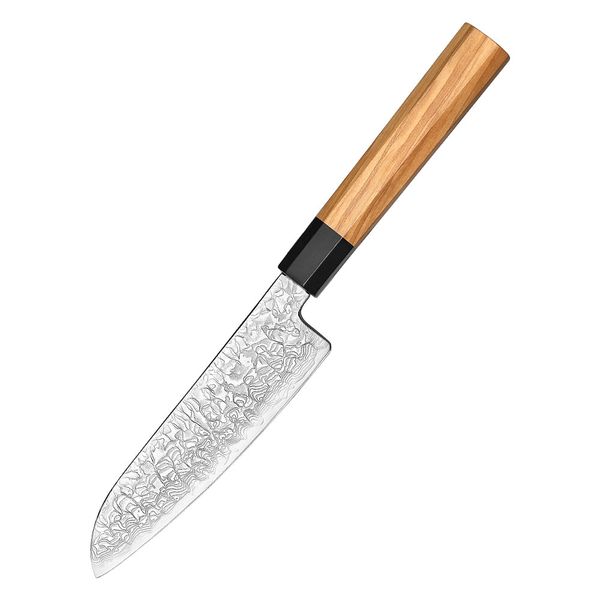
Neither is a pure vegetable knife, but both cut vegetables superbly. The santoku has a flat edge similar to the nakiri plus a tip. The chef's knife is longer and made for the rocking cut – ideal for herbs and large quantities.
| Task | Best | Also works |
|---|---|---|
| Peeling, trimming, removing eyes | paring knife | small utility knife |
| Dicing onions | santoku, chef's knife | nakiri |
| Finely chopping herbs | chef's knife | santoku, nakiri |
| Cabbage, lettuce, large vegetables | nakiri, chef's knife | santoku |
| Wafer-thin slices (cucumber, radish) | nakiri | santoku |
| Squash | large chef's knife | santoku |
| Tomatoes | any sharp straight-edged knife | tomato knife |
| Garlic, ginger, chilli | paring knife, utility knife | santoku |
Nakiri or santoku?
If you cut almost nothing but vegetables and own a second large knife, the nakiri is unbeatable: its straight edge and tall blade are made for exactly that.
If you're looking for one knife for everything – vegetables, meat and fish – choose the santoku. Its tip also lets you pierce and trim, which the nakiri can't do.
What you really need
For most kitchens, two knives for vegetables are enough:
- a small knife for work in the hand – a paring knife or a utility knife,
- a large knife for the board – nakiri, santoku or chef's knife.
Everything else is a specialist tool you only need if you use a particular technique regularly.
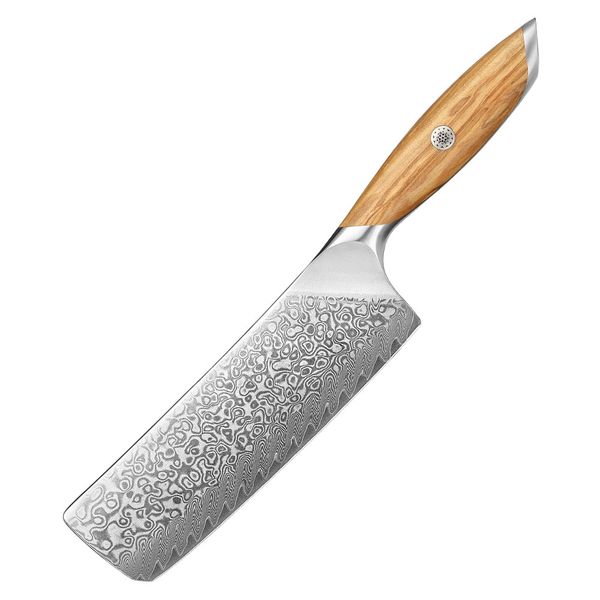
In the shop · ORIBU
Nakiri knife
€169,00
Frequently asked questions
What is a vegetable knife?
In the narrow sense, a small knife with an 8 to 10 cm blade for peeling and trimming. In the broader sense, any knife made for vegetables – including the large nakiri.
What is the difference between a vegetable knife and a paring knife?
The terms are often used interchangeably. The paring knife is usually a little shorter and meant for peeling in the hand; the vegetable knife is slightly bigger and more versatile.
Does a vegetable knife need a serrated edge?
No. A serrated edge saws, a sharp straight edge cuts more cleanly – tomatoes too. A straight edge is also easy to resharpen.
What is a nakiri good for?
For vegetables, salad and herbs. The straight edge cuts through everything in one stroke, the tall blade guides your fingers safely and lifts what you've cut off the board.
How do I sharpen a vegetable knife?
On a whetstone, like any straight-edged knife. You'll find the guide under How to sharpen a knife.
Matching in the shop