Santoku knife test: what to look for when buying
You can recognise a good santoku knife by seven features – from blade length to balance. Our buying guide without test seals, but with everything that matters.
4 min read · 14 November 2026
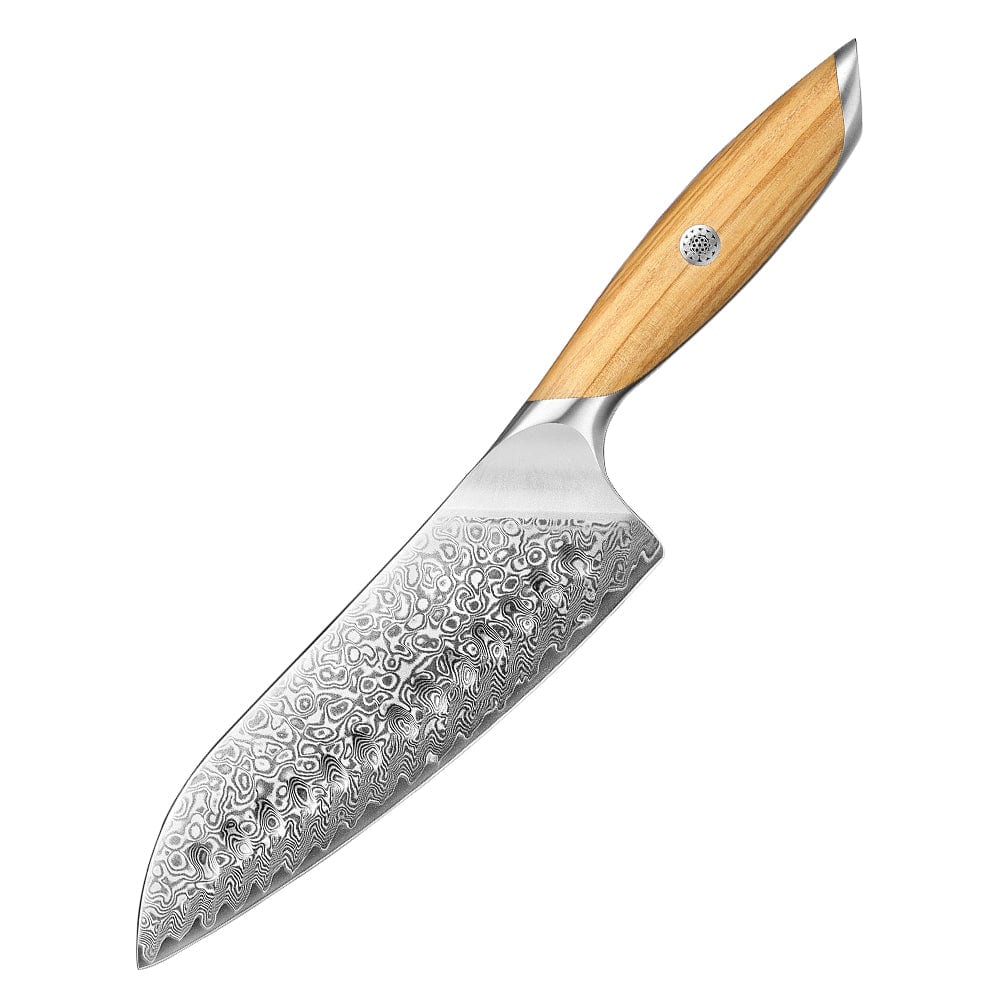
In many kitchens the santoku is the favourite knife – easy to handle, versatile and quick to sharpen. Accordingly, the choice is huge. Instead of naming a test winner, we show you the seven criteria that make a good santoku. With them, you can judge any knife yourself.
What a santoku actually is and what you use it for is explained in our santoku knife overview.
1. Blade length
Most santokus have a blade of 16 to 19 cm. That is enough for squash, cabbage and roasts while still being easy to handle. Smaller santokus of around 14 cm are ideal for small hands, small boards or as a second knife for herbs and onions.
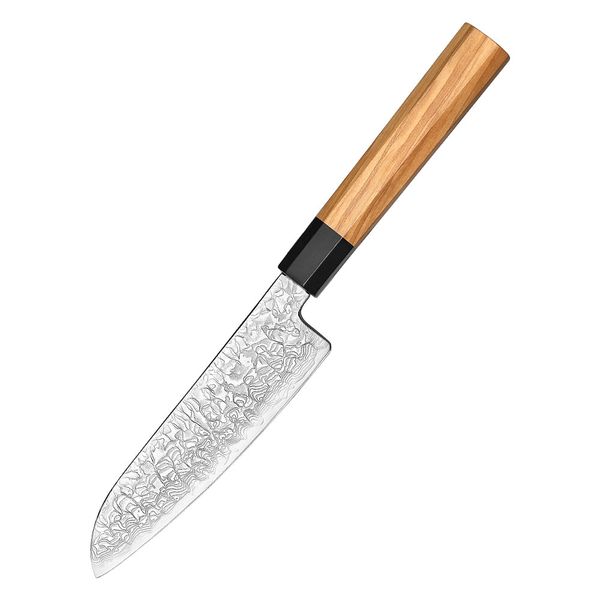
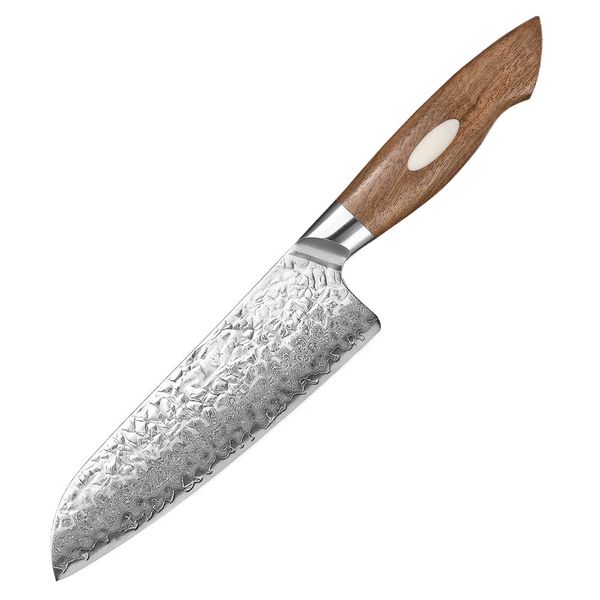
In the shop · KAYA
Small santoku knife
€119,00
2. Steel and hardness
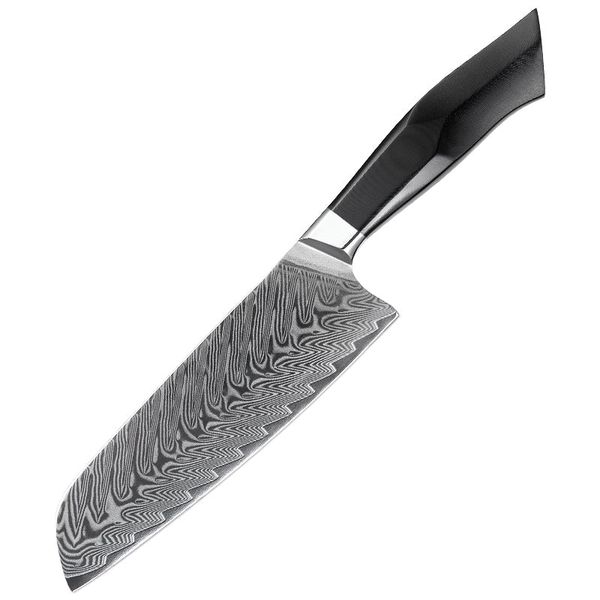
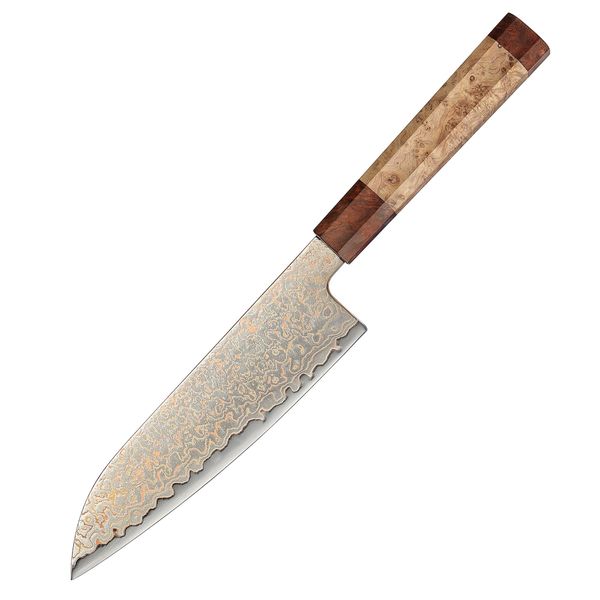
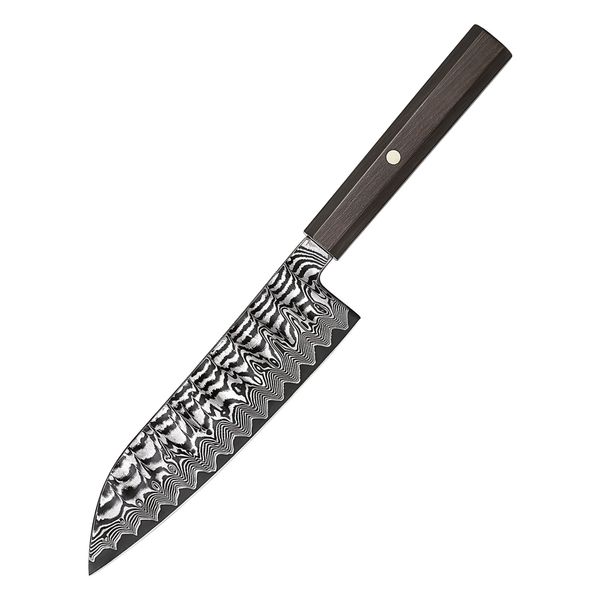
Hardness determines how long the edge stays sharp. Good santokus are between 58 and 62 HRC. In Damascus knives, a particularly hard core sits between softer outer layers: the core forms the edge, the outer layers protect it and create the pattern.
In our santokus you will find, for example, a core of AUS-10 (DAIKI, 60 HRC) or powder steel (ORIBU, 62 HRC). What the layers mean is explained in What is Damascus steel?.
3. Edge angle
A santoku is usually sharpened on both sides at about 15 degrees per side – much finer than many classic kitchen knives. That is what makes it so pleasantly sharp. Make sure the edge runs evenly and has no chips.
4. Blade shape and dimples
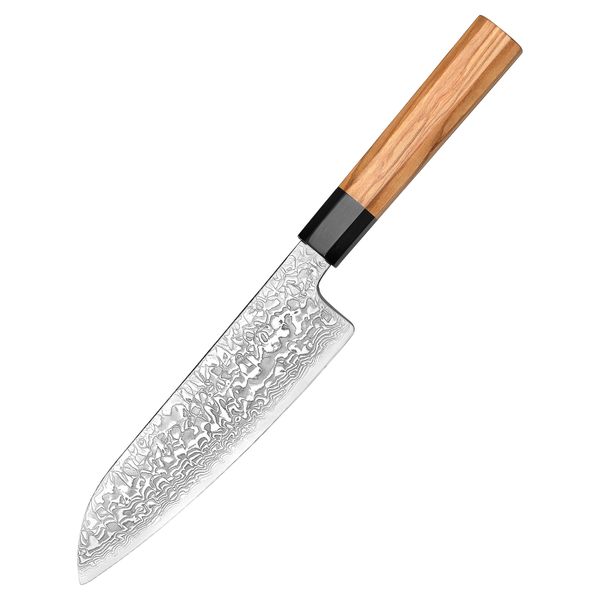
The santoku is defined by its flat edge with a rounded tip (sheepsfoot shape). When cutting, it rests almost entirely on the board.
Dimples – small hollows on the blade – are meant to stop potato or cucumber slices sticking to the blade. They help a little but aren't essential. A good, thinly ground blade makes more of a difference than dimples.
5. Handle
The handle decides whether you enjoy using a knife. Look for a shape that suits the size of your hand and a clean transition to the blade.
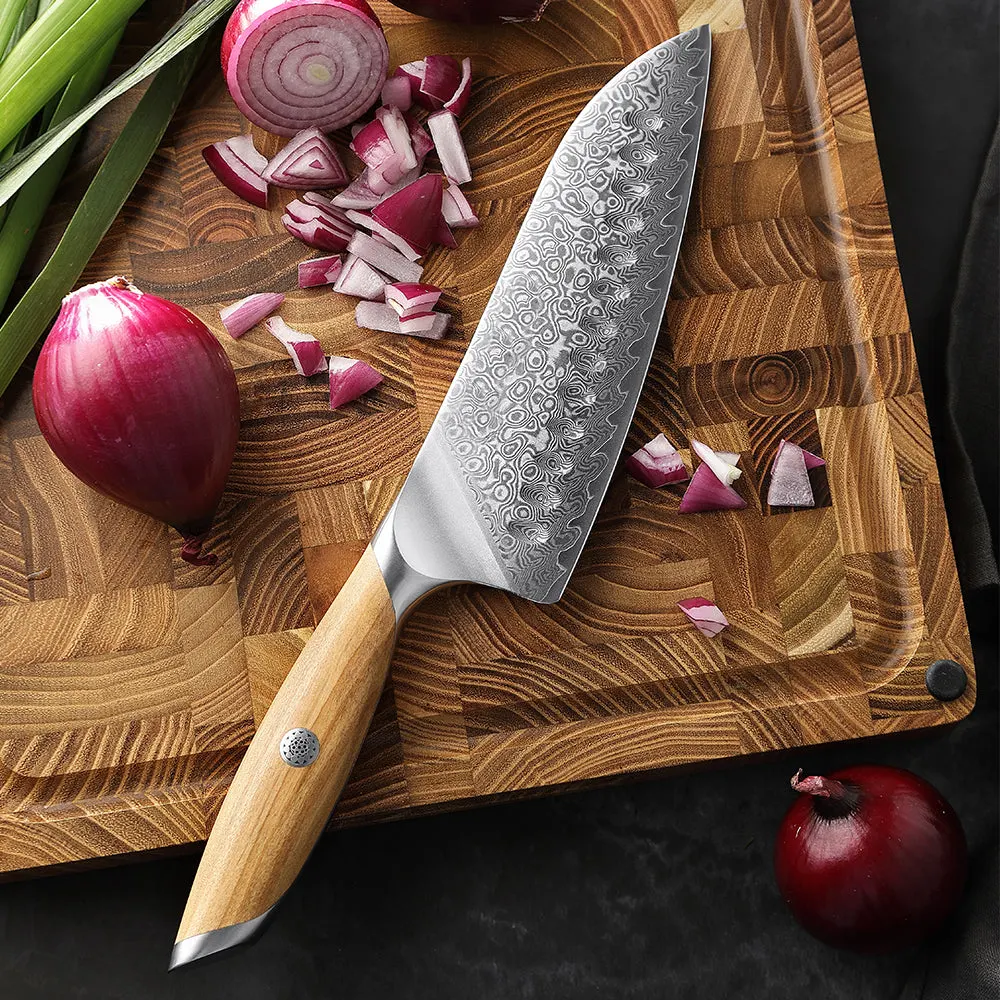
- Wood (olive wood, walnut, ebony) feels warm in the hand and needs a little oil now and then.
- G10 is a composite material, very robust and unaffected by moisture.
6. Weight and balance
Santokus usually weigh between 150 and 250 g. Light knives are nimble and tire the hand less; heavy ones cut through squash and cabbage with more of their own weight. A knife is balanced if it rests on one finger placed where the blade meets the handle.
7. Finish and care
The spine and bolster should be deburred so nothing digs into your finger. The handle must not have any gaps. And even the best santoku doesn't belong in the dishwasher. You will find care tips in the Damascus knife care guide (in German).
| Criterion | What to look for |
|---|---|
| Blade length | 16–19 cm as a main knife, 14 cm as a small knife |
| Hardness | 58–62 HRC |
| Edge angle | both sides, around 15° per side |
| Blade | thinly ground, even edge |
| Dimples | nice, but not essential |
| Handle | fits the hand, clean transition |
| Weight | 150–250 g, depending on preference |
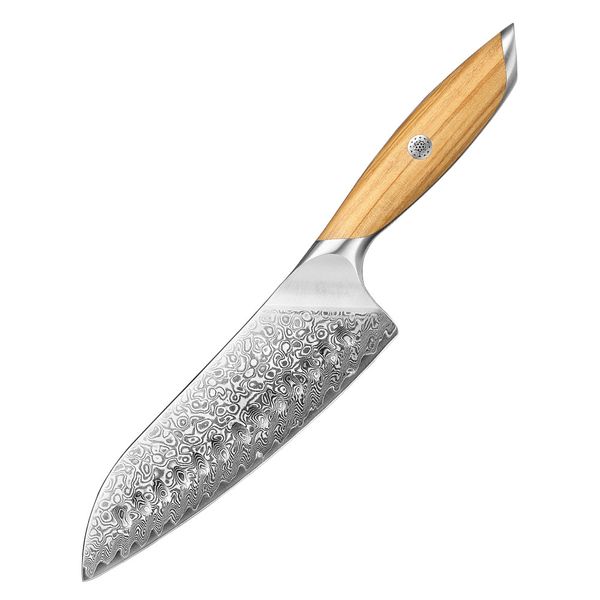
In the shop · ORIBU
Santoku knife
€159,00
Santoku or chef's knife?
If you are still torn between a santoku and a chef's knife: the santoku is handier and ideal for vegetables, the chef's knife is longer and made for the rocking cut. You will find the detailed comparison under Chef's knife or santoku (in German), and the Japanese-style version of the chef's knife under Gyuto.
Frequently asked questions
What blade length is ideal for a santoku?
For most people, 17 to 19 cm is ideal. Smaller santokus of around 14 cm suit small hands or work as a second knife.
Do I need a santoku with dimples?
No. Dimples reduce sticking a little, but a thinly ground blade matters more.
How hard should a santoku knife be?
58 to 62 HRC is a good range: it stays sharp for a long time and is still easy to resharpen.
What do I use a santoku for?
For vegetables, boneless meat, fish and herbs. For bread with a hard crust, a bread knife is the better choice.
Is there a santoku knife test winner?
We don't award test seals. With the seven criteria above you can judge any santoku yourself – and for our knives, all the data is on the product page.
Matching in the shop