Whetstone, sharpening stone or honing rod: what's the difference?
Whetstone, sharpening stone, finishing stone, honing steel: what each term means, how sharpening differs from honing – and which tool your knife needs.
4 min read · 11 November 2026
Anyone who wants to sharpen a knife quickly comes across lots of terms: whetstone, sharpening stone, finishing stone, honing steel, honing rod. Some mean the same thing, others something completely different. The short answer: for kitchen knives, whetstone and sharpening stone usually mean the same stone today. The long answer is still useful – because the difference between sharpening and honing decides which tool your knife needs right now.
Sharpening, honing, finishing – three different things
- Sharpening means: steel is removed on a stone until a clean edge forms again. This is needed when a knife is really blunt.
- Honing means: the fine edge, which has bent sideways during cutting, is straightened again. Hardly any material is removed. Honing refreshes sharpness but doesn't replace sharpening.
- Finishing means: after sharpening, the edge is smoothed on a very fine stone or on leather and freed of the burr.
What is a whetstone?
Originally, a whetstone was a small, elongated stone held in the hand and passed over the blade – the way you touch up a scythe or sickle in the field. It is made for quick touch-ups.
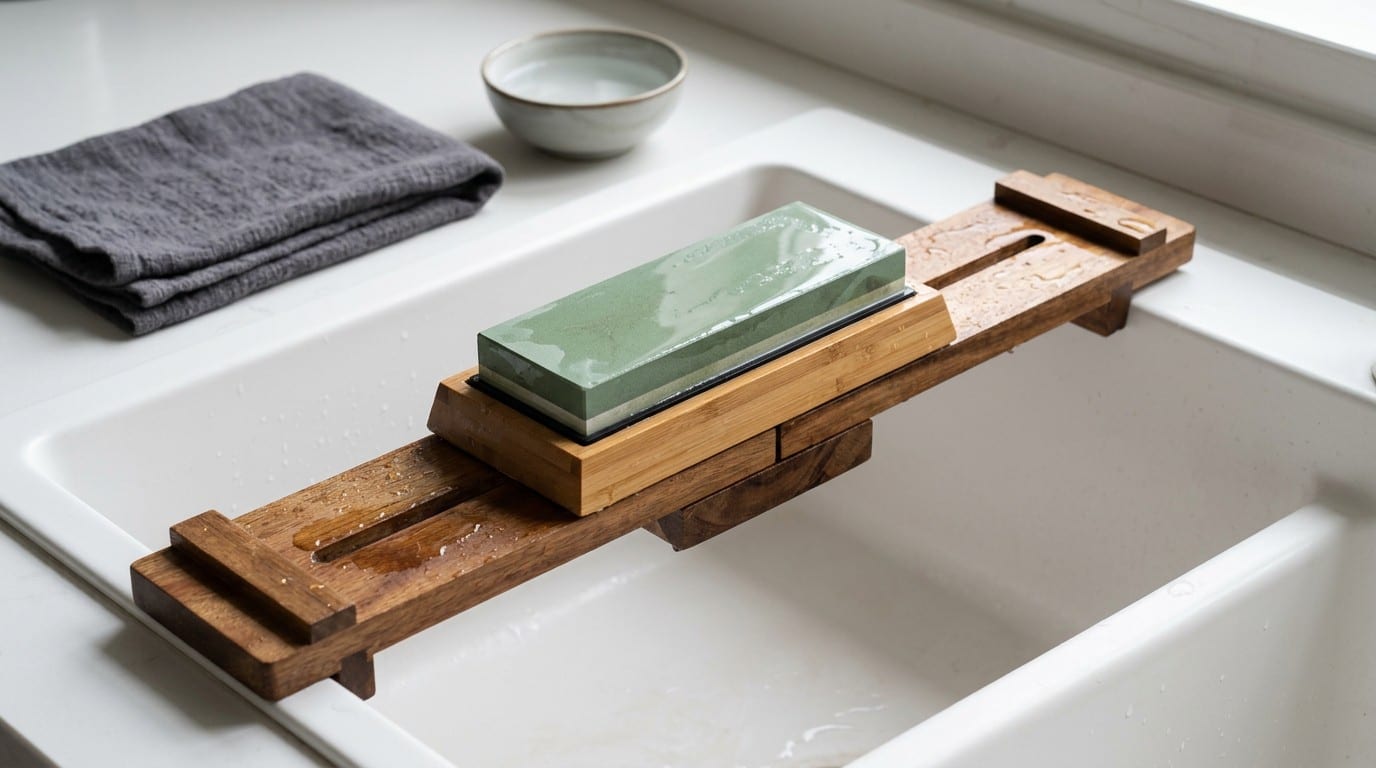
Today the term is used much more broadly in shops: large, flat stones for kitchen knives are sold as whetstones too. If you search online for a "whetstone for knives", you will almost always get what specialists call a bench stone.
What is a sharpening stone?
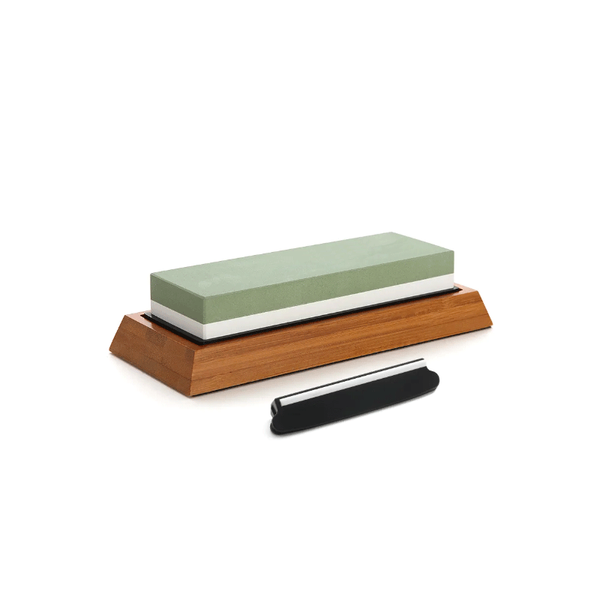
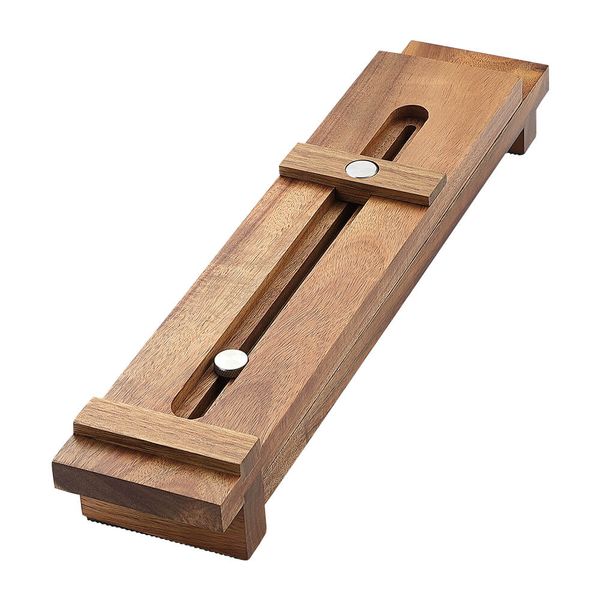
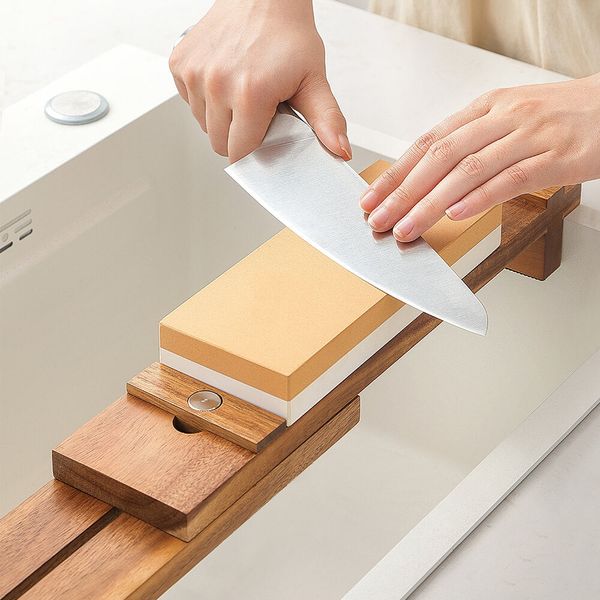
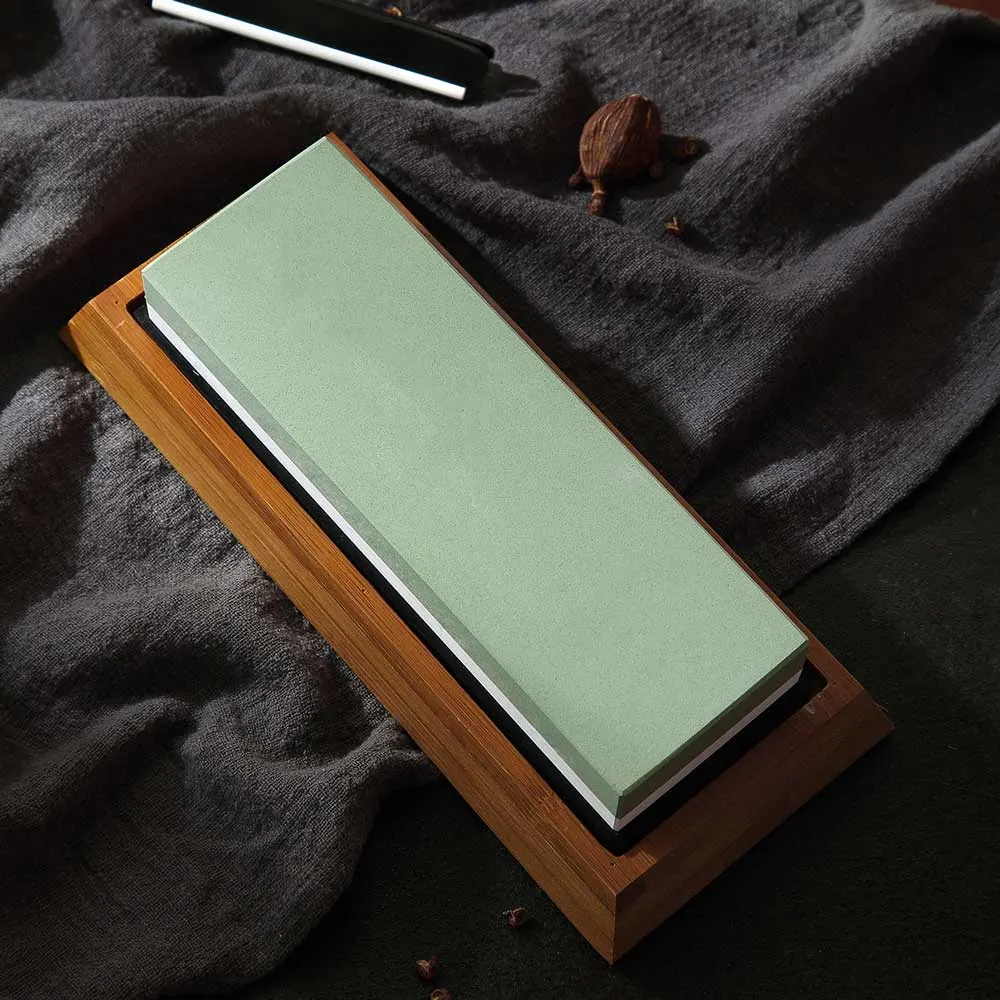
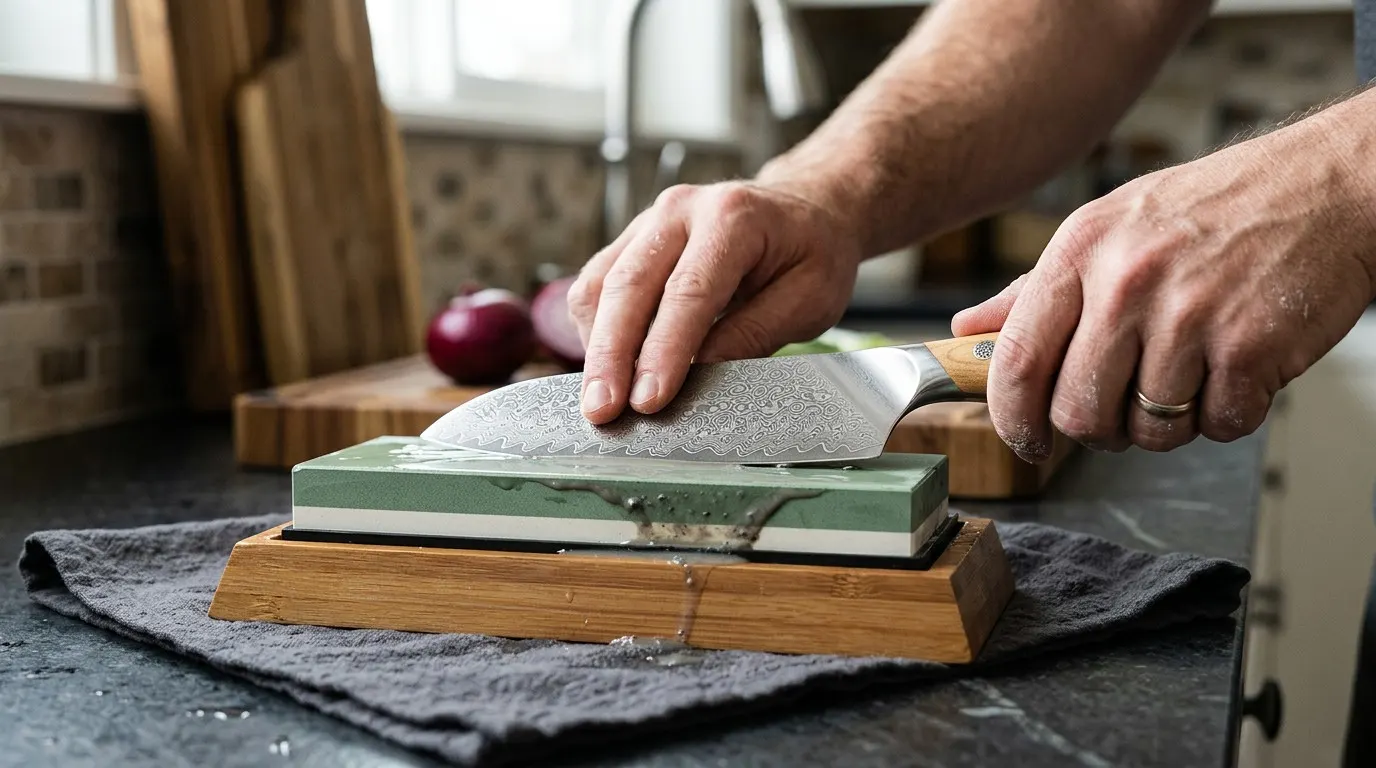
The sharpening stone – more precisely the bench stone – is a flat, rectangular stone that sits firmly on the worktop. Here it is the other way round: the knife is drawn over the stone. This allows an even angle along the whole length of the blade and is the most accurate way to sharpen a kitchen knife.
Sharpening stones come in many grits, from coarse to very fine. Which one you need is explained in our whetstone guide.
And the finishing stone?
A finishing stone is a sharpening stone with a very fine grit, from around #3000. It hardly removes any material but smooths the edge. On a combination stone, the fine side is the finishing stone.
| Tool | What it does | When to use it |
|---|---|---|
| Sharpening stone (#800 – #1200) | removes steel, forms the edge | when the knife is blunt, every few months |
| Finishing stone (from #3000) | smooths and polishes the edge | straight after sharpening |
| Honing steel, smooth or finely ridged | straightens the edge | in between, for softer blades |
| Ceramic honing rod | straightens and lightly sharpens | in between, also for hard blades |
| Pull-through sharpener | scrapes off steel at a fixed angle | for basic knives – not for Damascus |
Honing rod and honing steel: not for every blade
The classic ridged honing steel is made for European chef's knives of softer steel around 56 HRC. Their edge rolls over quickly and is easy to straighten again with the steel.
With hard blades from around 60 HRC it's different: the steel is less forgiving. A coarsely ridged honing steel can cause fine chips in the edge. For such knives – including Damascus knives – a ceramic honing rod with gentle pressure, or the fine stone itself, is the better choice.
What do you need for kitchen knives?
For most kitchens, one combination stone with #1000 and #6000 is enough. You can sharpen and finish with it. If you like, add a ceramic honing rod for touch-ups in between.
Our guide How to sharpen a knife shows sharpening step by step. You will find the right angle for your knife in the sharpening angle chart.
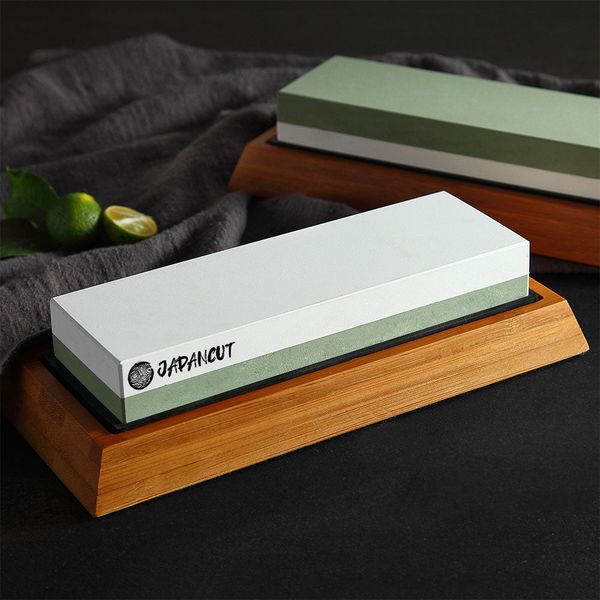
In the shop · MODOSU
Whetstone
€55,00
Frequently asked questions
Is a whetstone the same as a sharpening stone?
In shops, usually yes: both terms are used for flat stones for sharpening knives. In the original sense, a whetstone is a small hand-held stone for touch-ups, a sharpening stone a flat stone the knife is drawn across.
Which is better: honing steel or sharpening stone?
They don't replace each other. The honing steel straightens the edge in between, the sharpening stone re-forms it. A blunt knife only gets sharp again on the stone.
Can I sharpen Damascus knives with a honing steel?
Avoid ridged honing steels on hard Damascus blades. A ceramic honing rod with little pressure or the fine stone is better.
How often should I hone, and how often sharpen?
You can hone every few days as needed. Sharpening is necessary about every two to three months with daily use – hard blades last longer.
Matching in the shop