
Whetstones
With a whetstone you can bring blunt knives back into shape yourself, more gently than with any pull-through sharpener. Our MODOSU stone has two grits: #1000 for sharpening and #6000 for finishing.
2 products
Guide
Whetstones
Whetstones for damascus knives
Even the best knife gets blunt over time. With a whetstone you can bring the edge back into shape yourself, more gently than with any pull-through sharpener. Damascus knives with a hard steel core can be sharpened especially finely on the stone.
MODOSU whetstone
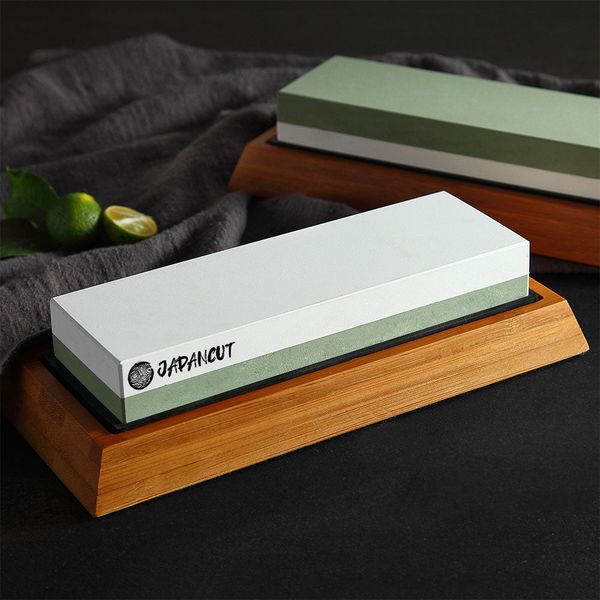
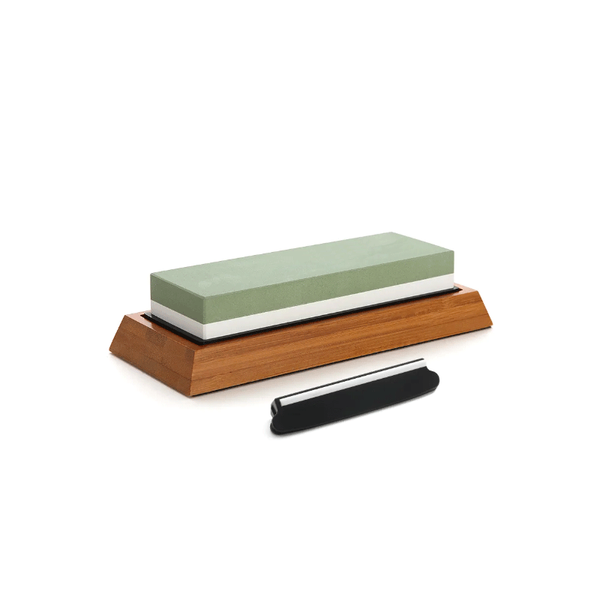
The MODOSU whetstone has two sides: #1000 grit for sharpening and #6000 for finishing and polishing. It's made of white corundum and comes with a bamboo holder, a non-slip silicone base, a sharpening guide and instructions.
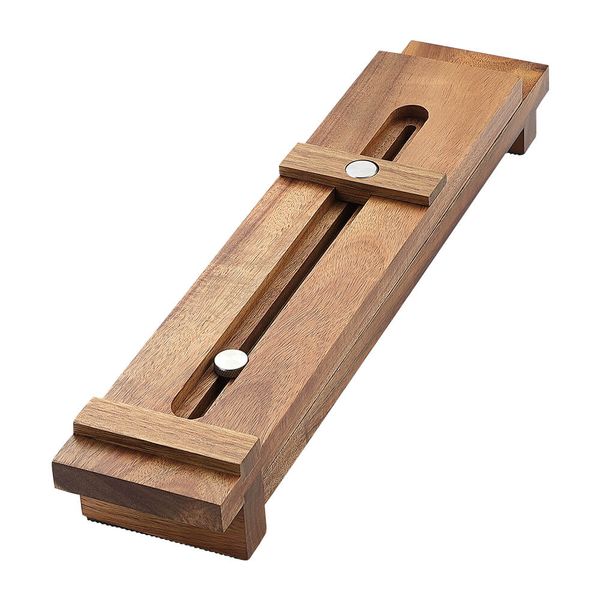
Adjustable whetstone holder
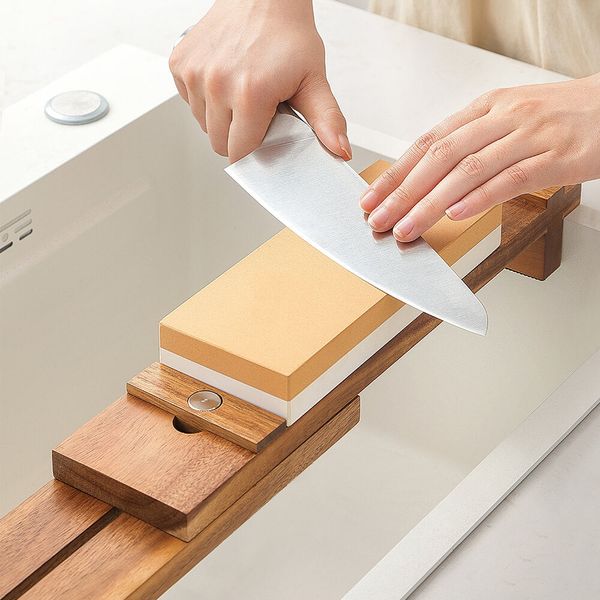
The whetstone holder in polished acacia adjusts in width and sits across the sink. That way you sharpen directly under running water and the slurry drains away. Rubberised supports keep it stable. Dimensions: 37 × 8.5 × 6 cm.
How to sharpen properly
- Soak the stone until no more air bubbles rise.
- Lay the blade at a shallow angle on the coarse side (#1000) and draw it across the stone with even pressure, first one side, then the other.
- On the fine side (#6000), finish the edge with light pressure.
- Rinse and dry the knife.
Frequently asked questions about whetstones
How often do I need to sharpen?
With daily use, roughly every few months. When the knife no longer cuts a tomato effortlessly, it's time.
What angle do I need?
Our damascus knives are mostly sharpened at 15° per side. The sharpening guide helps keep the angle consistent.
Does the stone need soaking?
Yes. Soak it in water for a few minutes before sharpening and keep the surface wet while you sharpen.