Whetstone guide: grits, types and how to use them
Which whetstone for which knife? What the grits mean, which types of stone there are and how to prepare and look after your stone properly.
5 min read · 11 November 2026
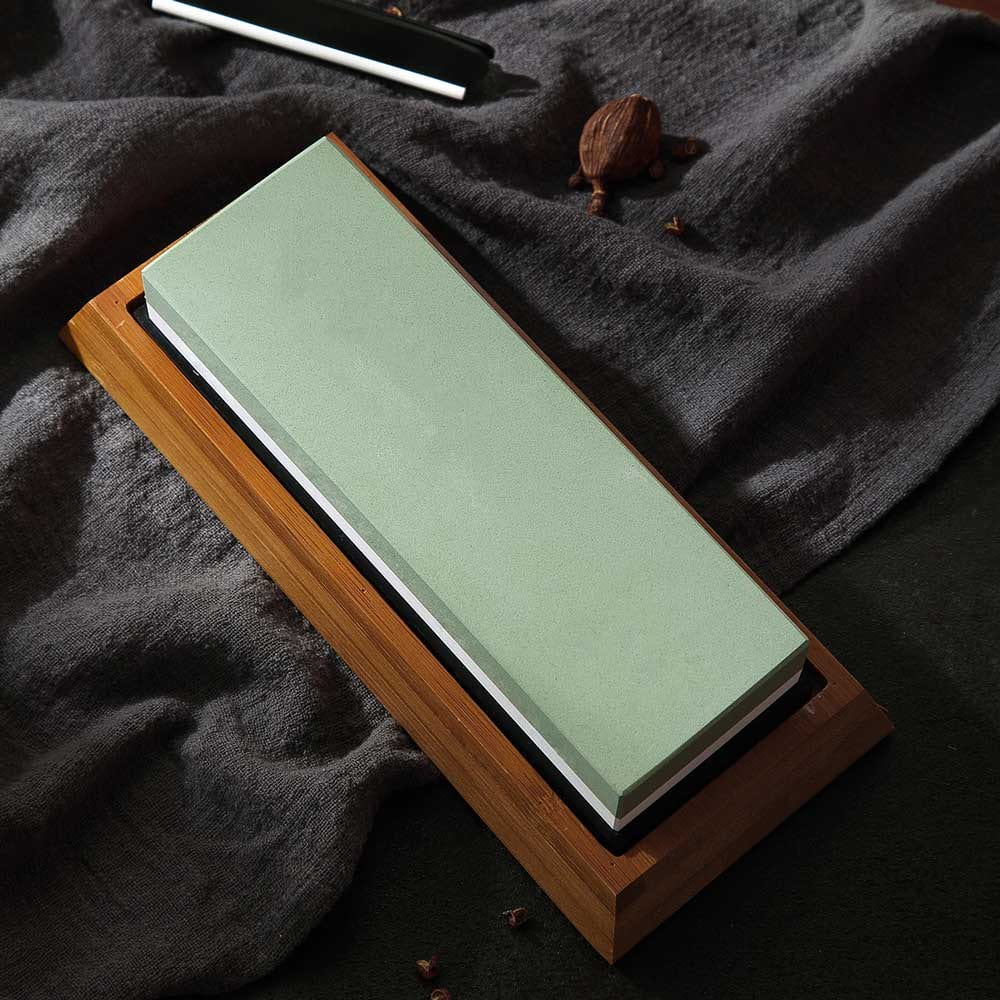
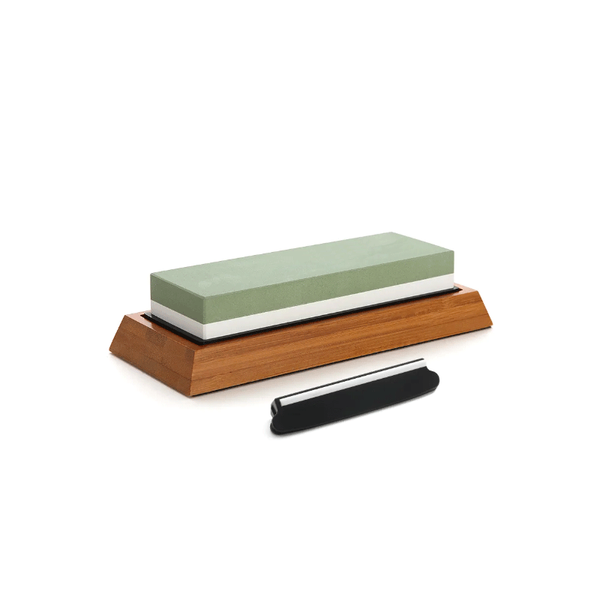
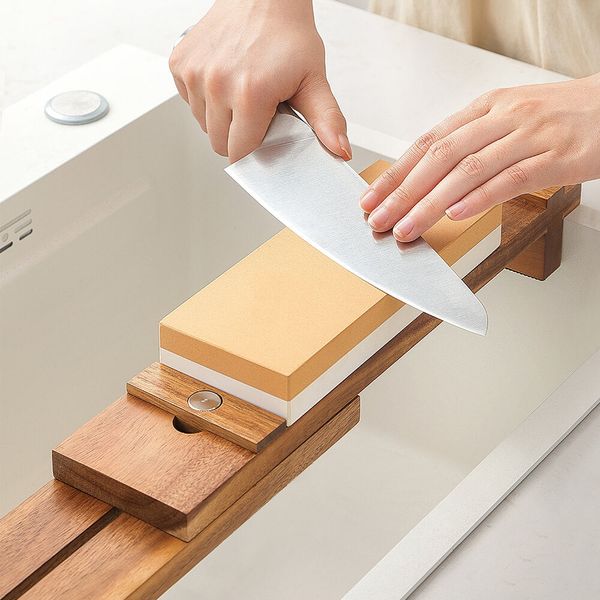
A whetstone is the best tool for getting a kitchen knife truly sharp. It removes material evenly, lets you set the angle yourself and treats the blade more gently than any pull-through sharpener. The choice is huge, though: grits from #200 to #12000, water stones, oil stones, diamond plates, natural stones.
This guide shows you which whetstone suits which knife, which grit you really need and how to prepare and look after the stone properly. You will find the step-by-step instructions for sharpening itself in our article How to sharpen a knife.
What does the grit mean?
The number on the whetstone tells you how fine the abrasive grains are. The higher the number, the finer the stone – and the less material it removes. A coarse stone forms the edge, a fine one smooths and polishes it.
Important: there are two standards. Japanese water stones are graded according to the Japanese JIS standard, European abrasives according to FEPA. The numbers of the two standards aren't directly comparable. The figures in this article refer to the JIS grit commonly used for water stones.
| Grit | Level | Used for |
|---|---|---|
| #200 – #600 | coarse | Grinding out chips, broken tip, very blunt knives |
| #800 – #1200 | medium | Basic sharpening: making blunt knives sharp again |
| #2000 – #3000 | fine | Intermediate step, often the finish for softer steels |
| #4000 – #8000 | very fine | Fine finishing: smooth, long-lasting edge |
| from #10000 | polishing | Mirror polish – nice, but rarely needed in the kitchen |
Which grit do you really need?
For everyday use, two grits are enough: a medium one around #1000 for the actual sharpening and a fine one around #6000 for finishing. That is why combination stones are so popular – two grits in one stone, one side for the work, one for the finish.
You only need a coarse stone below #600 if a blade has nicks or chips. For a knife that has simply gone blunt, it is too aggressive: it removes an unnecessary amount of steel.
With hard blades from around 60 HRC – which includes most Damascus knives – fine finishing is particularly worthwhile. Hard steel holds a finely finished edge for a long time, while softer steels quickly lose that advantage.
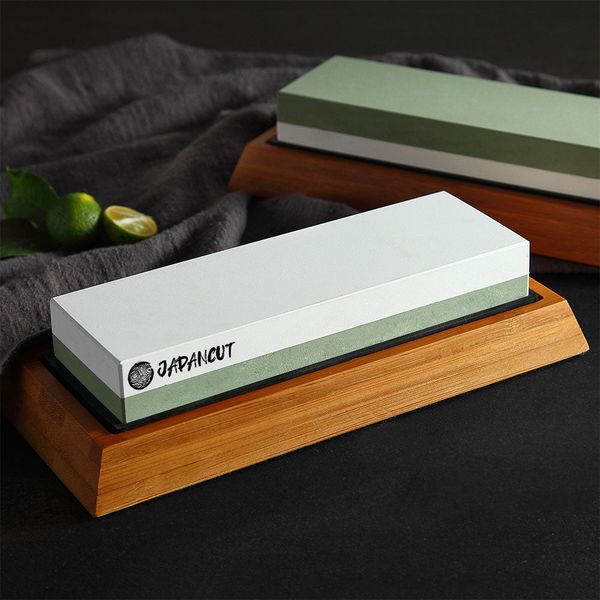
In the shop · MODOSU
Whetstone
€55,00
What types of whetstone are there?
Water stones
The standard for kitchen knives. Water stones consist of bonded abrasive grains, usually corundum (aluminium oxide) or silicon carbide. During sharpening, fresh grains keep breaking loose – together with water they form the grey slurry that helps the sharpening. Water stones work quickly and leave a fine finish. In return they wear and need flattening from time to time.
Diamond plates
A steel plate coated with diamond grains. It sharpens very quickly, always stays flat and needs no soaking. The finish is rougher than with a water stone of the same grit. Diamond plates are good for repairs and for flattening other stones; for fine finishing, a water stone is more pleasant.
Natural stones
Well-known examples are the Belgian coticule and the Arkansas stone. Natural stones sharpen slowly and very finely and are mainly suited to the final pass. Their grit isn't standardised and varies from stone to stone.
Oil stones
Oil is used as the sharpening fluid instead of water. Oil stones are hard and hardly wear, but work more slowly. They have become rare in the kitchen – water is simpler and cleaner.
Preparing the whetstone: soak or just wet?
It depends on the stone:
- Classic water stones are placed in water before sharpening until no more air bubbles rise – usually 5 to 10 minutes.
- Very fine stones and so-called splash-and-go stones are only wetted. Long soaking can damage them.
- Diamond plates only need a few drops of water.
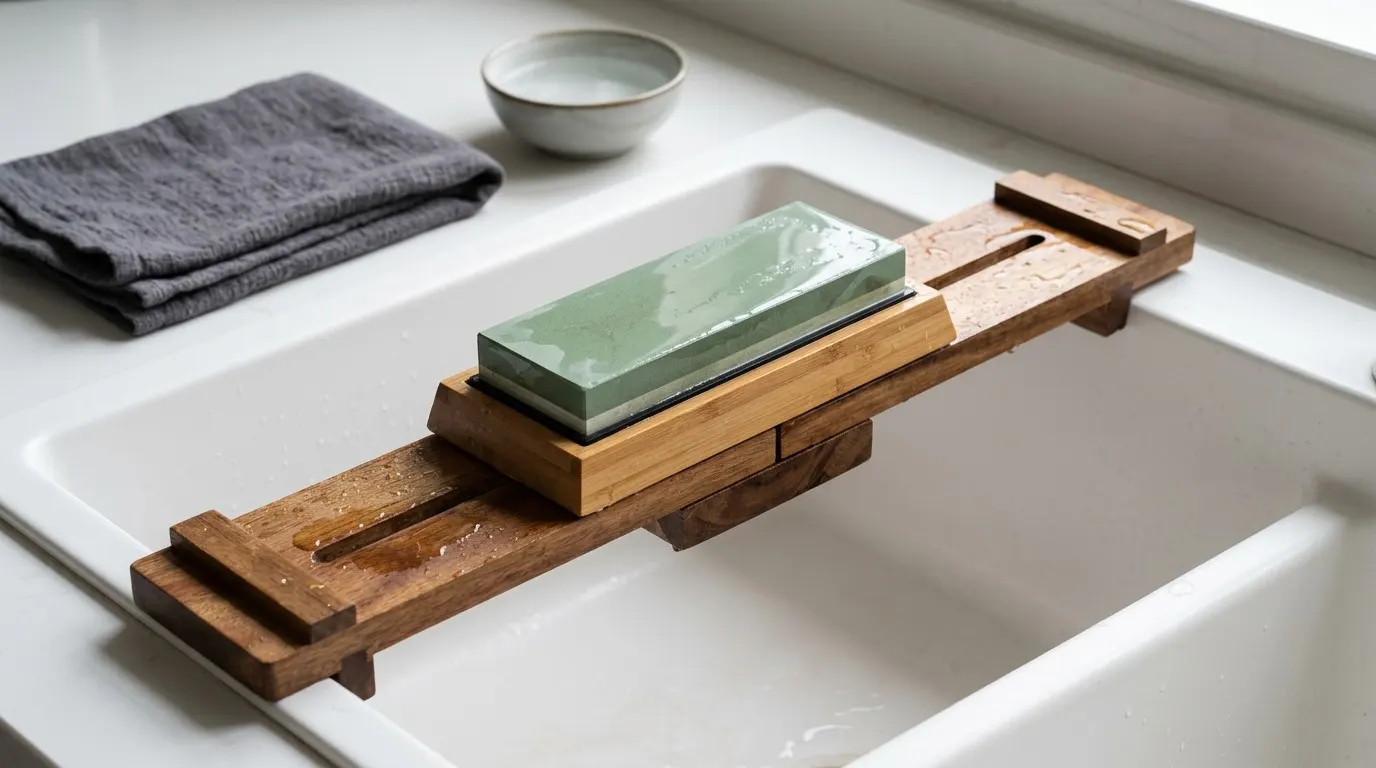
If in doubt, check your stone's instructions. During sharpening, one rule applies to all: keep the surface wet. Don't rinse off the slurry – it's part of the process and improves the result.
Flattening the whetstone
During sharpening, the stone wears more in the middle than at the edges. Over time it becomes dished – and on a dished stone you can't hold an even angle.
How to check: draw a pencil grid on the wet surface and rub the stone over a flattening stone or wet-and-dry sandpaper on a glass plate. Once the grid has disappeared everywhere, the stone is flat again. With regular use, doing this every few sharpening sessions is enough.
Care and storage
- After sharpening, rinse under clean water, without washing-up liquid.
- Let it air-dry, not on a radiator or in the sun – the stone can crack.
- Only put it away dry, otherwise it can go mouldy.
- Don't store it permanently in water: on combination stones the bond between the two sides can come loose.
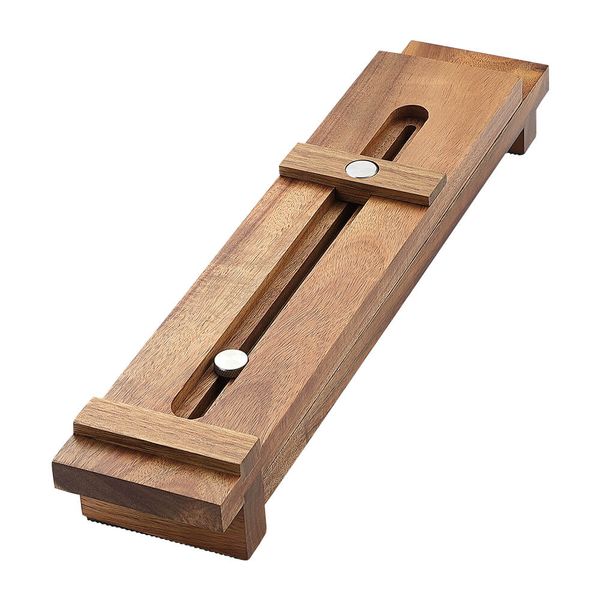
In the shop
Adjustable whetstone holder
€39,00
Frequently asked questions
Which whetstone is suitable for beginners?
A combination stone with #1000 and #6000. You sharpen on the #1000 side and finish the edge on the #6000 side. You don't need anything more for kitchen knives.
Which grit for Damascus knives?
#1000 for basic sharpening and #3000 to #6000 for fine finishing. Coarse stones below #600 only for nicks. You will find the right angle in our edge angle chart.
How long does a whetstone last?
With normal kitchen use, many years. It gets a little thinner with every flattening, but is only used up when just a few millimetres are left.
Whetstone or sharpening stone – are they the same?
In shops, both terms are often used for the same stone. We explain the difference, and what a honing rod has to do with it, in the article Whetstone or sharpening stone.
Can I sharpen any knife on a whetstone?
All knives with a straight edge. Serrated knives, such as bread knives, can't be sharpened on a flat stone – you need a sharpening rod for that.
Matching in the shop