How to fillet fish: step-by-step guide
Round fish and flatfish: how to scale, fillet, skin and remove the bones – the basic technique step by step.
4 min read · 11 November 2026
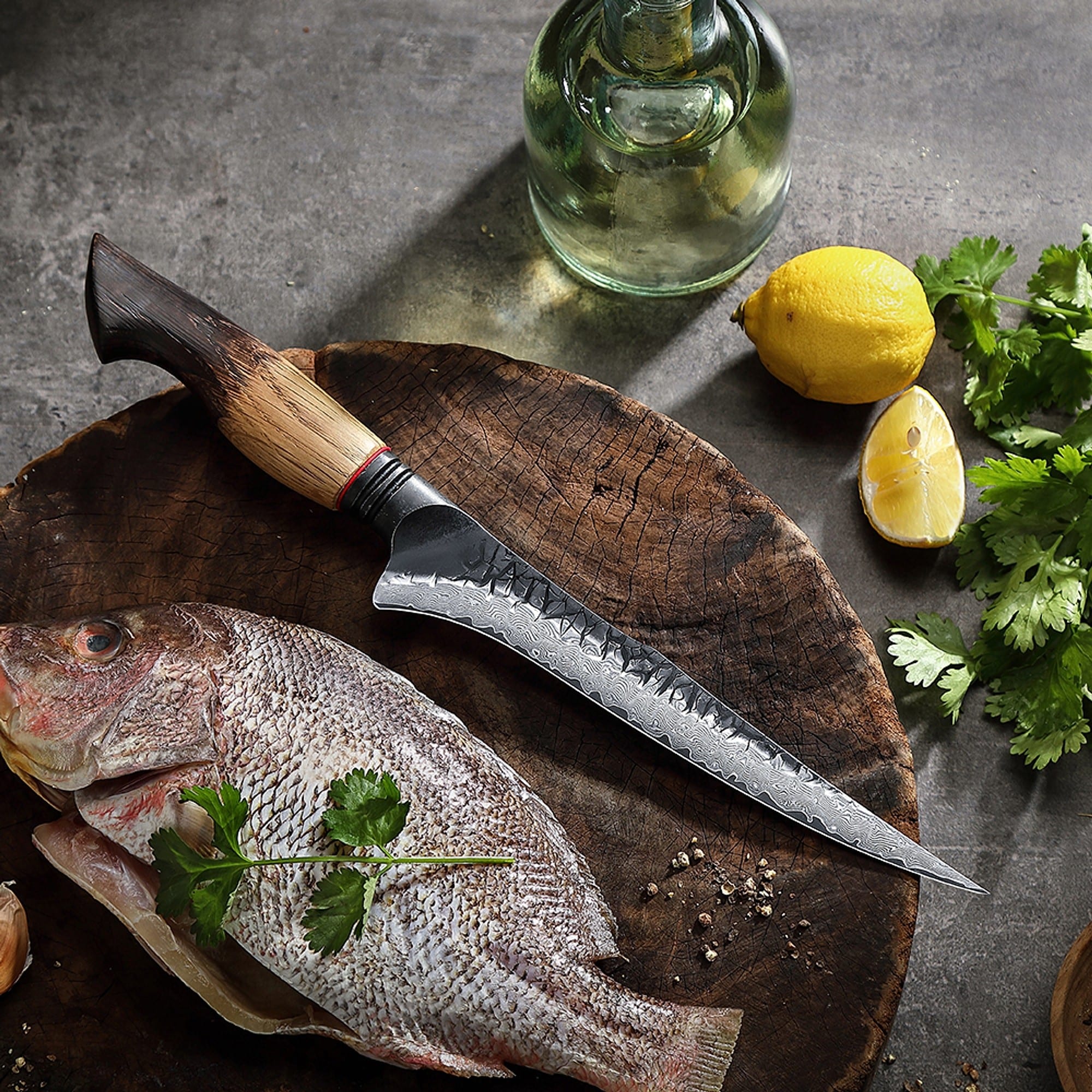
A whole fish is fresher, cheaper and more flavourful than ready-made fillets – if you know how to break it down. The technique is the same for almost every fish; there are only two body types: round fish with two fillets and flatfish with four.
Here you'll learn the basic technique step by step: scaling, filleting, skinning and removing the bones.
How to spot fresh fish
The best fillet starts at the shop. Fresh fish has clear, bulging eyes, bright red gills and shiny skin with firmly attached scales. The flesh gives under finger pressure and springs back. It smells of the sea or lake, but not strongly fishy.
Preparation
- Workspace: large board, damp cloth underneath, kitchen paper, a bowl for trimmings.
- Scaling: if you'll be eating the skin, scrape the scales off with the back of the knife or a fish scaler from tail to head – ideally under running water or inside a large bag, as they fly everywhere.
- Drying: pat the fish thoroughly dry inside and out.
Filleting a round fish
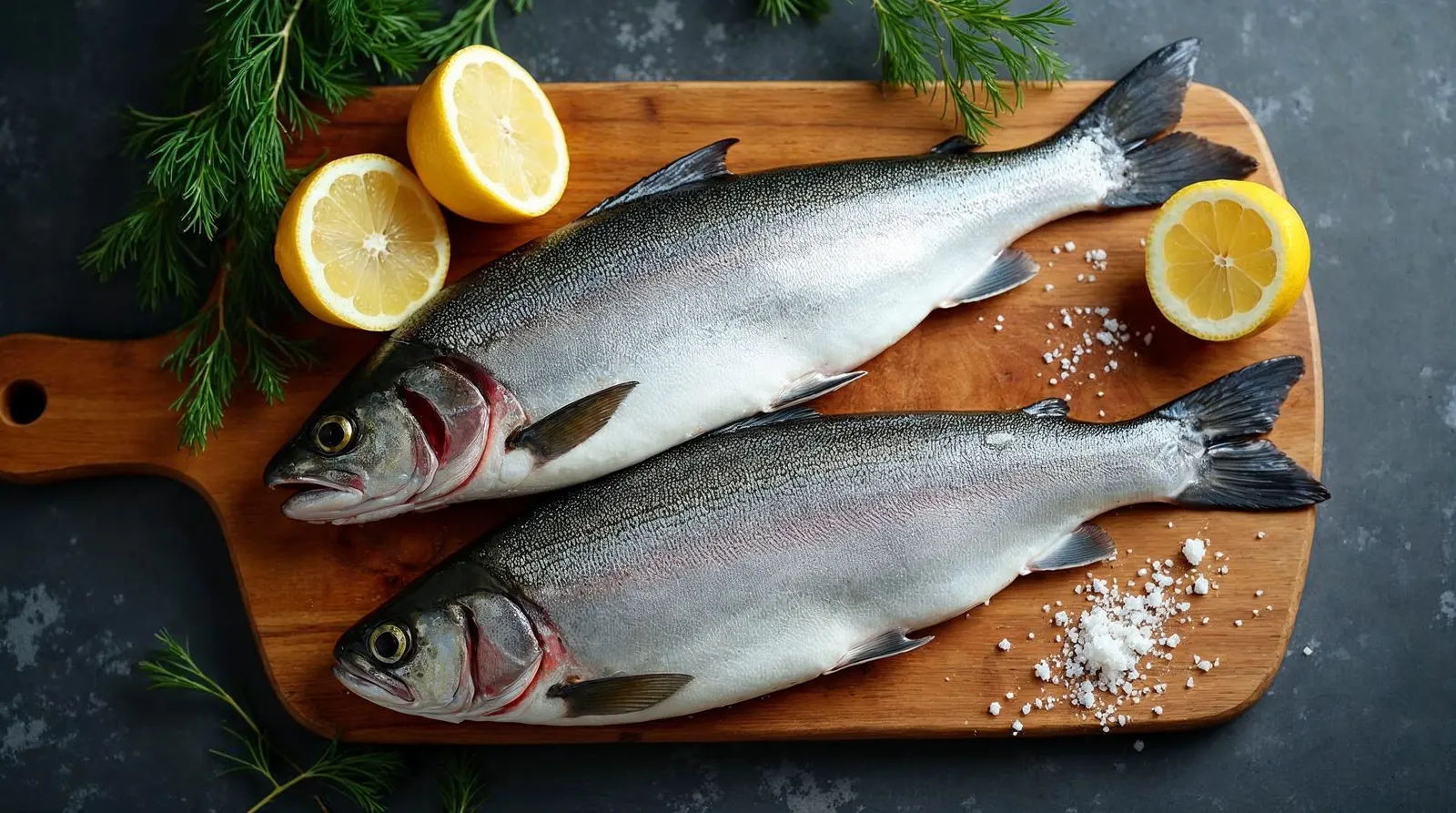
This is how to break down zander, trout, char, sea bream, sea bass or salmon.
Round fish: two fillets
Position: lay the fish with its back towards you, head on the side of your holding hand.
Cut behind the head: cut diagonally behind the gill cover and pectoral fin until the blade meets the backbone.
Back cut: run the knife tip flat along the dorsal fin from head to tail. The blade rests on the bones.
Release the fillet: deepen the cut in long strokes over the backbone until you can lift the fillet away over the belly side.
Turn over: turn the fish and release the second fillet the same way – this time from tail to head.
Belly bones: cut the belly bones away flat at the thick end.
Filleting a flatfish
Plaice, sole, flounder and turbot have two fillets on each side of the body – four in total.
Flatfish: four fillets
Centre line: lay the fish dark side up. Cut along the visible centre line from head to tail, down to the bone.
Head cut: cut in an arc around the head.
First fillet: place the knife flat at the centre line and release the fillet in long strokes from the middle outwards to the fin edge.
Second fillet: turn the fish through 180° and release the fillet on the other side of the centre line.
Other side: turn the fish over and repeat everything on the pale side.
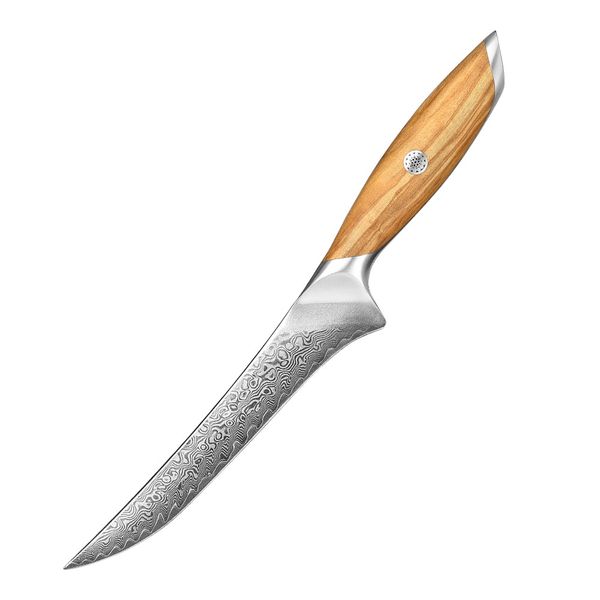
In the shop · ORIBU
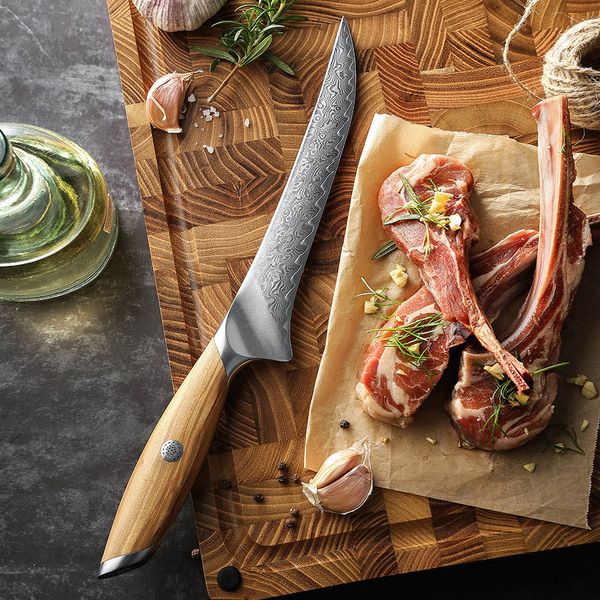
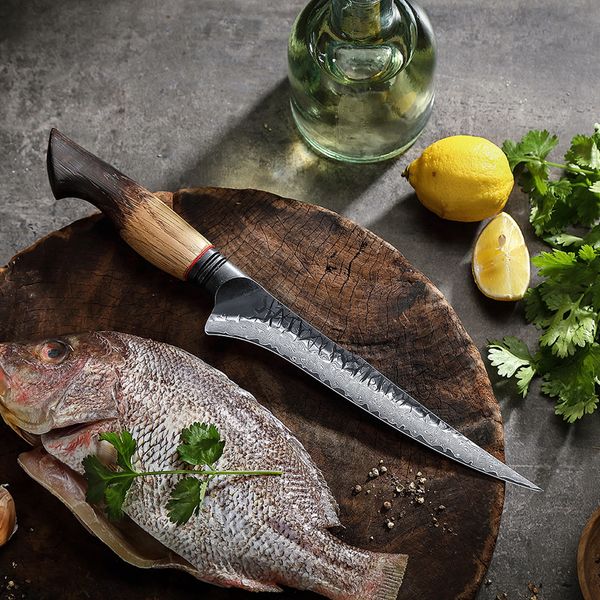
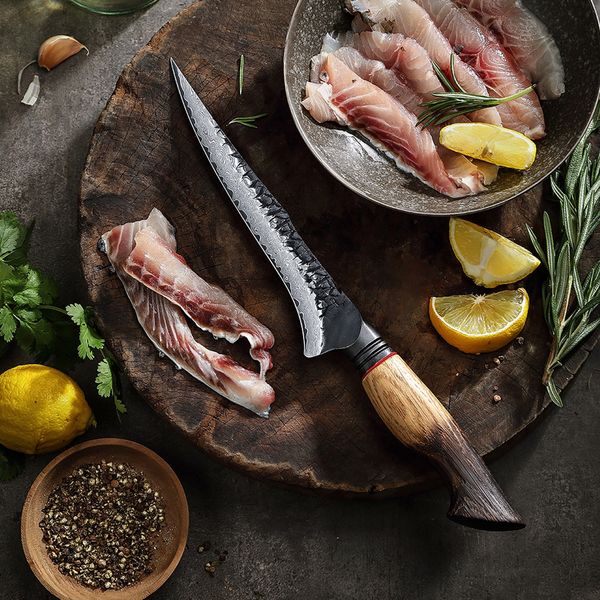
Fillet knife
€149,00
Skinning
Lay the fillet skin side down, narrow end towards you. Cut down to the skin at the end, hold the flap of skin – a piece of kitchen paper helps you grip – and run the blade flat between skin and flesh. Pull the skin towards you rather than pushing the knife. The blade angles slightly down towards the skin.
Removing the bones
- Pin bones: run your finger along the middle of the fillet. Pull out each bone with tweezers in the direction it grows.
- V-cut: with larger fish you can cut out the strip of bones with two angled cuts as a narrow wedge.
- Pike and carp: both have extra, forked intramuscular bones that can't simply be pulled out. In pike they are removed with a special cutting technique; carp fillets are traditionally scored finely so the bones soften during cooking.
The right knife for filleting
| Feature | Why |
|---|---|
| Narrow blade | little friction, the fillet doesn't stick |
| Slight flexibility | the blade follows the bones |
| 16–20 cm length | long strokes, even on larger fish |
| Fine edge, approx. 15° per side | clean cuts without tearing |
| Tip | for piercing and the back cut |
A fillet knife isn't a knife for force: the bones of large fish, heads and frozen food don't belong under its fine blade. Use a sturdy chef's knife to take off the head.
Guides for particular fish
The easiest way to learn filleting is with a small round fish. You'll find the detailed guide for raw and cooked trout here: How to fillet trout.
Frequently asked questions
Which knife for filleting fish?
A fillet knife with a narrow, slightly flexible blade of 16 to 20 cm. It needs to be very sharp so the flesh doesn't tear.
Do I need to scale the fish before filleting?
Only if you'll be eating the skin. If you're removing the skin, you can skip scaling.
How do I get the bones out of the fillet?
Run your finger along the fillet and pull out each bone with fish-bone tweezers in the direction it grows. With large fish, cut out the strip of bones as a wedge.
What is the difference between round fish and flatfish?
Round fish such as zander or trout have a round cross-section and give two fillets. Flatfish such as plaice lie flat and give four fillets.
Can I fillet with a chef's knife?
With large fish like salmon, it works well. For small and medium fish, a narrow, flexible fillet knife is much easier to handle.
Matching in the shop