Knife block without knives: what to look for when buying
Which types of empty knife block there are, which one protects your edges and what to look for in size, material and stability.
5 min read · 11 November 2026
If you've bought your knives one at a time – or own a set without a block – you need a knife block without knives: an empty block that suits your own blades. That sounds simple, but it isn't always. Many blocks have fixed slots that only certain knives fit into.
Here you'll learn which types there are, which ones protect your edges and what to look for in size, material and stability.
What types of knife block are there?
Slotted knife block
The classic: a wooden block with milled slots. It's stable and only shows the handles. The drawback with an empty block: the slots are made for particular blade shapes. A wide santoku or nakiri often won't fit, and a long chef's knife sticks out. On top of that, the slots are hard to clean and moisture dries poorly inside them.
Bristle knife block
Inside is a bundle of plastic bristles or rods, between which you can push the knives anywhere you like. It's flexible, and the insert can usually be removed and washed. The blade does rub against the bristles every time you insert it, though, and very long knives need a correspondingly tall block.
Magnetic knife block
Here the knives cling to the outside of the wood. The magnets sit invisibly inside. This has several advantages: every blade shape and length fits, the edge touches nothing, the blade air-dries and you can see at a glance which knife you're reaching for. For valuable knives, it's the gentlest solution.
Drawer insert
If you want to keep the worktop clear, you can store the knives in a slotted insert in a drawer. It's safe and out of sight, but needs a sufficiently deep and long drawer.
| Type | Fits | Gentle on the edge | Cleaning |
|---|---|---|---|
| Slots | only matching blades | medium – edge rests in the slot | difficult |
| Bristles | almost all blades | medium – blade rubs on bristles | washable insert |
| Magnetic | all shapes and lengths | very good – edge touches nothing | simply wipe |
| Drawer insert | depends on the insert | good | easy |
What to look for when buying
1. Room for your knives
Count your knives and measure the longest. A block should offer at least one or two more spaces than you need today – collections grow. On magnetic blocks it's the surface area that counts: wide blades like a nakiri or chef's knife take up more space than a paring knife.
2. Stability
A block that tips over when you take a knife off is a safety risk. Look for weight, a wide base and non-slip feet. Heavy woods and a stainless steel base provide stability.
3. Material
Hardwoods such as acacia, walnut or oak are dense, moisture-resistant and gentle on the blade. Wood has another advantage over bare metal: the blade doesn't get scratched when you place it on.
4. Magnetic strength
On magnetic blocks, the magnets need to hold even heavy knives securely – but not so strongly that the blade slams against the wood when you place it. Good blocks have continuous magnetic surfaces rather than individual points.
5. Footprint
Measure the space on the worktop and the height under the wall cupboards. With a block where the knives cling to the sides, you need little headroom. With slotted blocks, you have to be able to pull the knives out upwards.
How to use a magnetic knife block properly
Placing: put the spine against the wood first, then let the blade roll gently down until it lies flat. That way the edge never touches the wood first.
Removing: tilt the knife away from the wood over the spine, rather than pulling it straight off or sliding it.
Place dry: dry the knives after washing before putting them on the block.
Cleaning: wipe the wood now and then with a slightly damp cloth and treat it occasionally with a little care oil.
Our magnetic knife blocks
All our knife blocks come without knives and hold any blade shape:
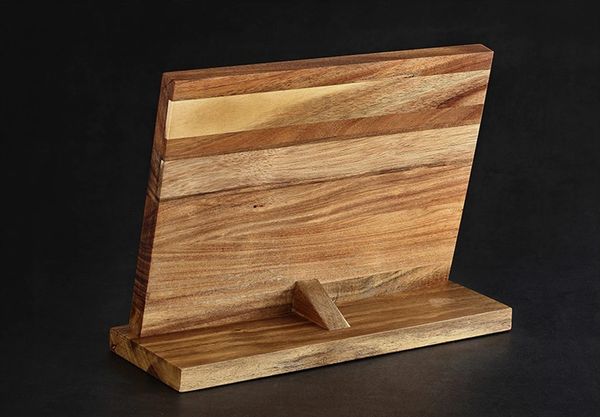
- HIKARI in acacia wood: the compact block for 5 to 6 knives.
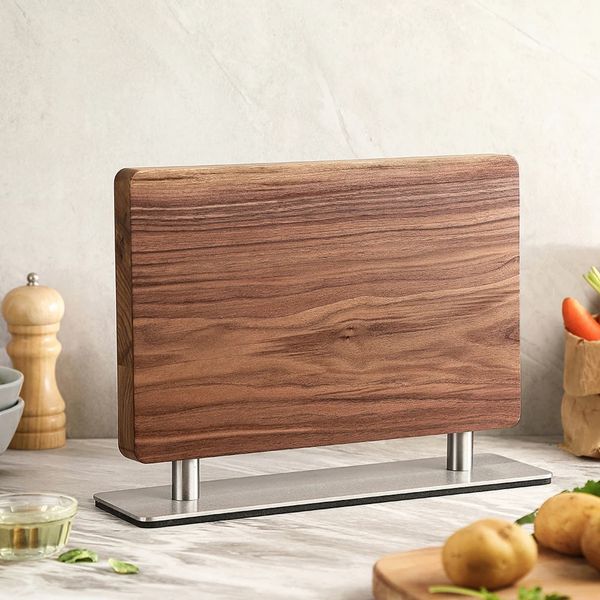
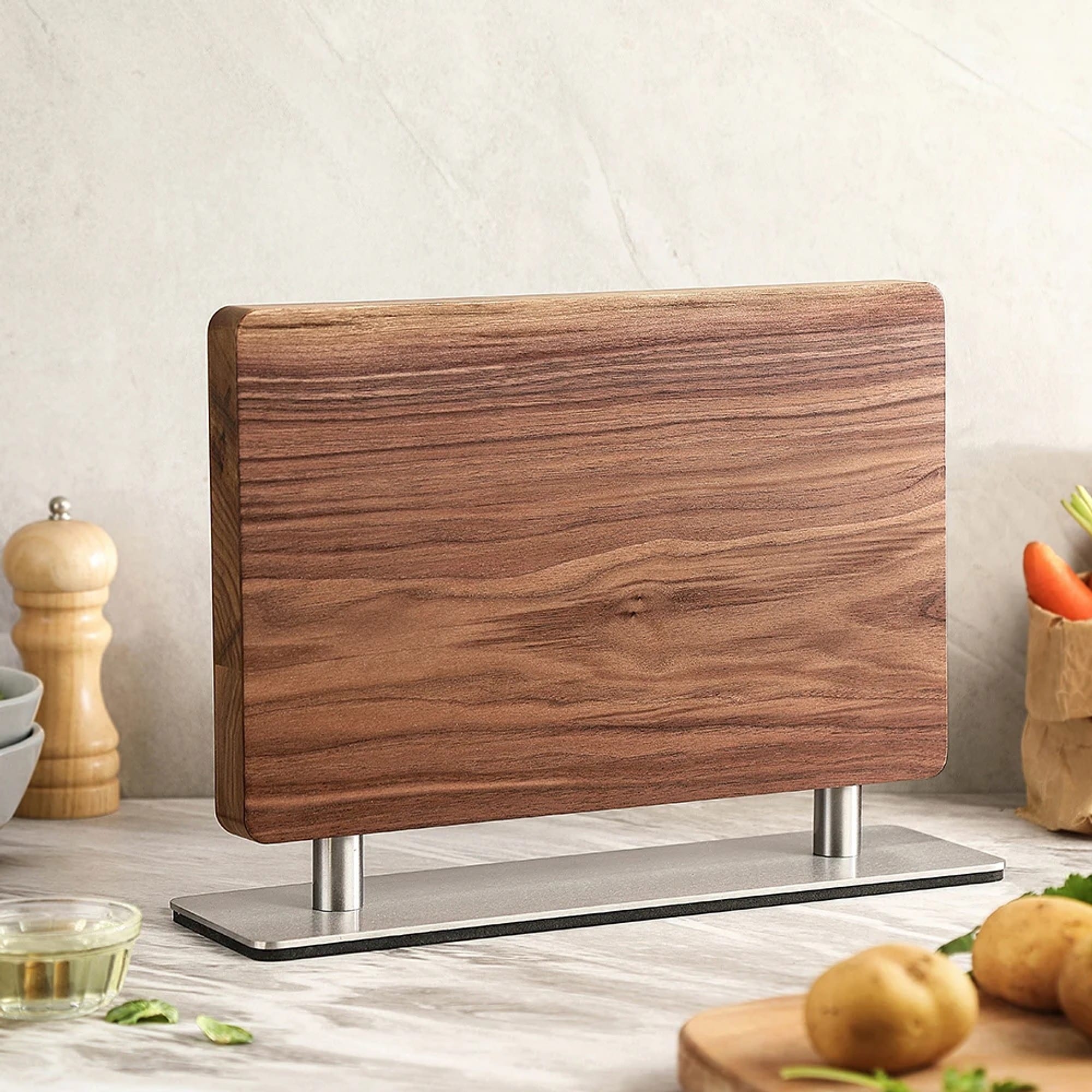
- KURUMI in solid walnut with a stainless steel base: magnetic on both sides, for larger collections.
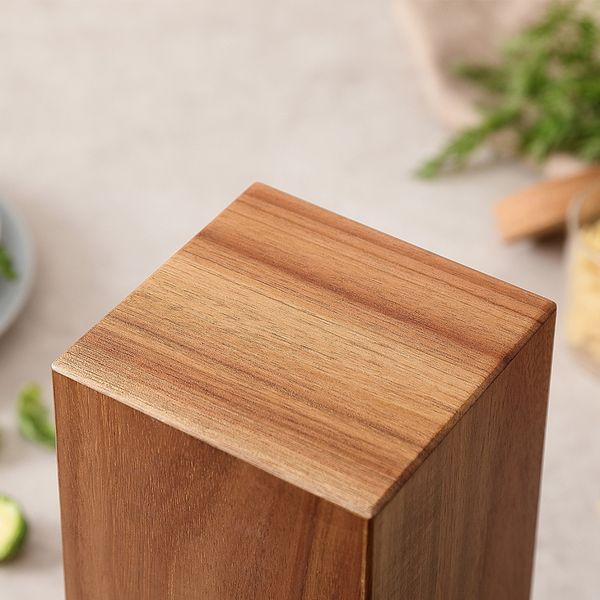
- HIKARI knife tower: magnetic on all four sides and rotating through 360° – lots of space on 15 × 15 cm.
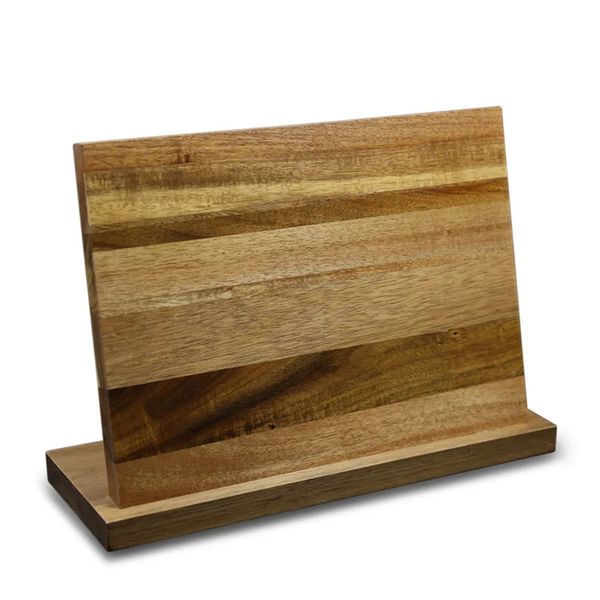
In the shop · HIKARI
Magnetic knife block
€49,00
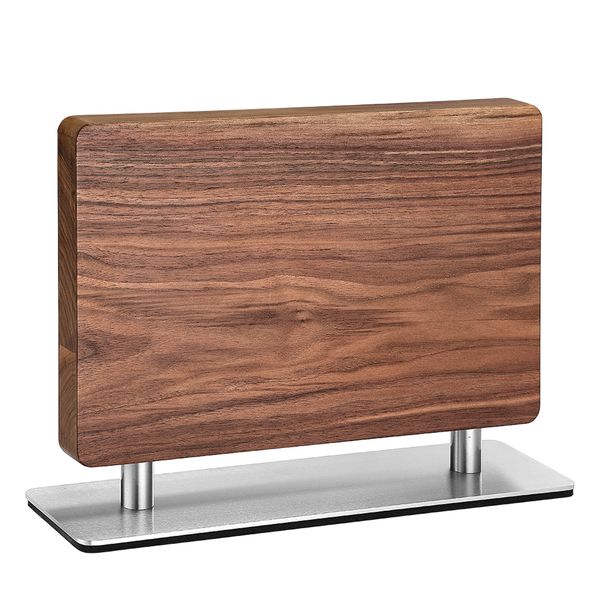
In the shop · KURUMI
Magnetic knife block
€109,00
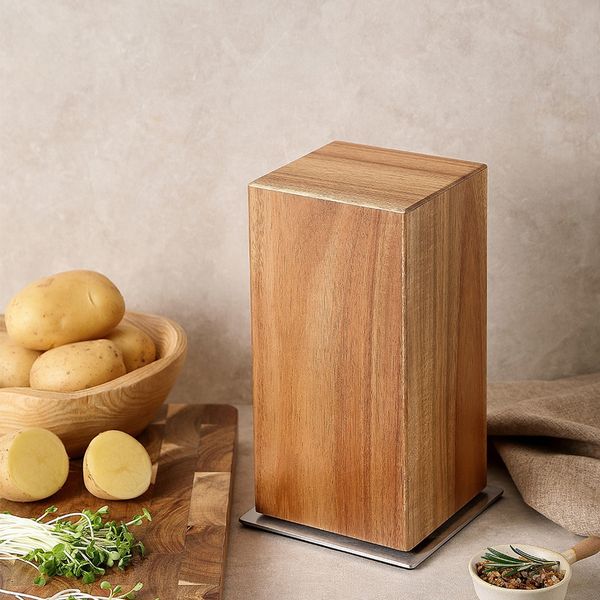
In the shop · HIKARI
Rotating magnetic knife tower
€79,00
Frequently asked questions
Which is better: knife block or magnetic strip?
Both protect the edge if the knives cling magnetically. The block stands on its own and needs no fitting, the strip keeps the worktop clear. What decides is the space in your kitchen.
Does a magnet harm the knife?
No. The magnet doesn't change the steel. It's only important to place and remove the blade via the spine so the edge doesn't hit the wood.
Do magnetic knife blocks hold heavy knives too?
Yes, good blocks hold even heavy chef's knives securely. They aren't suitable for ceramic-bladed knives – ceramic isn't magnetic.
How many knives fit on a magnetic knife block?
That depends on the surface area and blade widths. A single-sided block usually takes 5 to 6 knives; double-sided blocks and towers correspondingly more.
Do all knives fit in a slotted knife block?
No. Slots are made for particular blade widths and lengths. Wide blades like a santoku or nakiri often won't fit. With an empty block, it's best to measure first.
Matching in the shop