Cutting meat against the grain: why it makes meat tender
Why meat becomes more tender when cut across the grain, how to spot the direction of the fibres and which knife you need.
3 min read · 14 November 2026
You've cooked a steak perfectly – and it's still tough? Often it's not the meat but the cut. Meat is made up of long muscle fibres. If you cut along the grain, you're chewing on long, tough strands. If you cut across the grain, the fibres are short and the meat becomes noticeably more tender.
Here you'll learn how to recognise the direction of the grain, how to cut properly and which knife you need.
What does "against the grain" mean?
Muscle meat is made up of many long fibres running parallel to each other. Cutting across this direction divides the fibres into short pieces. When you chew, they break apart easily. If, on the other hand, you cut parallel to the grain, the fibres stay long – the meat seems tough even though it's cooked properly.
How to spot the direction of the grain
Finding the grain
Look closely: on the surface you'll see fine lines or streaks. They show the direction of the fibres.
Check before cooking: the grain is often easier to see when raw. Remember the direction or cut off a small corner as a marker.
Position the knife across: place the blade at right angles to the lines.
Check large cuts: in brisket or shoulder, the direction of the grain changes. Divide the piece at those points and cut each part across separately.
| Cut | Grain | How to cut |
|---|---|---|
| Flank steak, bavette, skirt | long and clearly visible | always across and at an angle, in thin slices |
| Brisket | changes direction | separate into two parts, cut each across |
| Roast beef, beef joint | clearly visible | across, in even slices |
| Ribeye, rump steak | short | across, at the table with a steak knife |
| Fillet | very tender | cutting direction matters less |
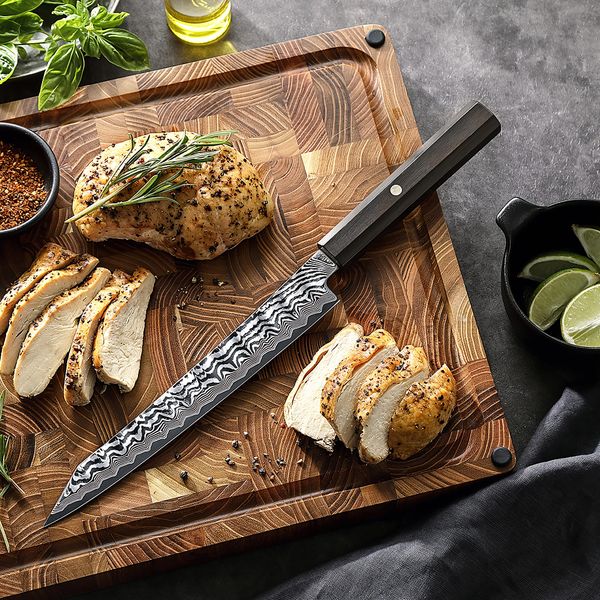
| Chicken breast | lengthwise | across, in slices or strips |
The right knife
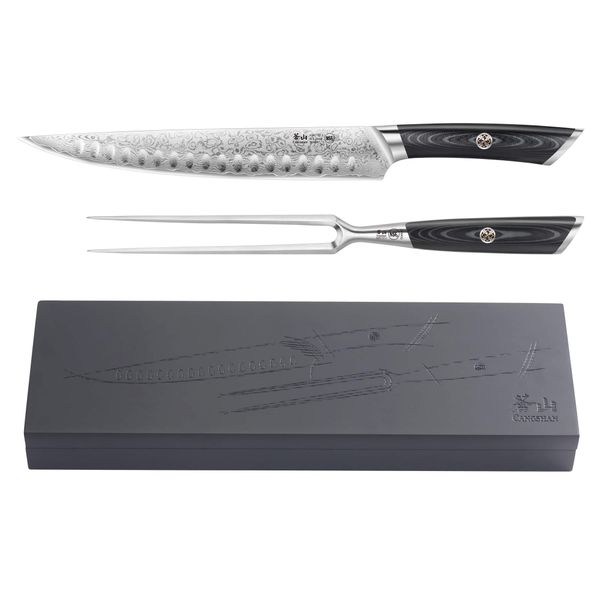
For roasts and large cuts, you need a long, sharp blade that glides through the meat in a single stroke. A carving knife is made exactly for this. A long chef's knife works too.
The key is the pull cut: start the cut with the rear part of the blade and draw it towards you in one long movement. Sawing tears the fibres and squeezes out the juices.
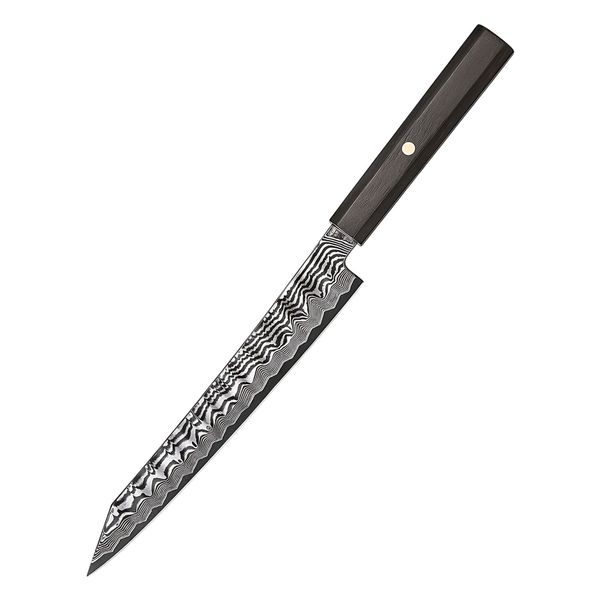
In the shop · NAMI
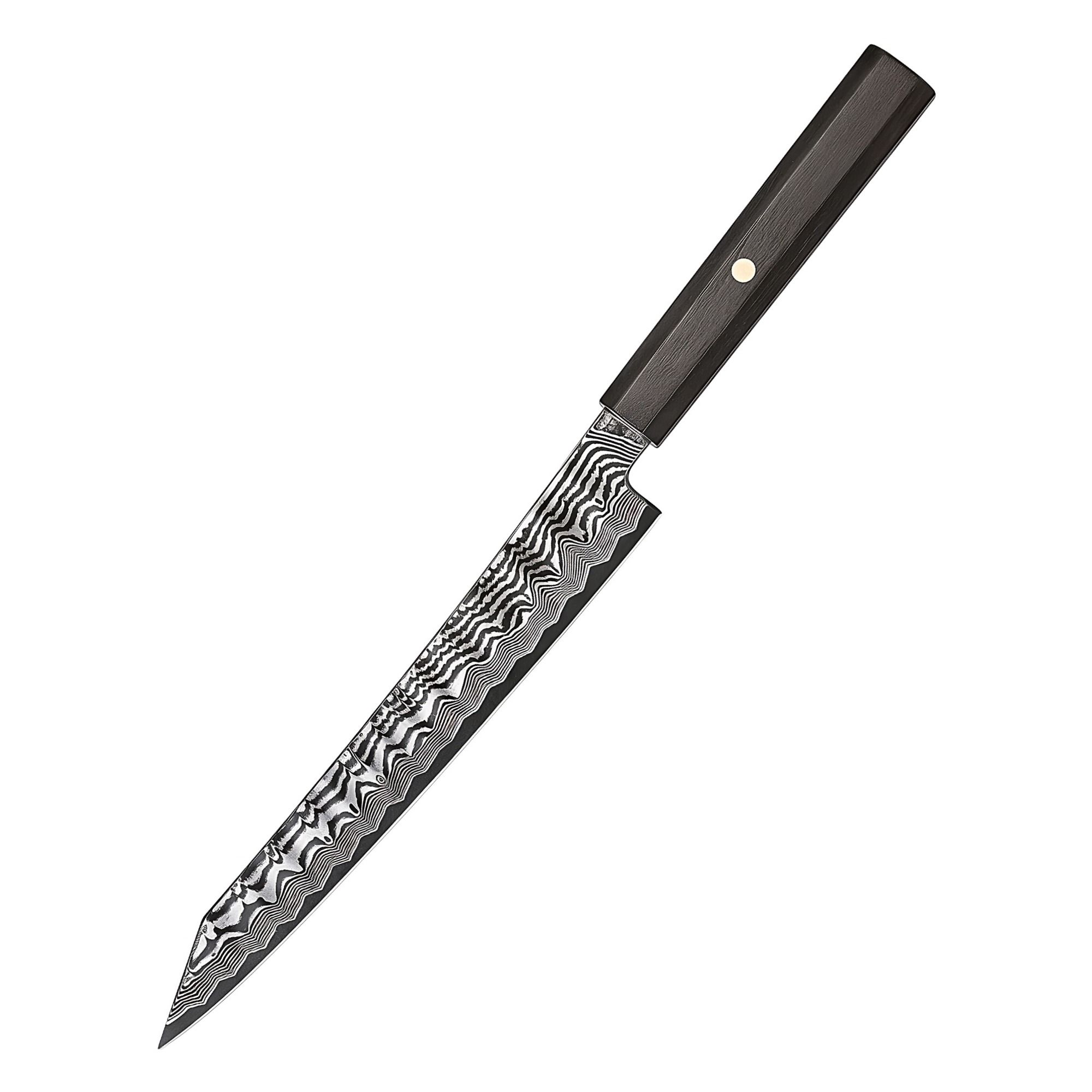
Carving knife
€149,00
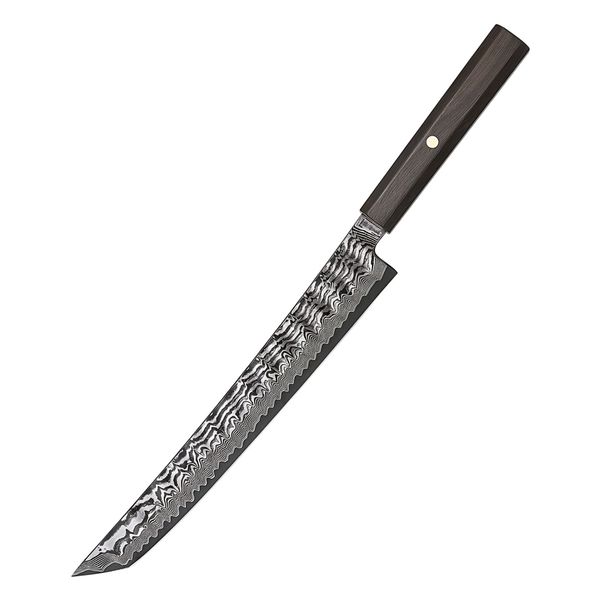
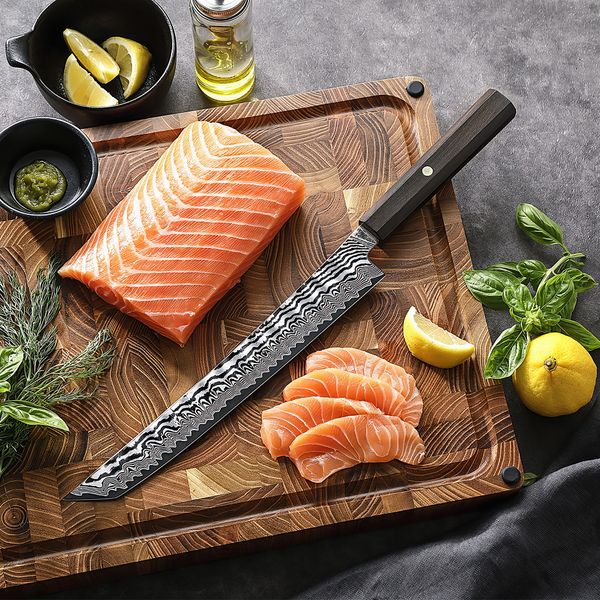
In the shop · NAMI
Sakimaru knife
€159,00
Are there exceptions?
Yes. For stir-fries, goulash or strips of meat, you also cut raw meat into strips across the grain – it then becomes particularly tender when cooked quickly. In very long braises, the fibres fall apart anyway, so the cutting direction matters less. And with fillet, the fibres are so tender that you'll hardly notice a difference.
At the table: the steak knife
On the plate, too: cut across the grain. A sharp steak knife with a straight edge separates the fibres cleanly instead of tearing them – the juices stay in the meat.
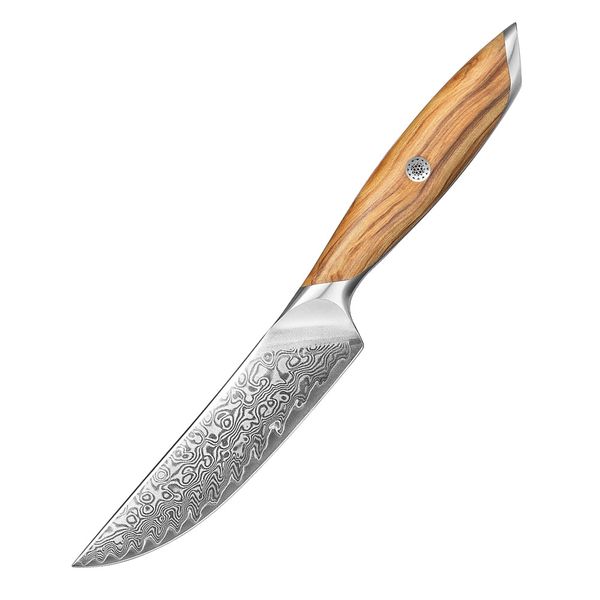
In the shop · ORIBU
Steak knife
€105,00
Frequently asked questions
What does cutting against the grain mean?
Cutting across the direction of the muscle fibres. This keeps the fibres short and the meat more tender.
How do I recognise the grain in meat?
By the fine lines on the surface. They're usually easier to see raw than after cooking.
Why does meat get tough if you cut it wrongly?
Because long muscle fibres remain in each piece, and you have to chew on them for a long time.
Which knife is best for cutting meat?
For roasts a long carving knife, for raw meat a chef's knife or santoku, and at the table a straight-edged steak knife.
Do I need to cut chicken against the grain?
Yes, chicken breast also becomes more tender when cut across the grain – especially in strips for a stir-fry or salad.
Matching in the shop